Medellín is one of the most populous cities in the country Colombia. While once considered dangerous for its affiliation with the cartel, Medellín has transformed itself into a lively hub for innovation, artistic expression, and boasts a popular nightlife. Now a popular tourist destination, the city attracts people from all over the world.
Hot off a deal on flights with JetBlue points, my dad and I decided to venture south for a few days to see what the vibrant city of Medellín had to offer. Situated within the Andes mountain range, the city of Medellín is built along the Aburrá Valley and stretches up and down the steep valley walls on either side. This made the descent into Jose Maria Cordova International Airport a bit bumpy for my liking, and it didn't help that once we landed, the line through immigration and customs took over 2 hours to get through. Fortunately, this was the worst of it.
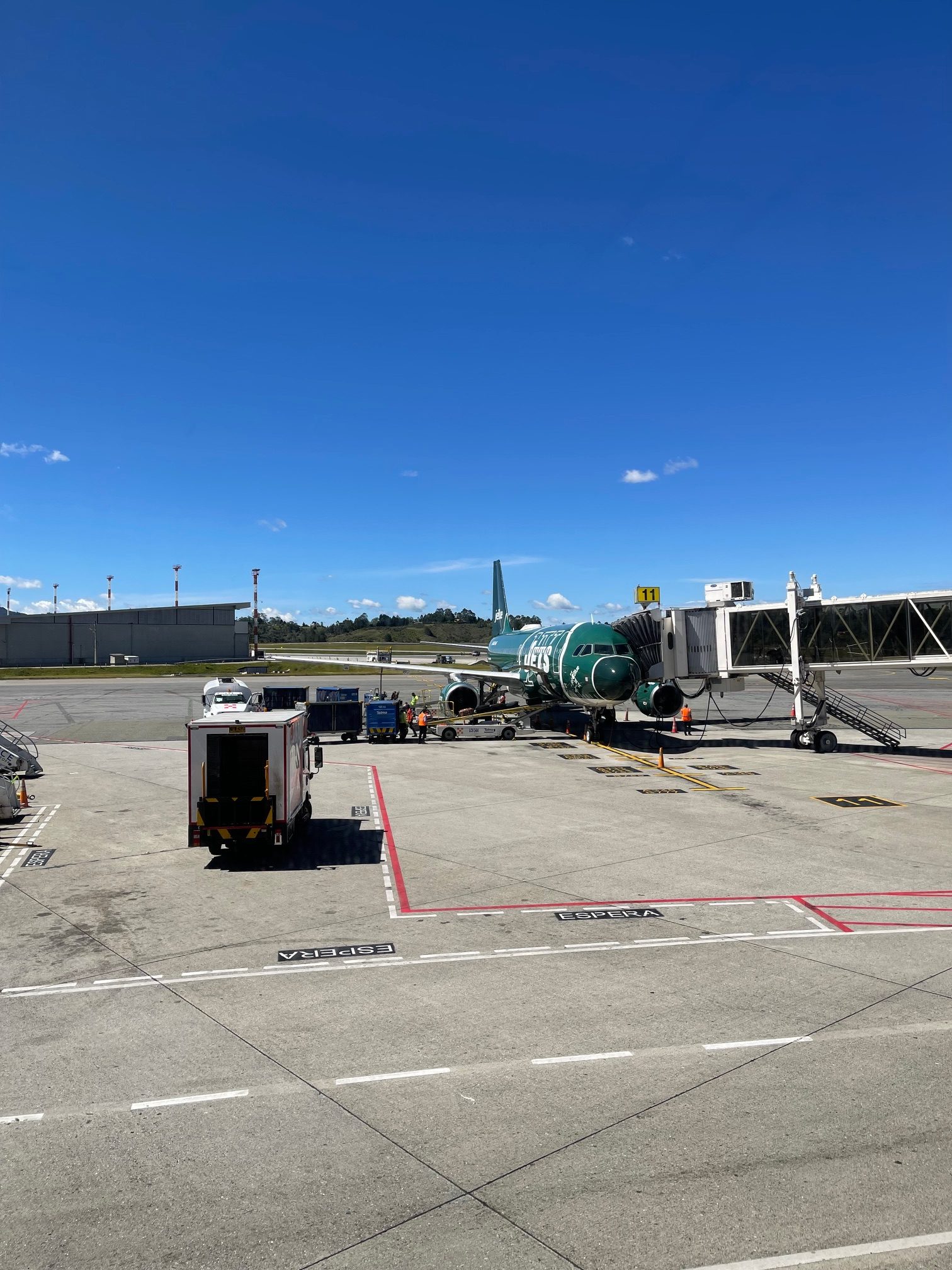
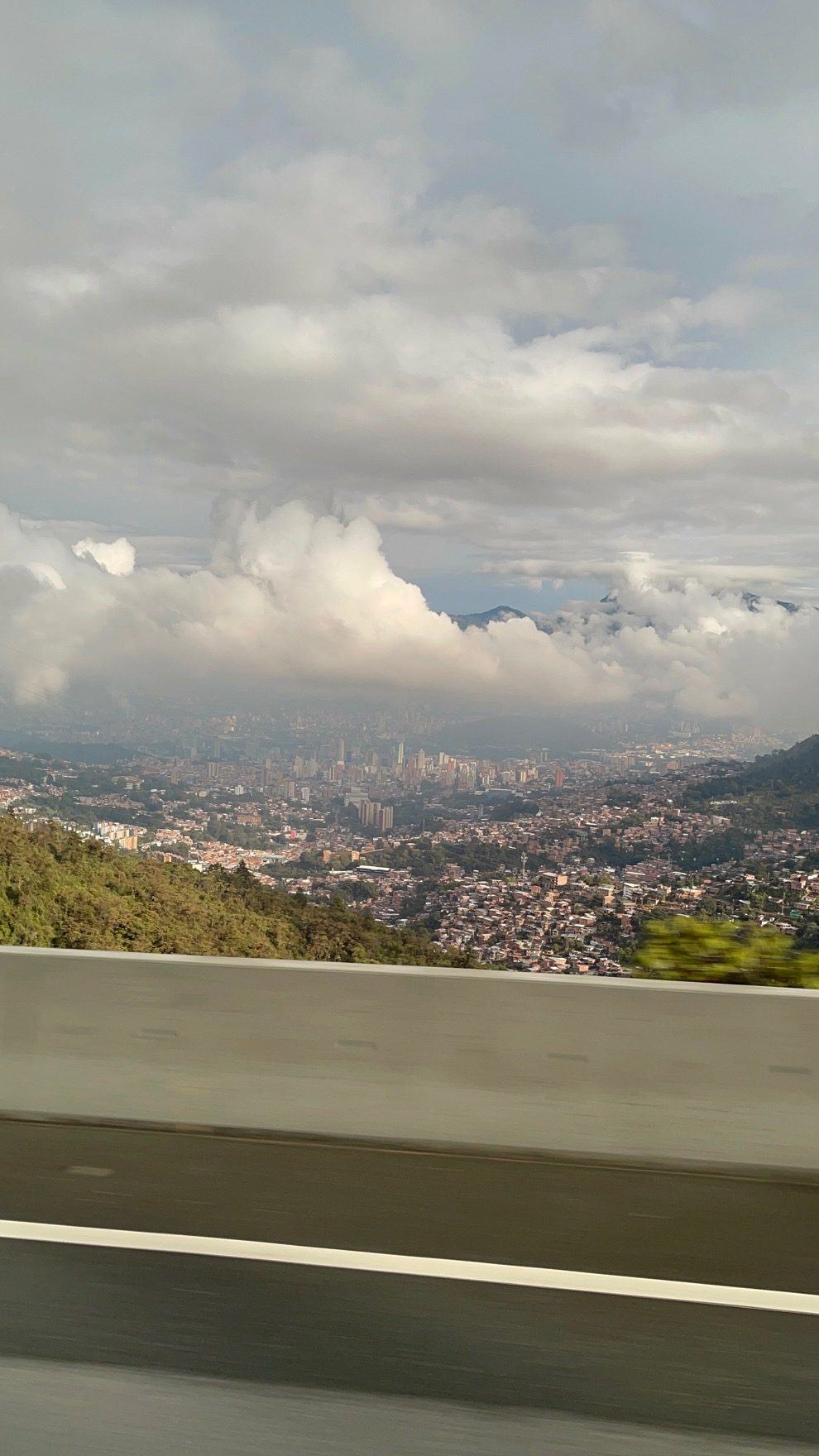
Upon exiting the airport, I was greeted by an airport worker with "De dónde viene?" ("Where are you from?" in English). After not having practiced my Spanish for the better part of 4 years, I was proud of myself for understanding that, and my dad was certainly impressed when I responded with "de los Estados Unidos" (from the United States). We eventually made our way to a taxi and enjoyed the 45 minute ride down into the city that followed. We passed through the Túnel del Oriente, a recently built 5-mile long tunnel that connects the airport to the city of Medellin, then snaked our way down a few switchbacks before entering the neighborhood of El Poblado and arriving at our hotel.
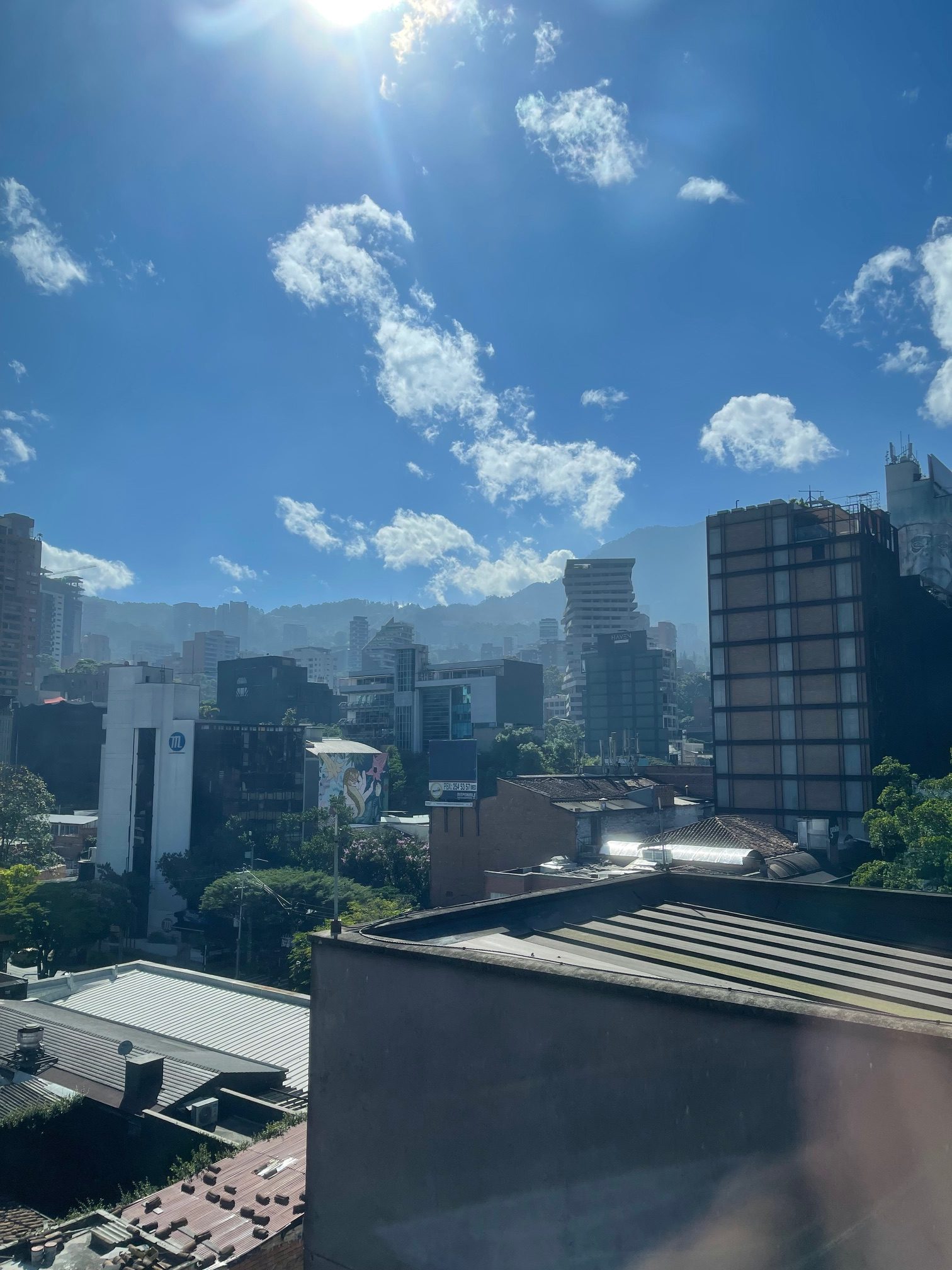
None of the workers at the hotel spoke any English, mostly relying on translation apps to communicate to us. But I was too prideful to rely solely on a translator, instead taking this as an opportunity to dig deep and practice what little Spanish I could remember. I won't say it was perfect, certainly not by any means fluent, but I will say I was quite impressed with how much did come back to me by the end of the trip.
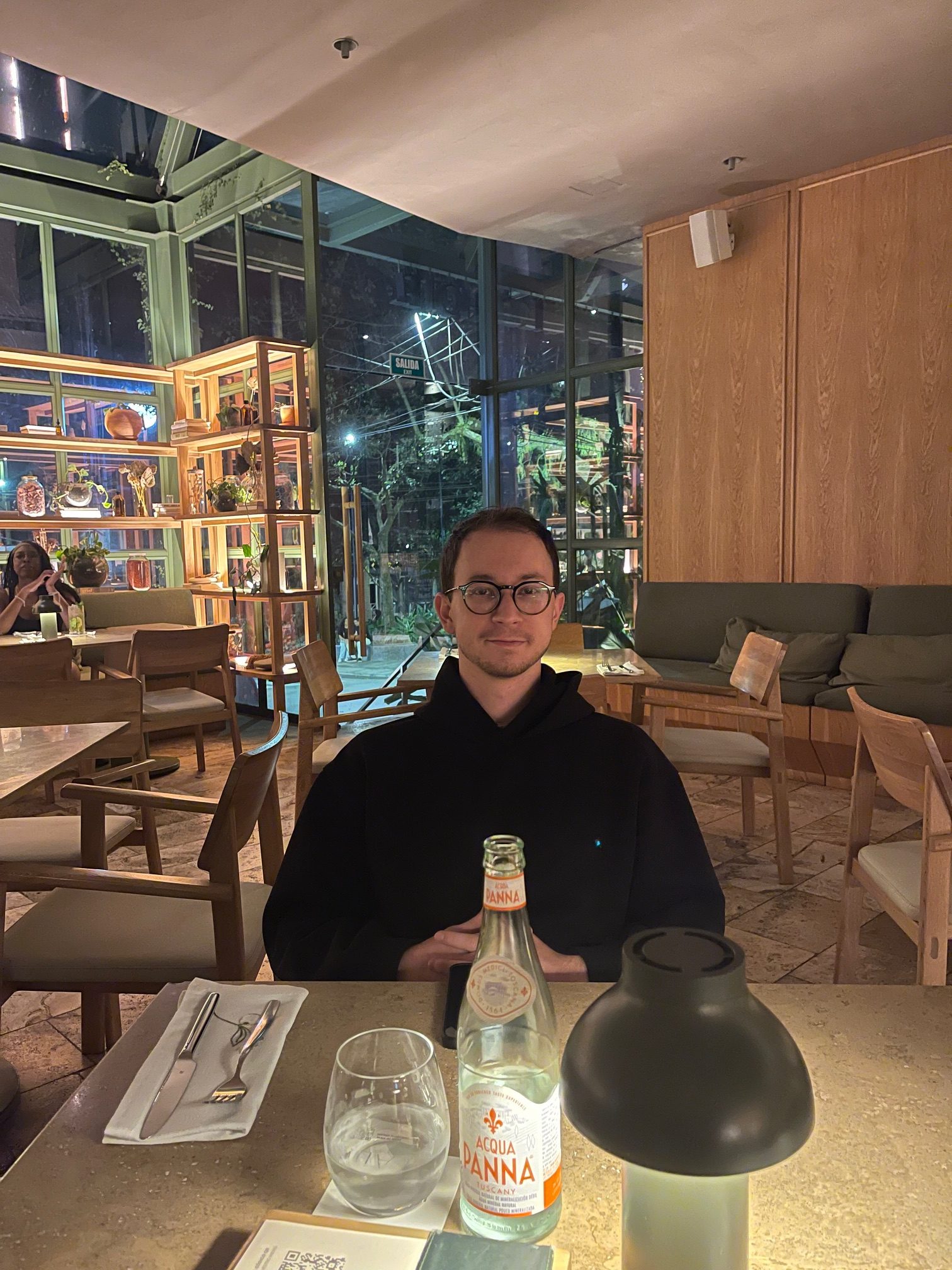
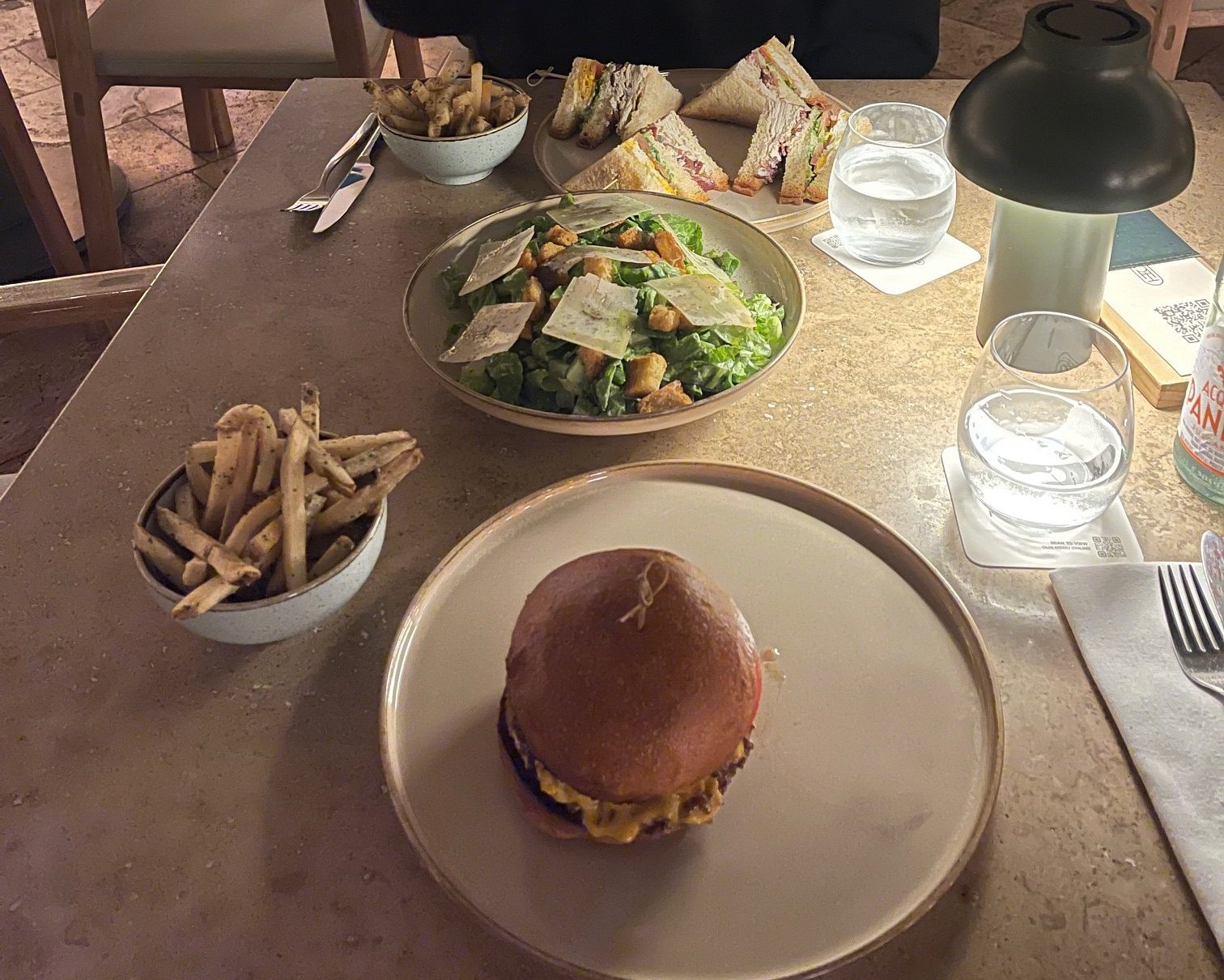
Anyway, after settling into our hotel room and admiring the views, we decided to venture out for some dinner. We didn't go very far, just found a modern looking bar/restaurant a couple blocks away and ordered a light dinner. It was not particularly a Colombian dinner, but it got the job done. After eating, we just called it an early night, watched a movie back at the hotel room, and prepped for an early morning.
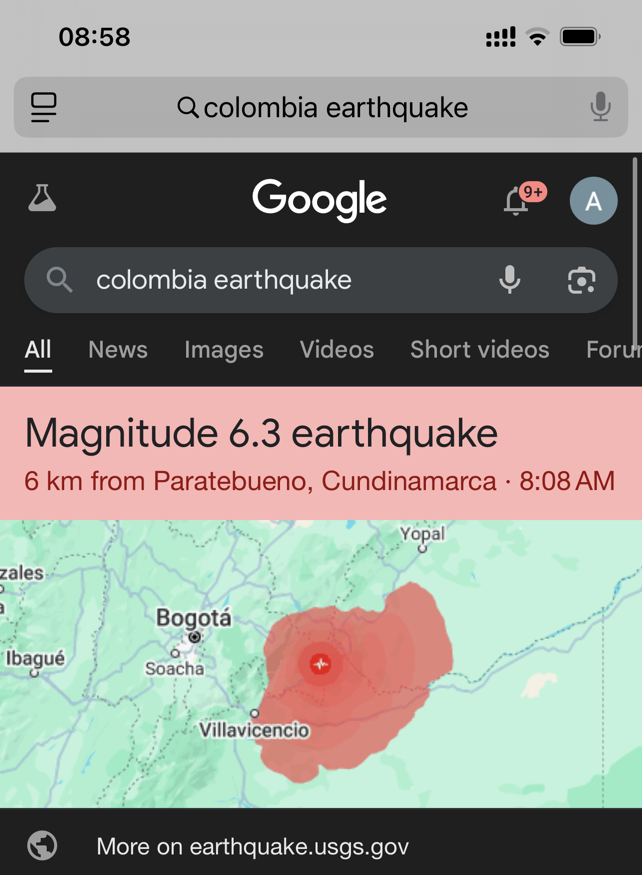
I woke up the next morning around 8am to what I thought was my dad shaking the bed to wake me up. Turns out, the whole building was just shaking due to an earthquake! Fortunately for us it happened near Bogotá, Colombia's capital city, but the fact we could still feel it all the way in Medellin was surreal.
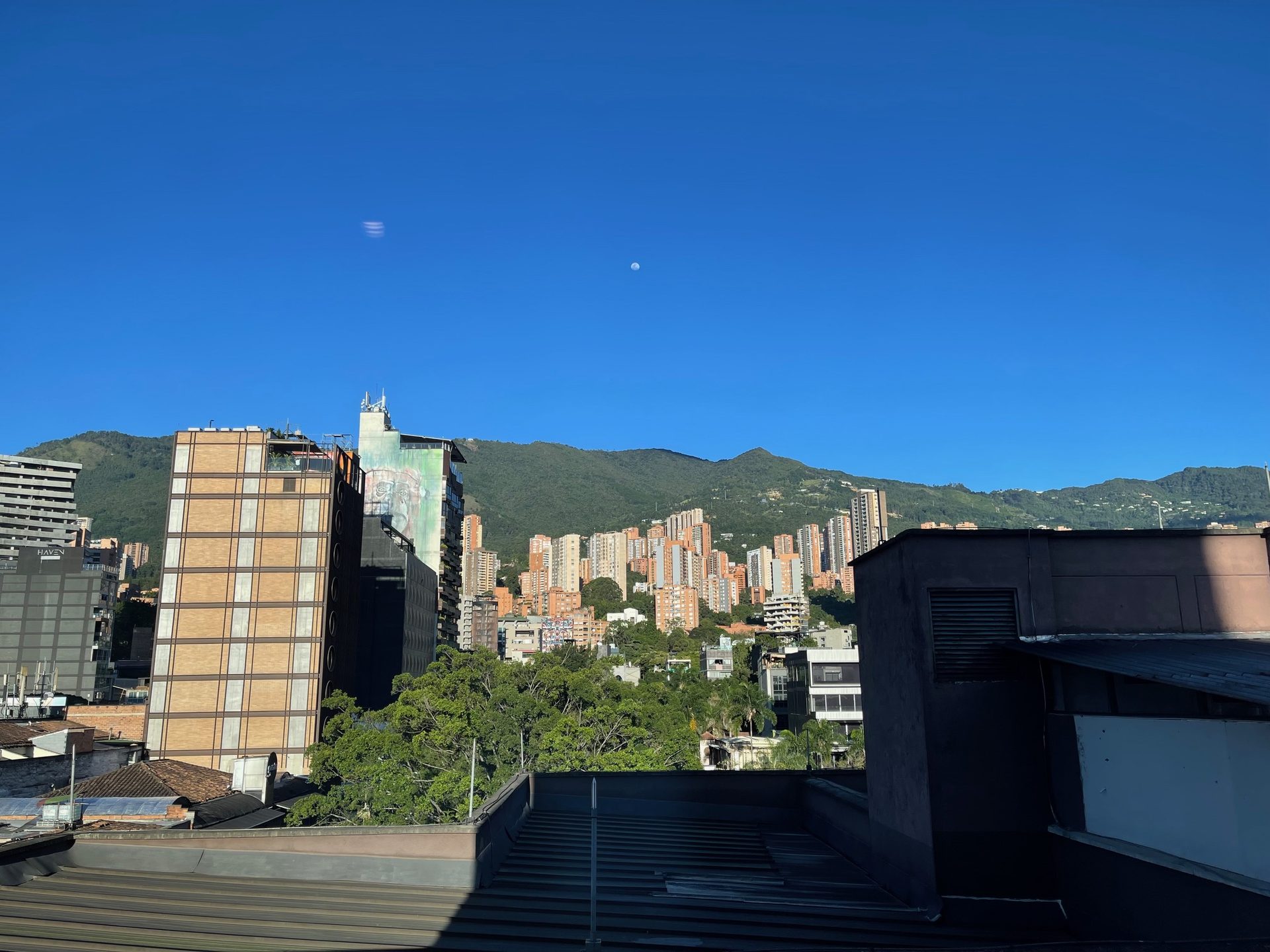
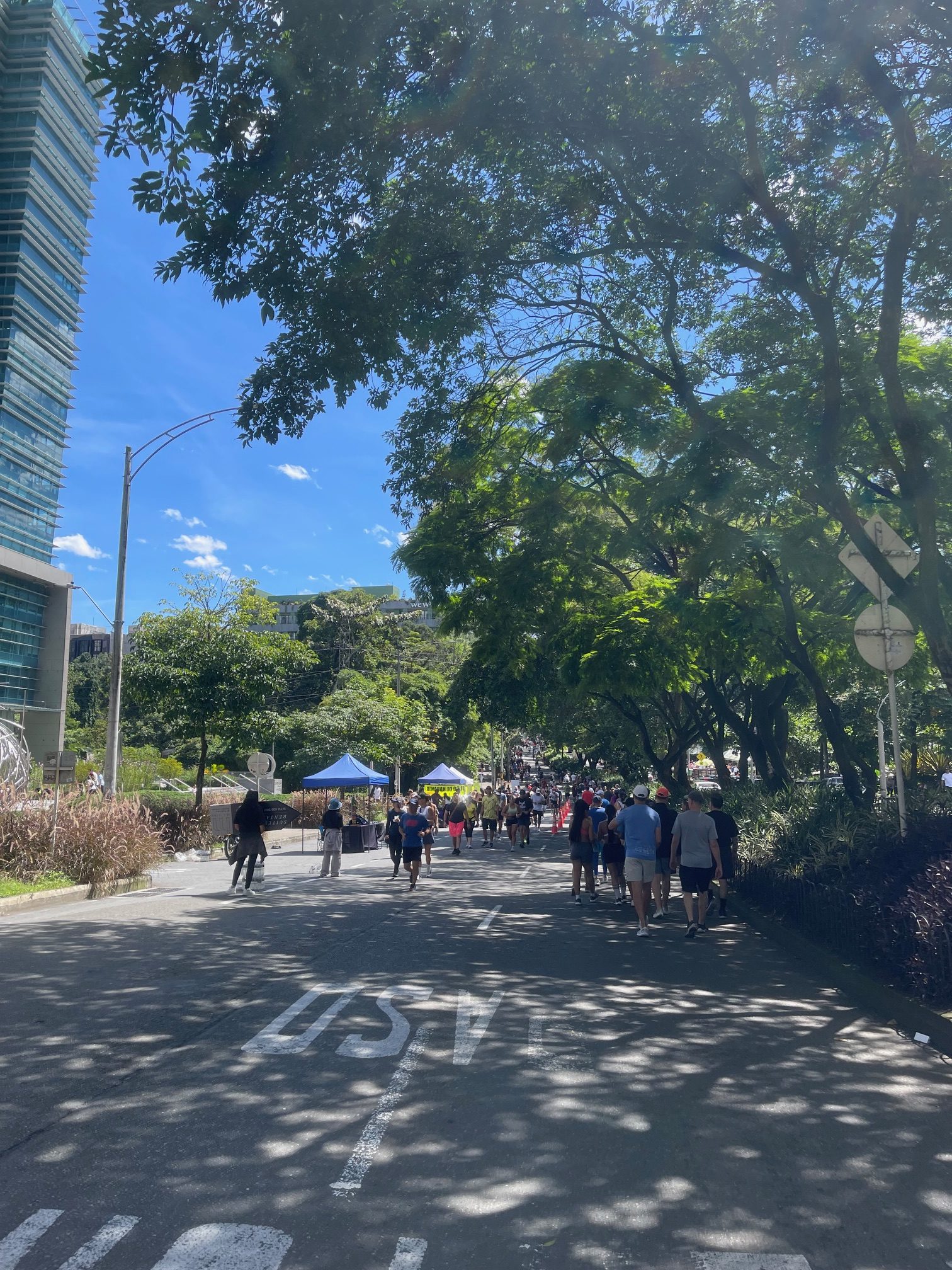
Our first full day in the city was actually a Sunday, so when we went out after a quick breakfast at the hotel, we were surprised to see so many people out and about. One of the major roads had been closed off and hundreds of people were walking, running, and biking for what must've gone on for miles. It was really cool to see. And of course we joined in for a little while to walk around and take in the fresh air with everyone else.
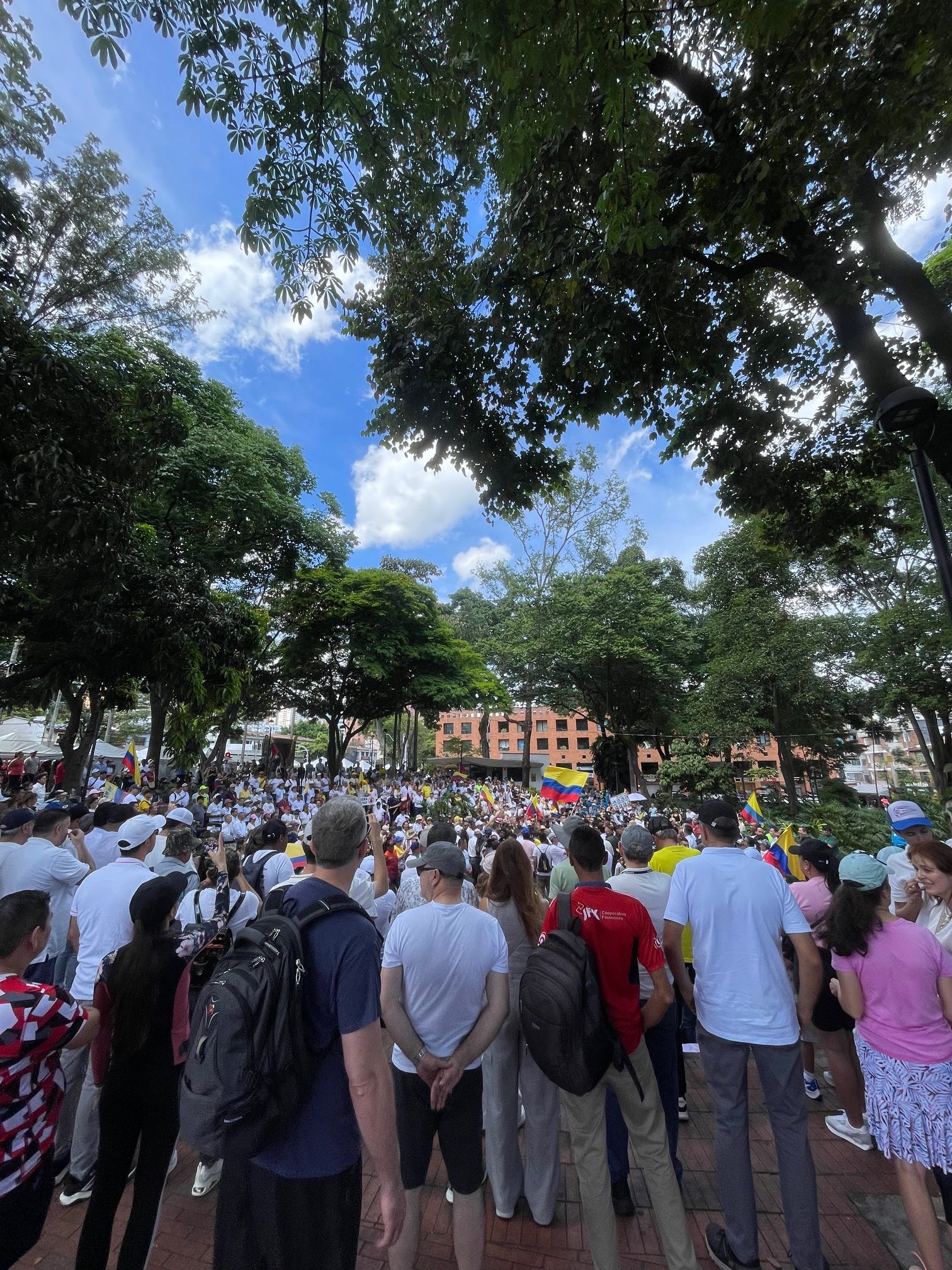
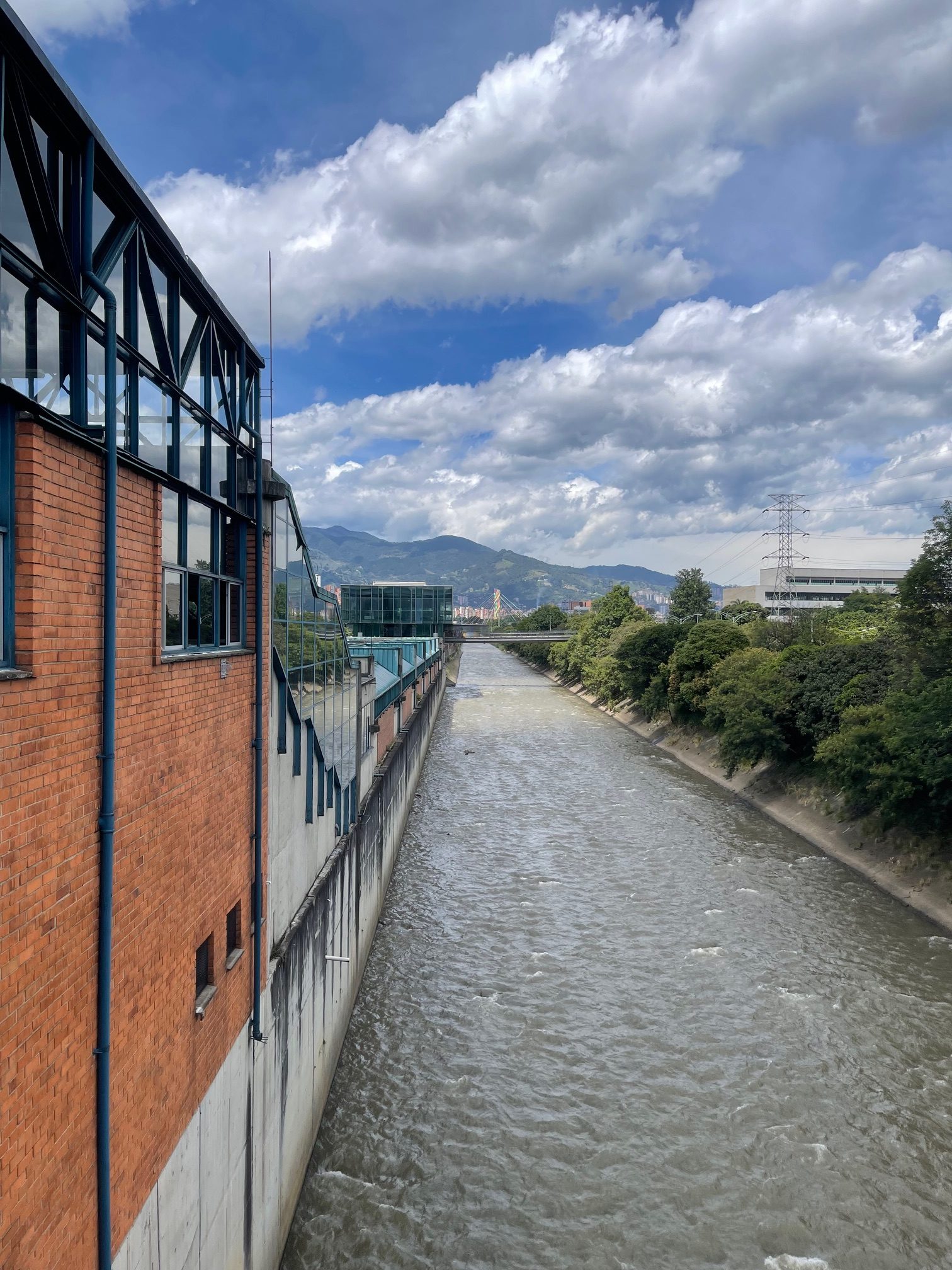
We ended up walking quite a ways, all the way down to the Río Medellín. The river itself wasn't anything to call home about, but we did get some sick views of the city from a bridge that crossed over the river. We still had some time to kill before a tour scheduled for later that afternoon. So we just wandered around the area a bit more, walking along highways and popping into a mall that had a suspiciously large number of phone repair shops inside. Eventually we had enough and just ordered an Uber to the popular Comuna 13 neighborhood.
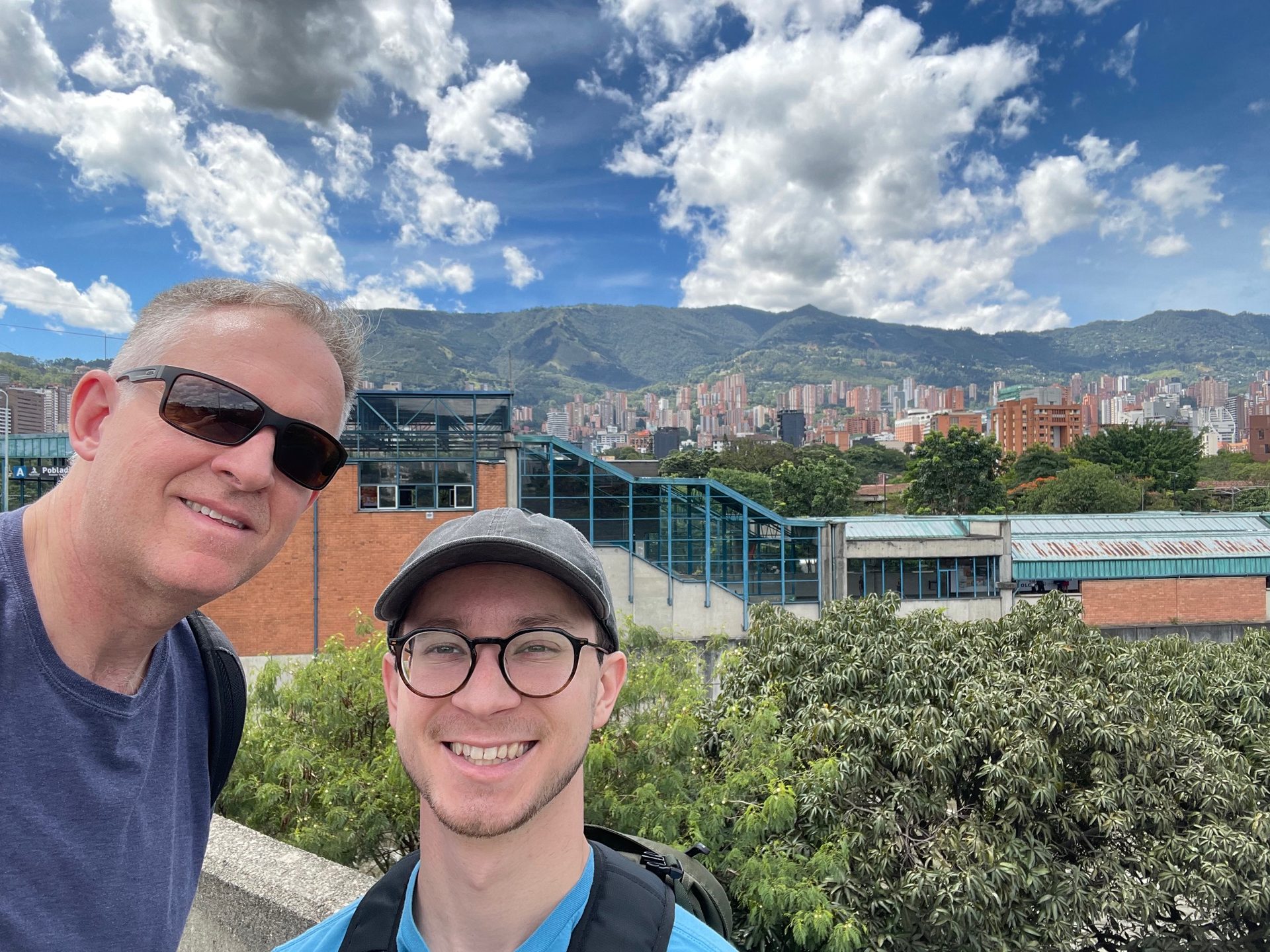
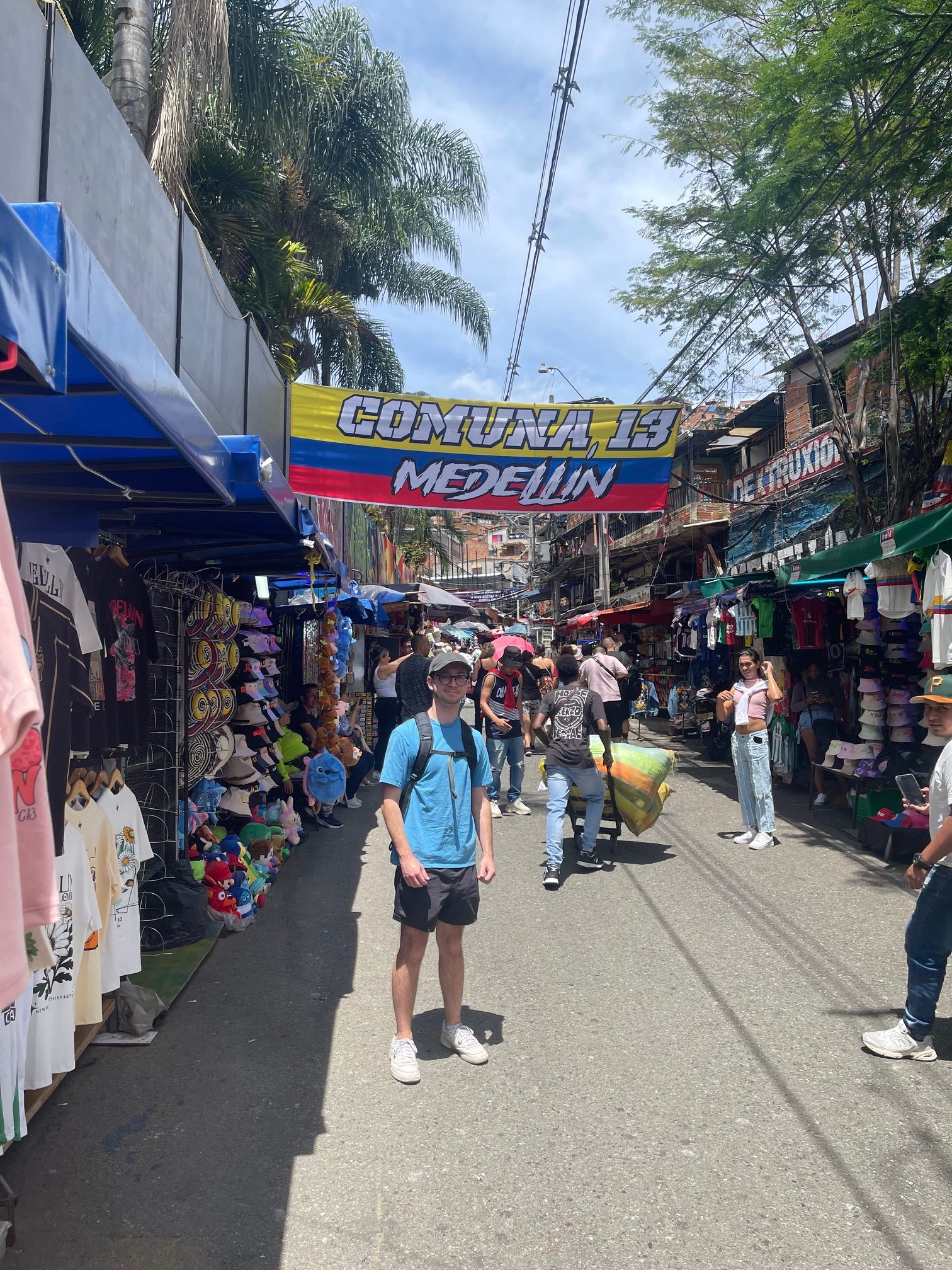
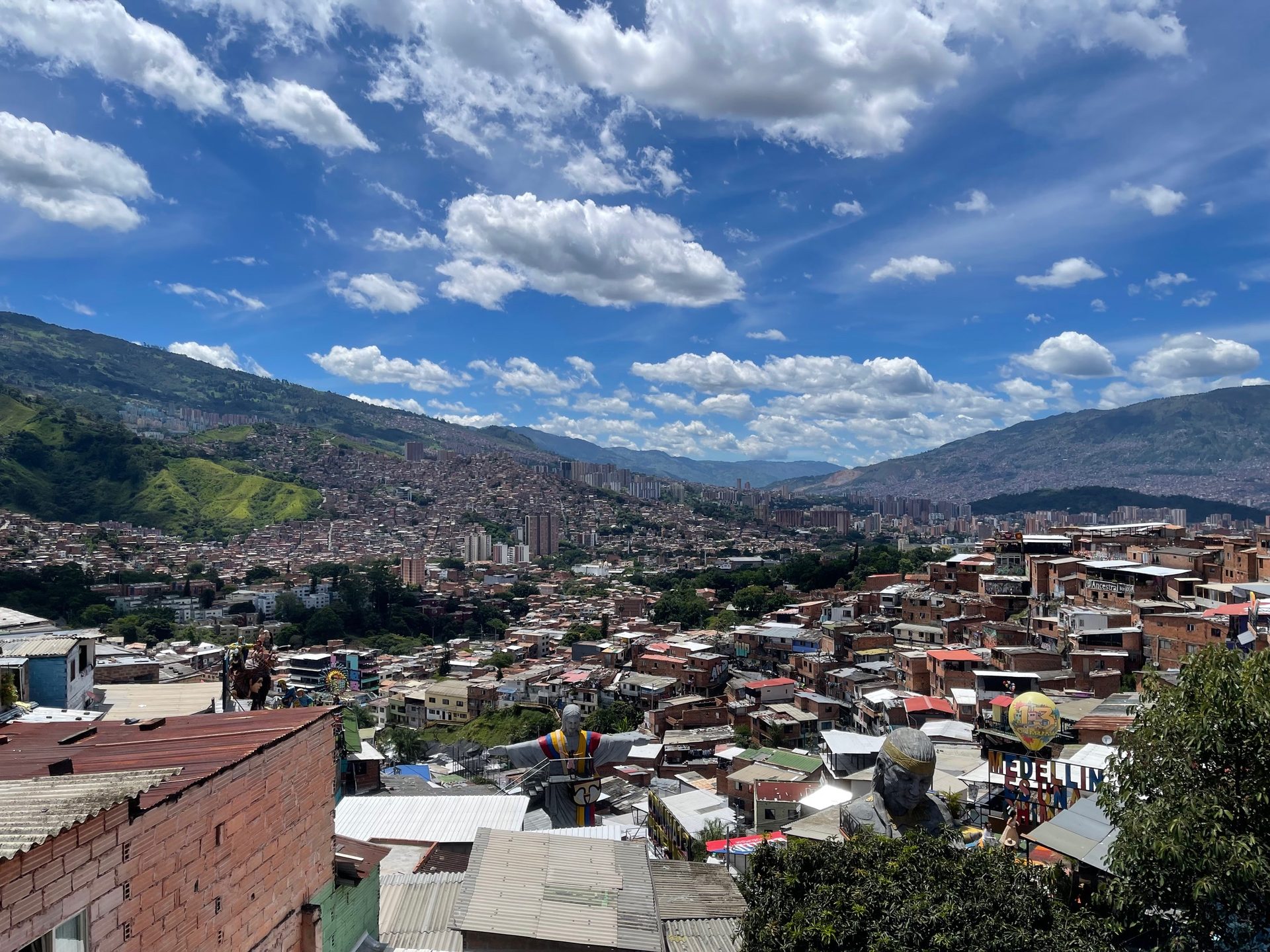
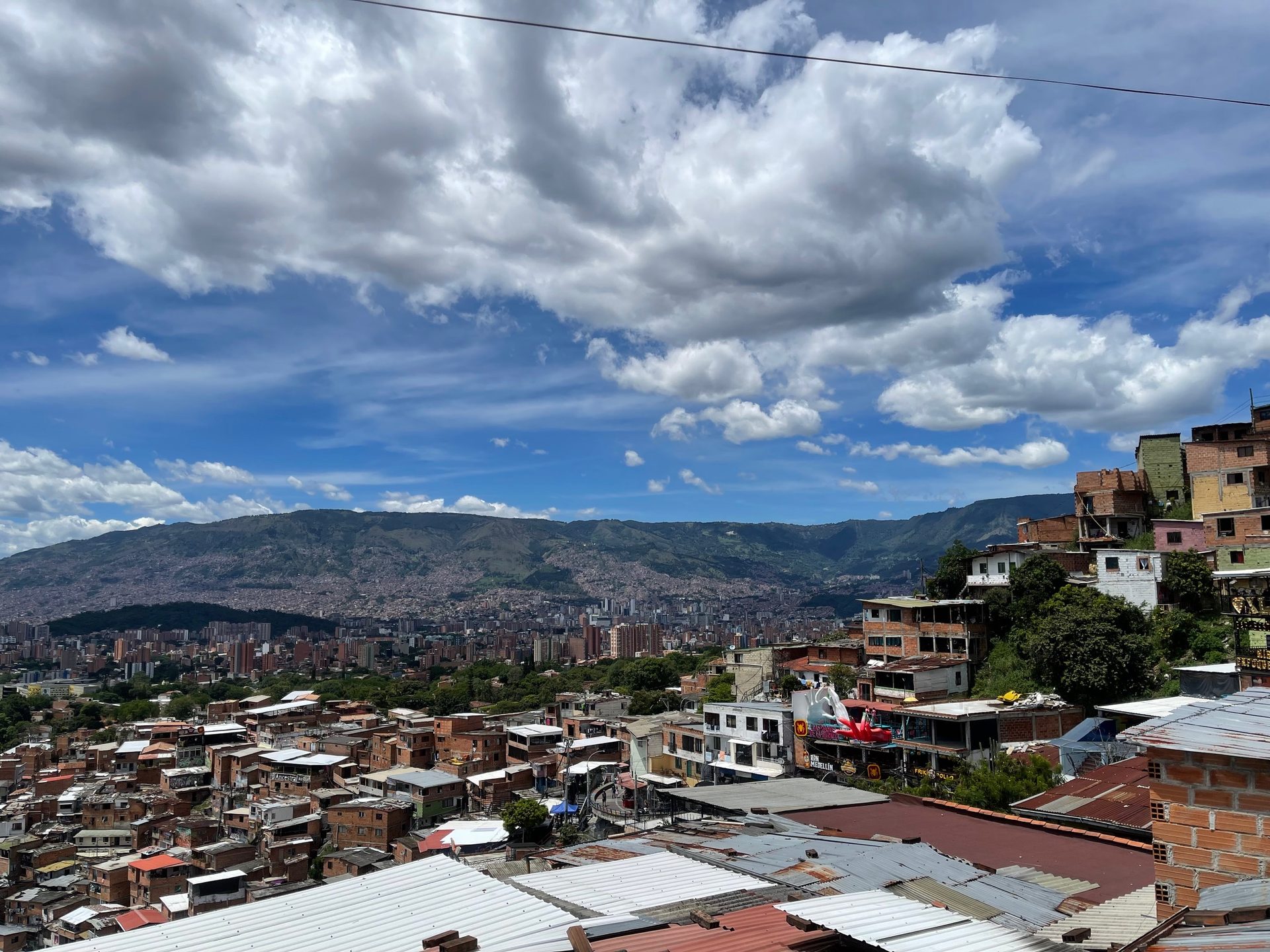
With still an hour left before our tour started, my dad and I decided to explore some of Comuna 13 ourselves in the meantime. Like much of the city, the entire neighborhood is built onto the side of a hill. So while the streets start out flat at the bottom, you start to climb in elevation pretty quickly. This made for some more amazing views of the city from the "miradores" (viewpoints) closer to the top.
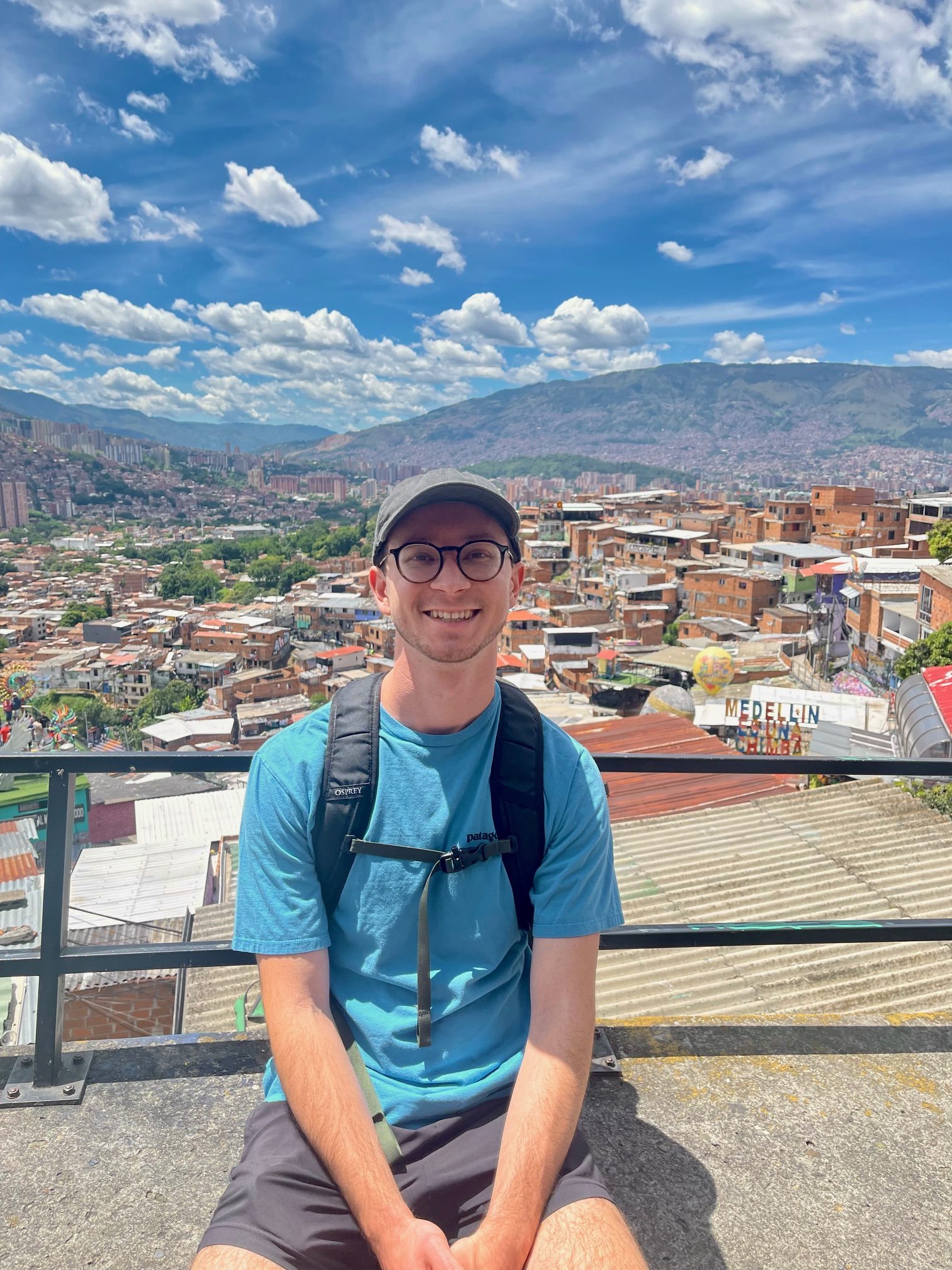
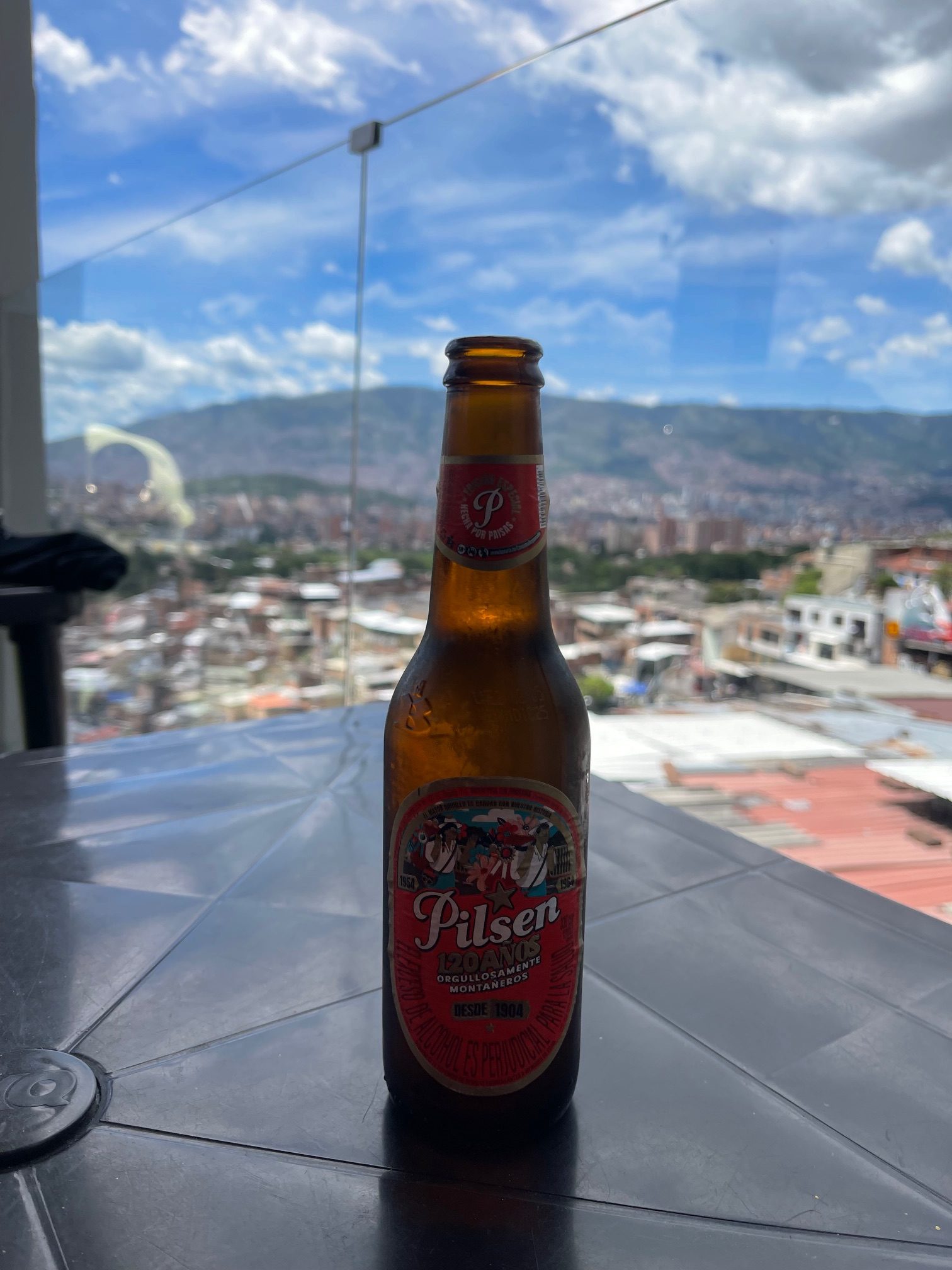
We stopped at one place with a small bar that offered a great lookout spot over Comuna 13 and beyond. I ordered myself bottle of a local beer called Pilsen. We spent around a half hour there, enjoying some music and the views, before heading back down to find our tour guide.
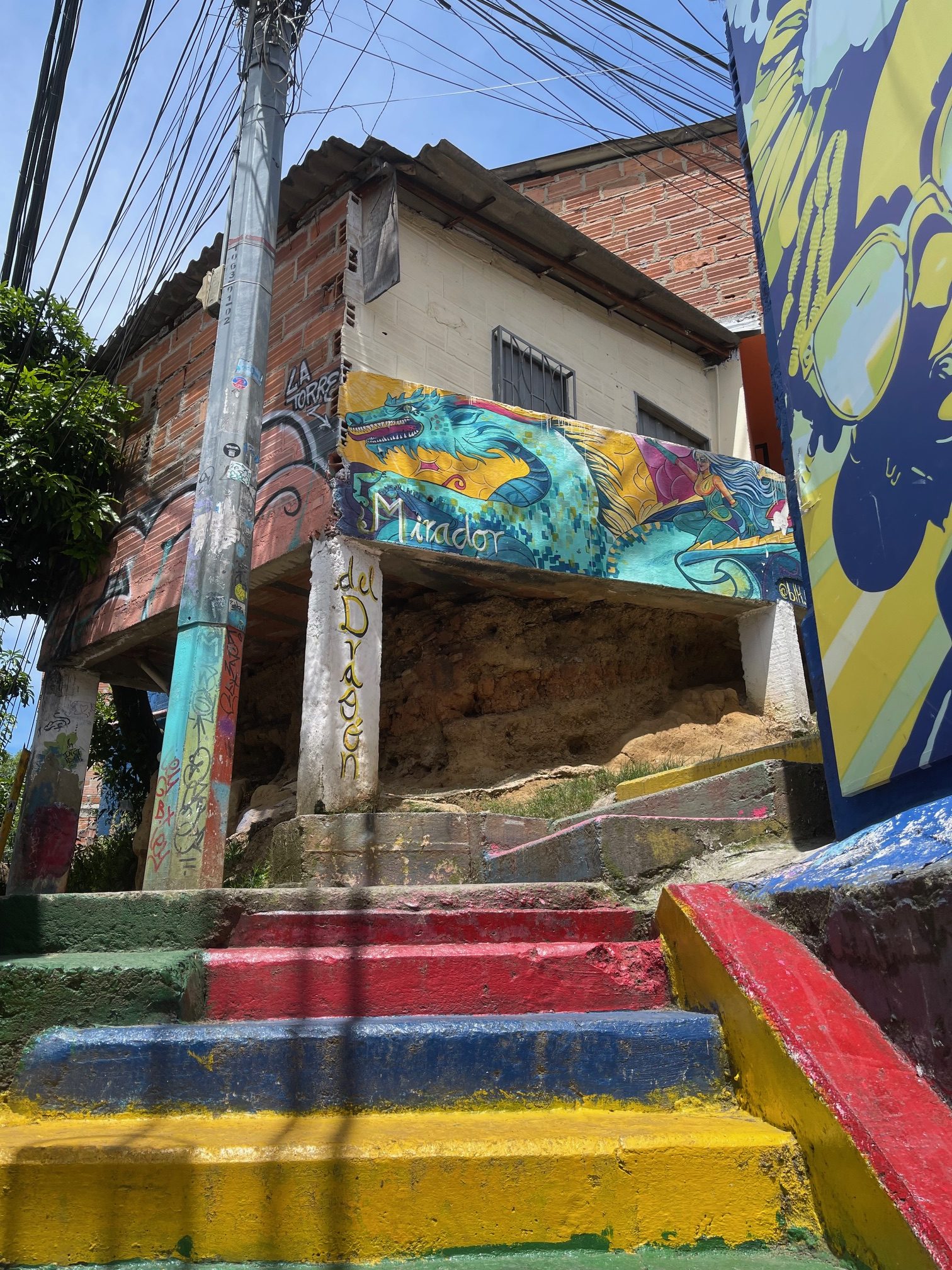
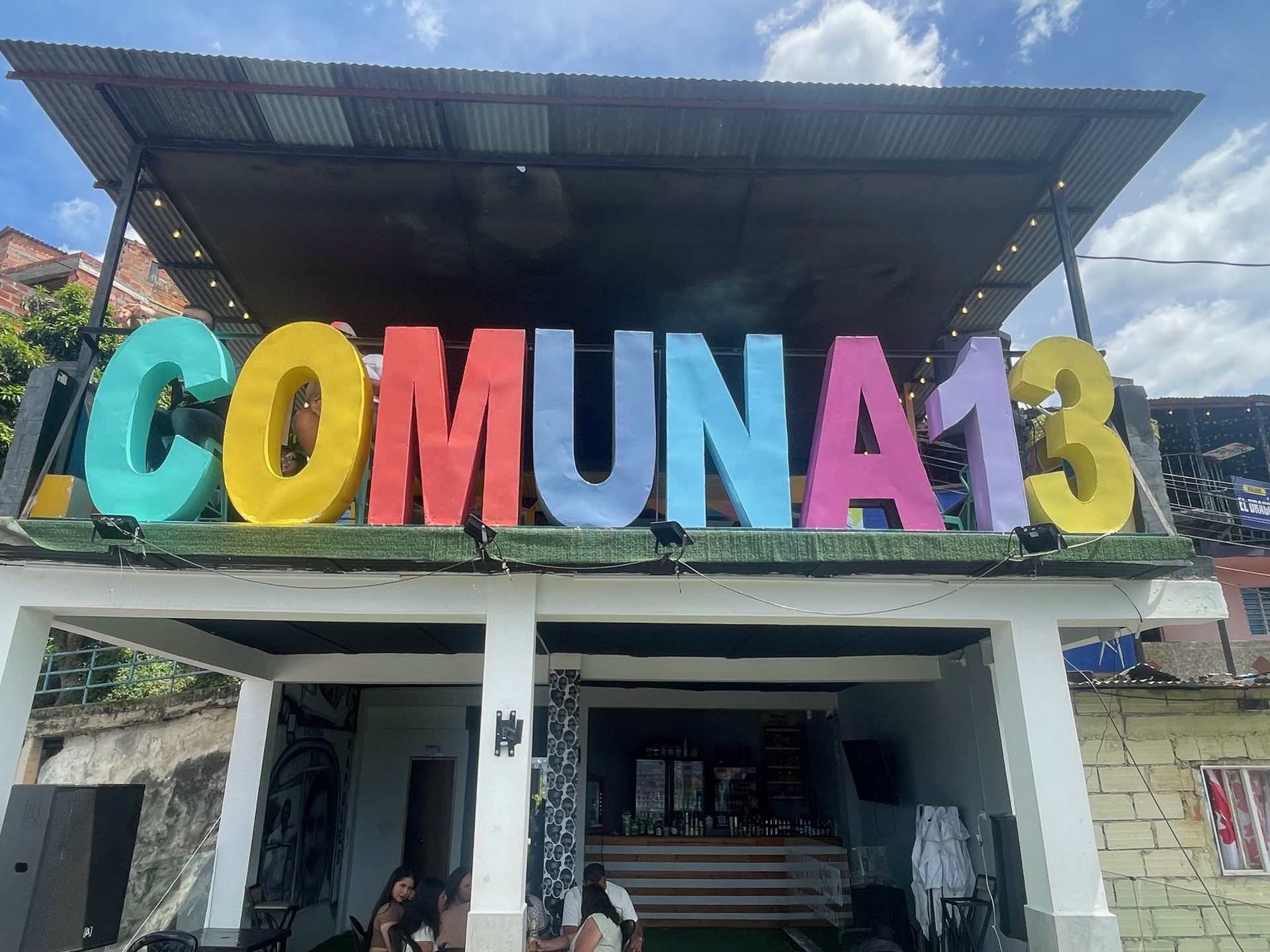
The tour itself was pretty cool. Our tour guide spent some time in the beginning sharing history about Comuna 13 and what it was like for him growing up in the area. He told us that Comuna 13 used to be ridden with gangs and cartels in the 1980s and 90s, and consequently was a very dangerous area to grow up in. He shared how, as a child, he was forced to transport drugs on his bicycle between cartel members, and was once even shot in the back a few times! Comuna 13 has transformed into a much safer place nowadays, with vibrant murals and graffiti covering the walls as symbols of reclamation and resilience.
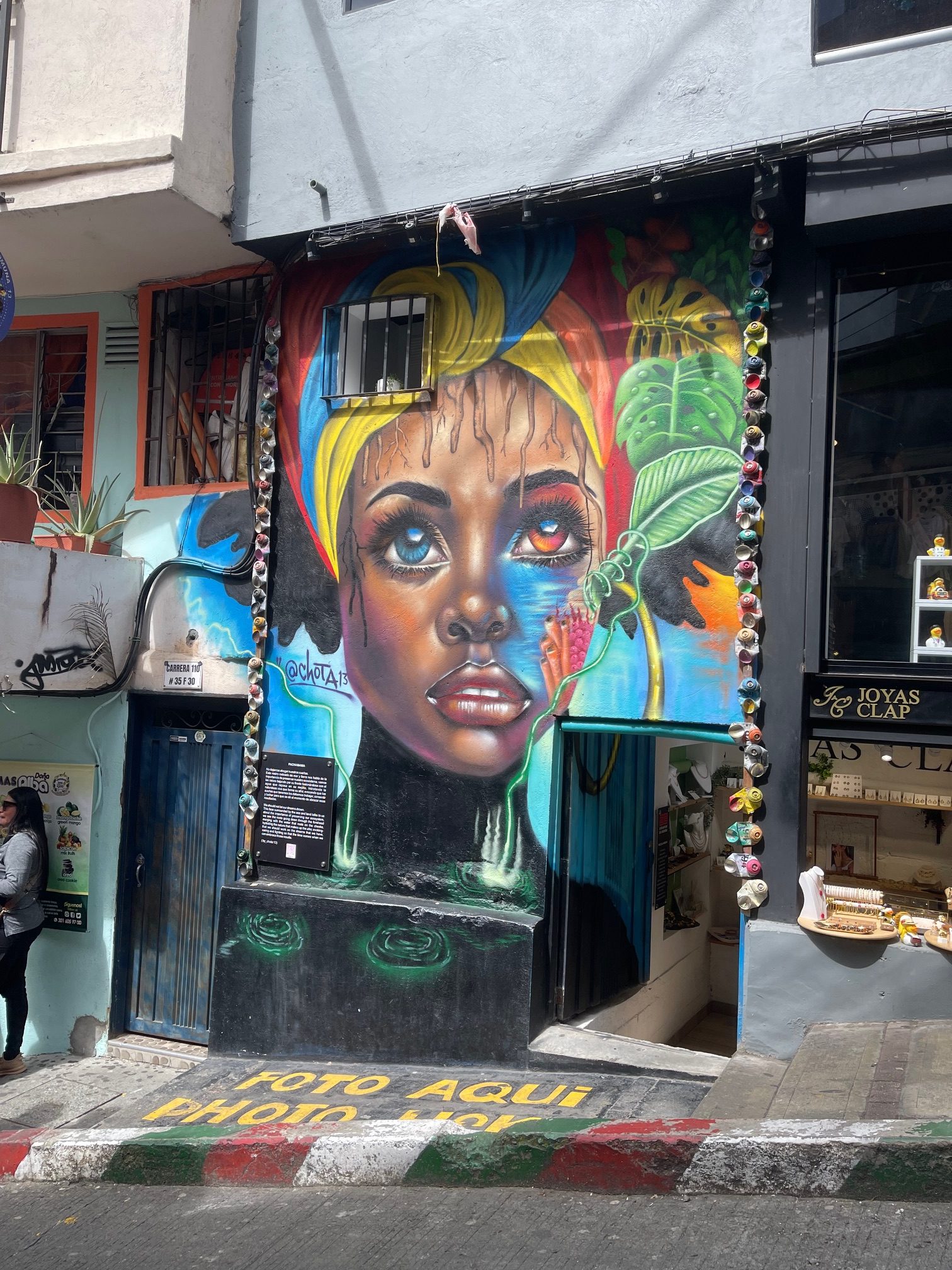
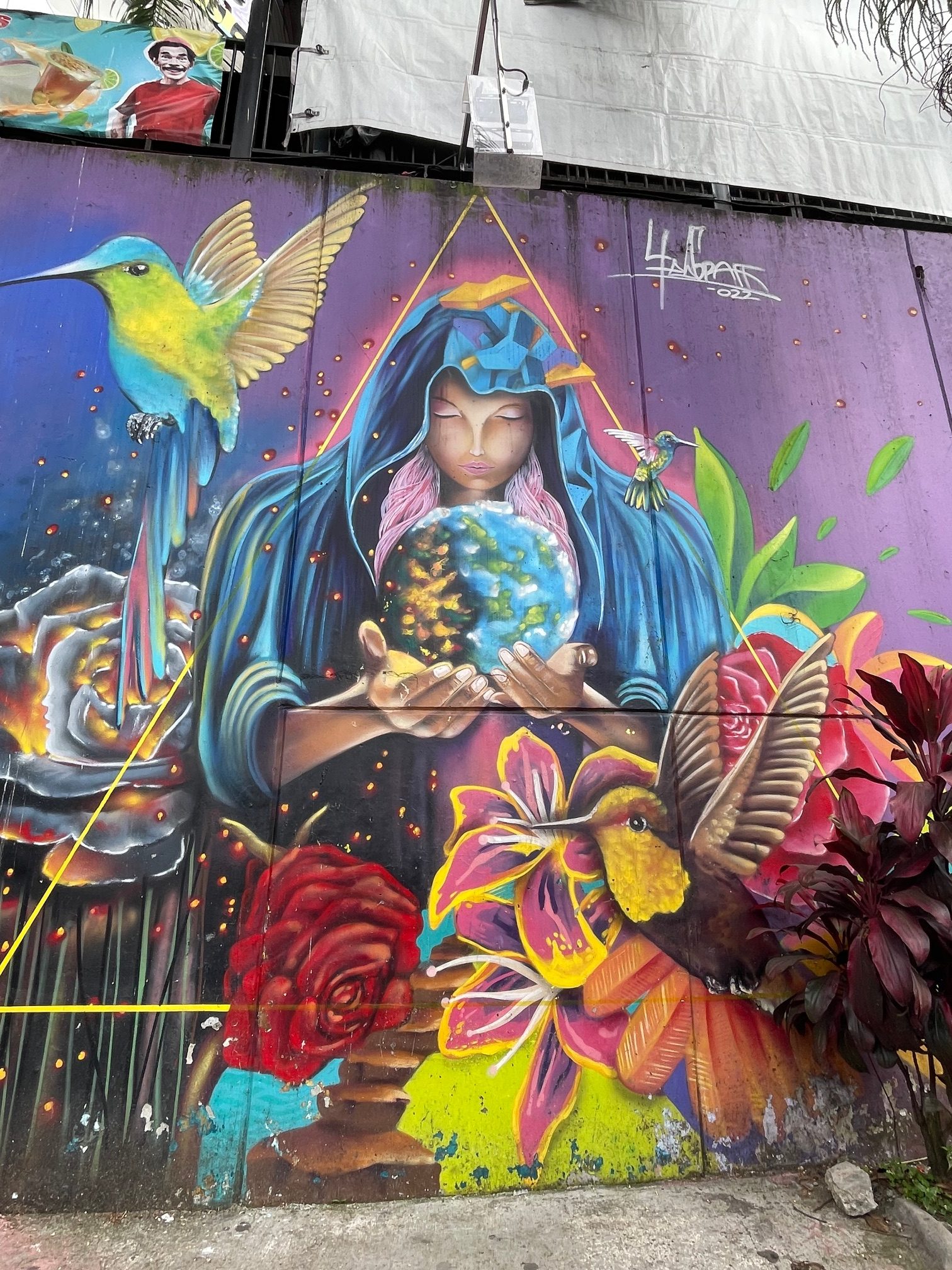
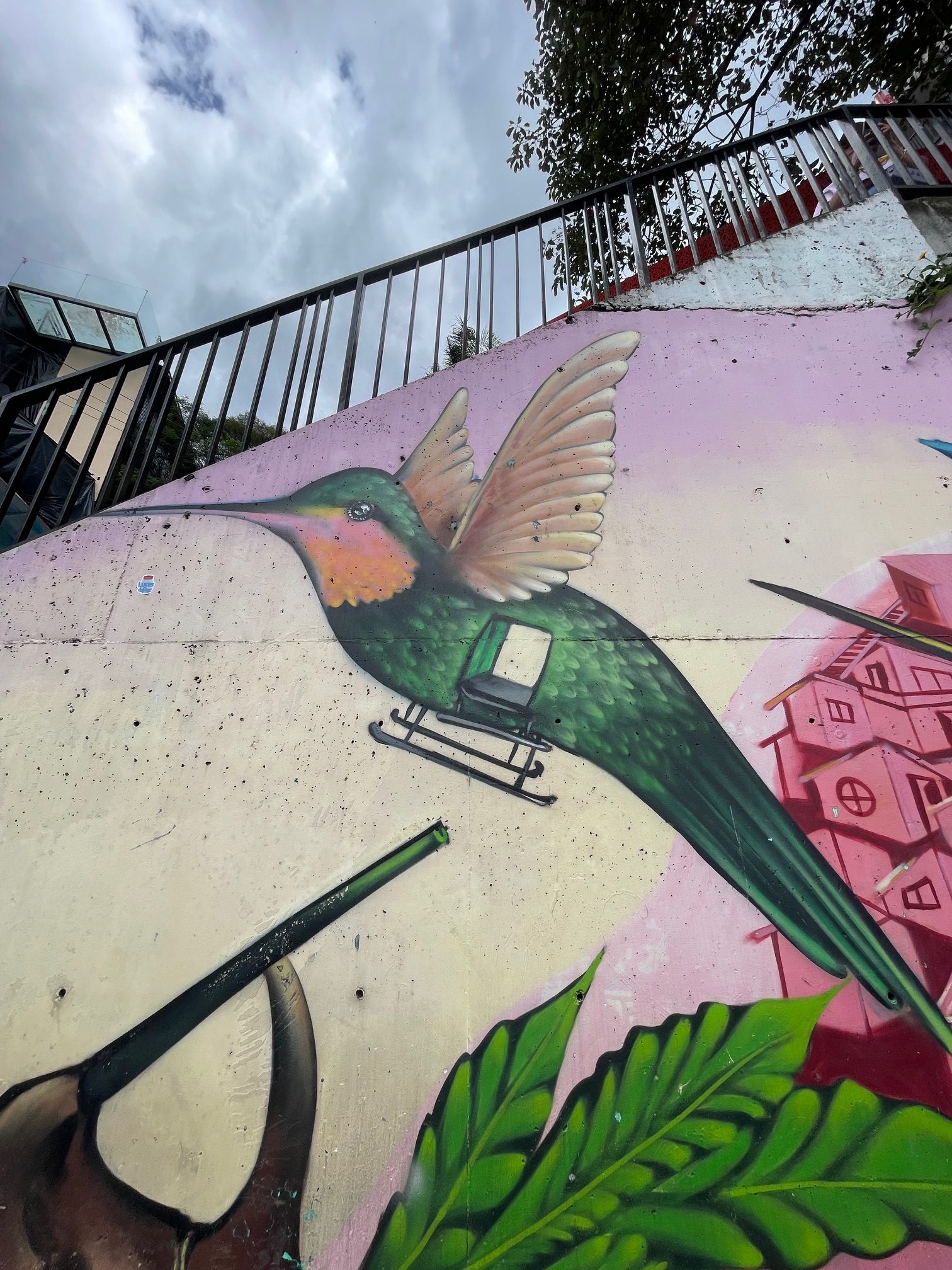
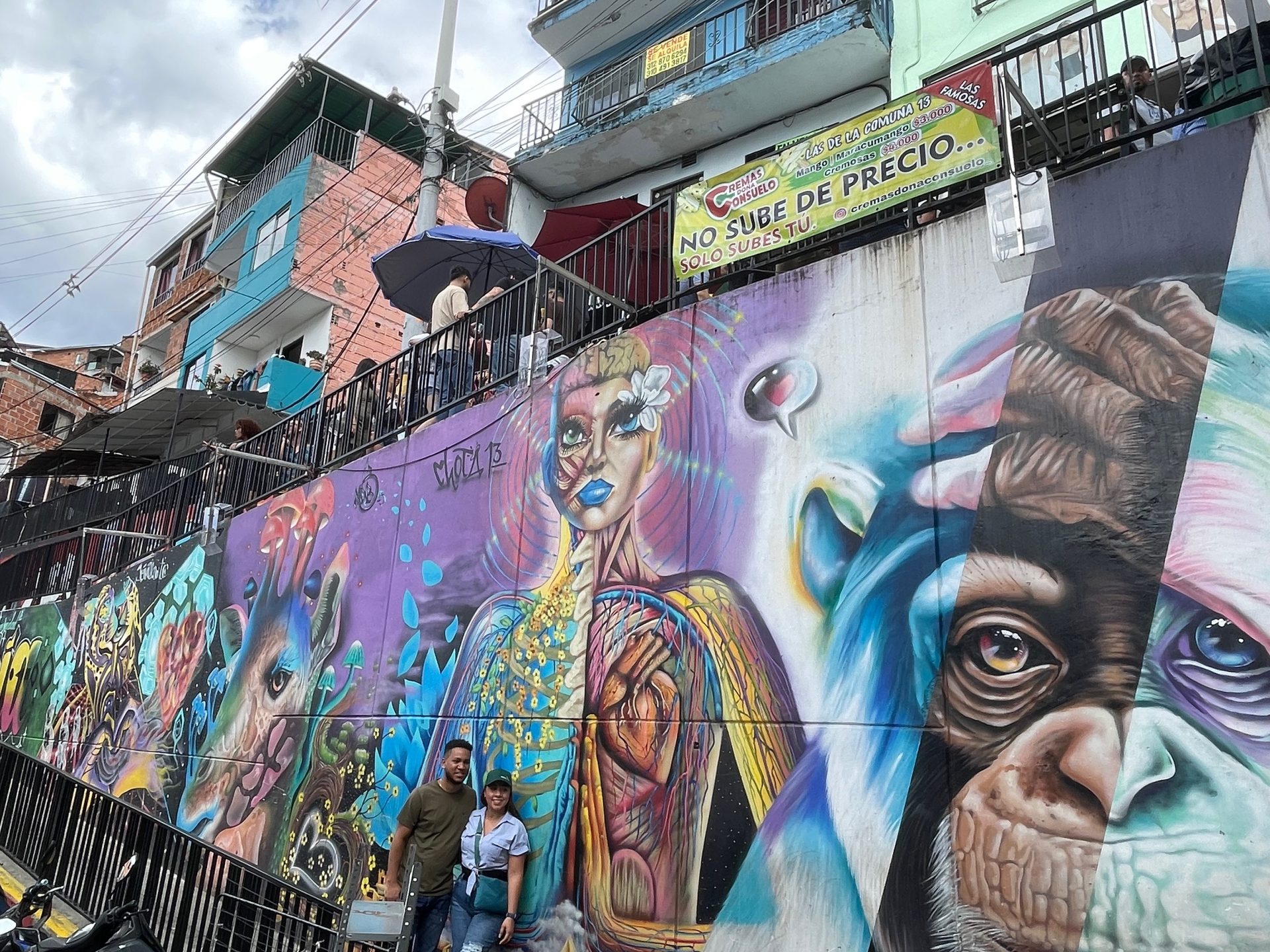
After our tour guide finished his story, we followed him down the narrow side streets of the neighborhood and stopped at a few small vendors for some local foods. We tried Colombian empanadas and sausage, patacones con hogao (which was essentially a fried plaintain, similar to tostones, with a tomato-onion sauce on top), and salted mango ice cream (which was more like a popsicle).
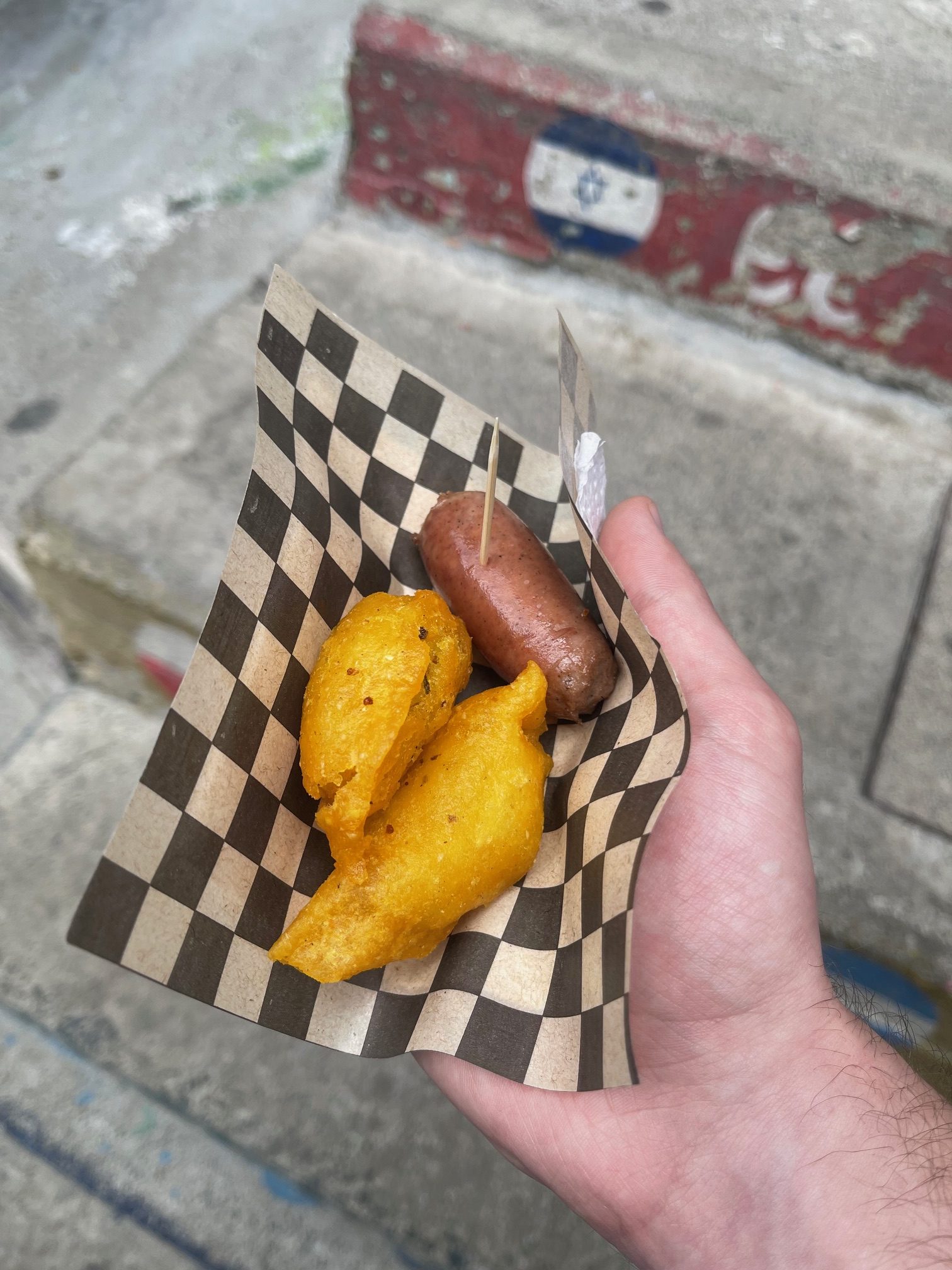
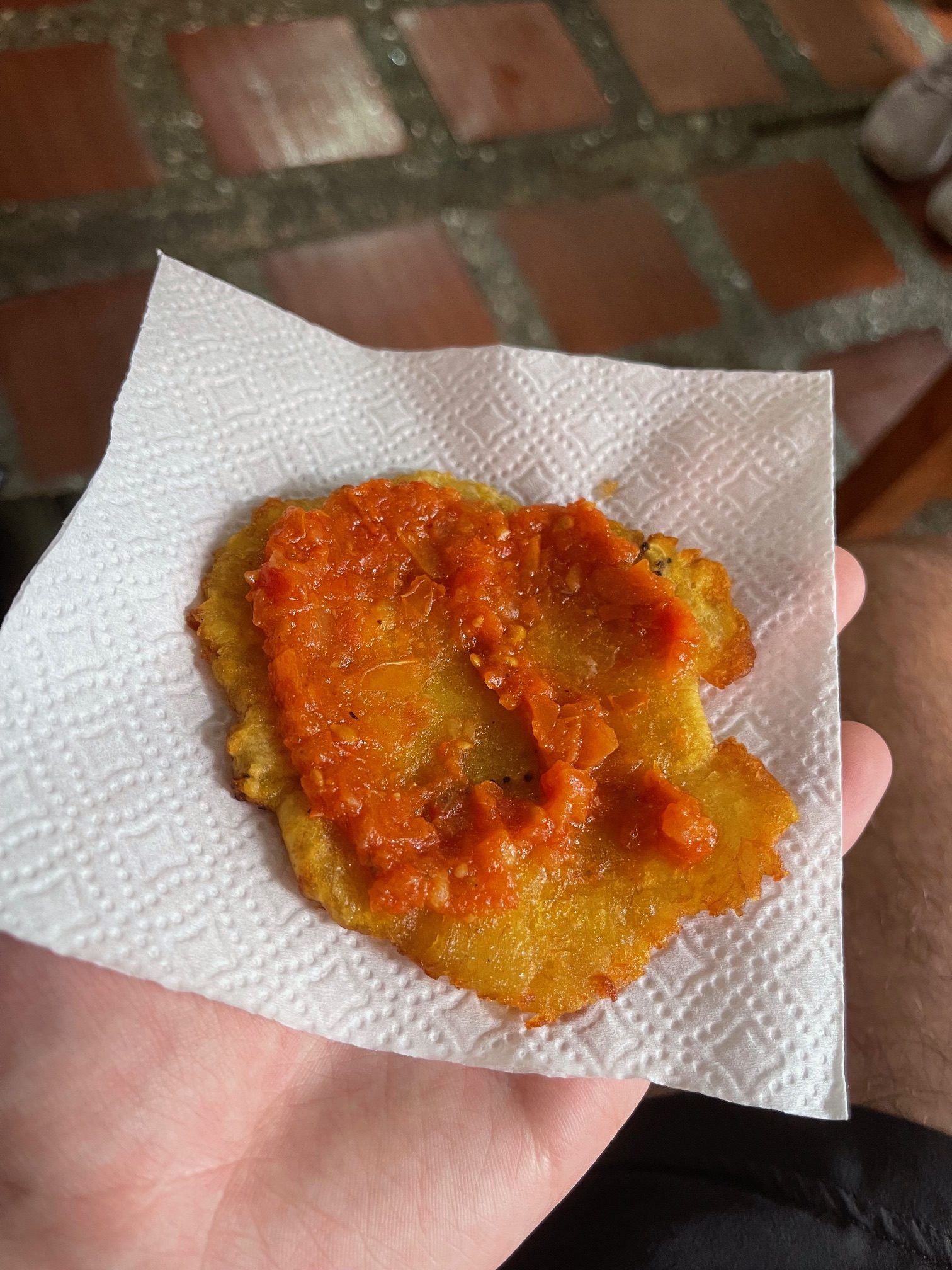
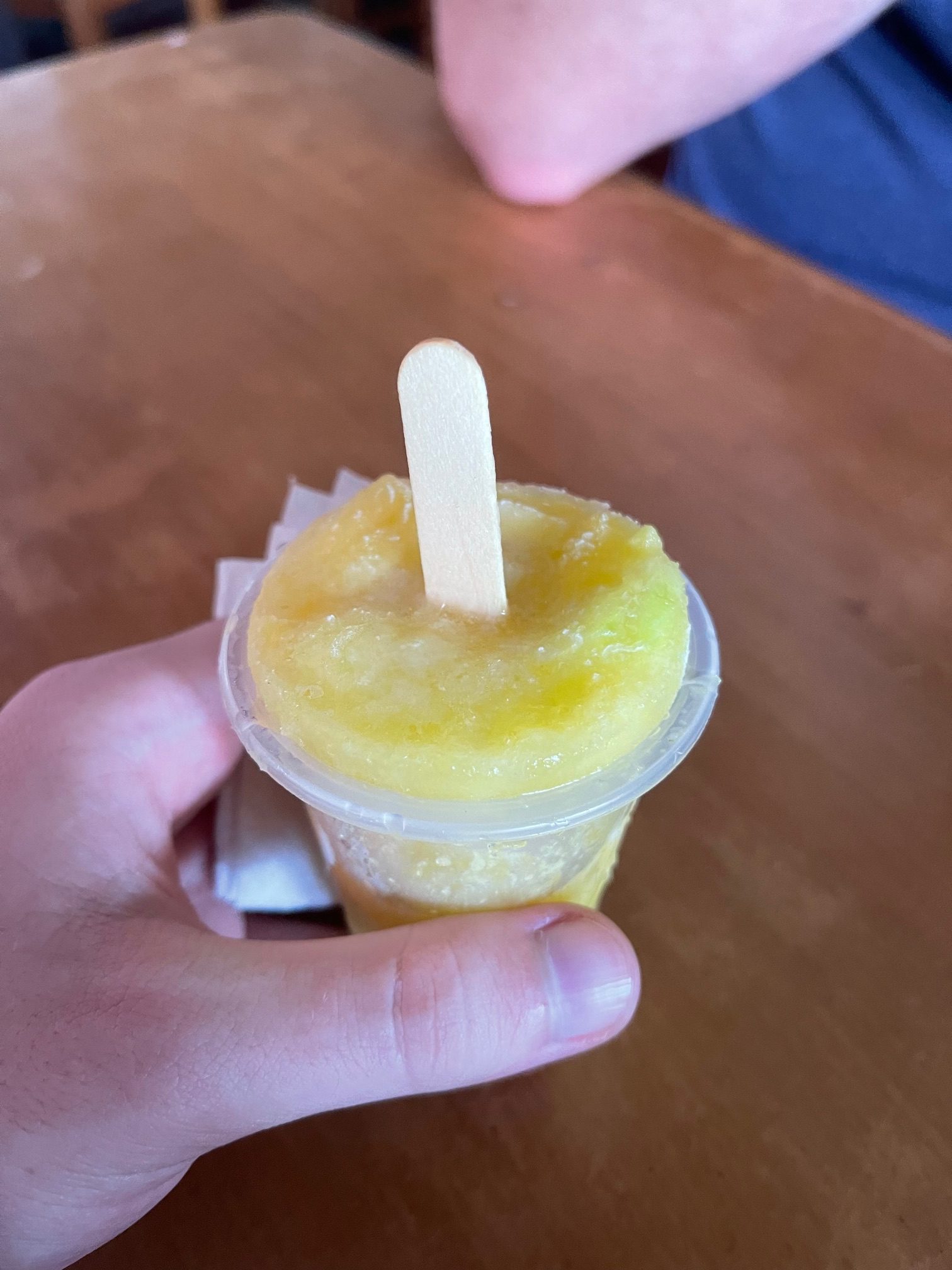
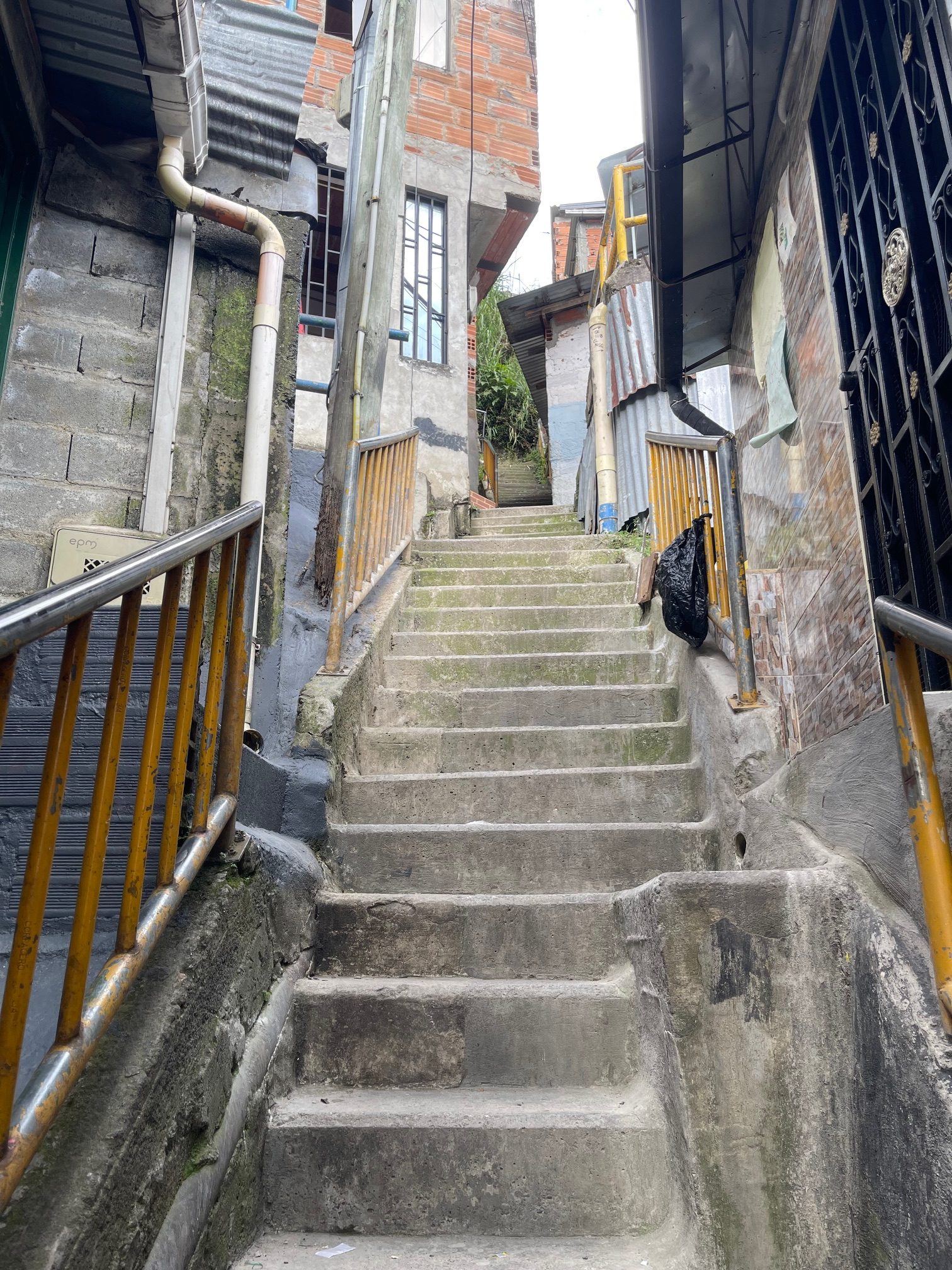
The tour took us down a few more narrow alleys, up and down large sets of stairs, and past the homes of many who currently live in the Comuna 13 neighborhood. It was kinda crazy being able to just look into someone's living room or bedroom from out in the open. But the way the houses are built along the hillside, there really isn't much room for privacy.
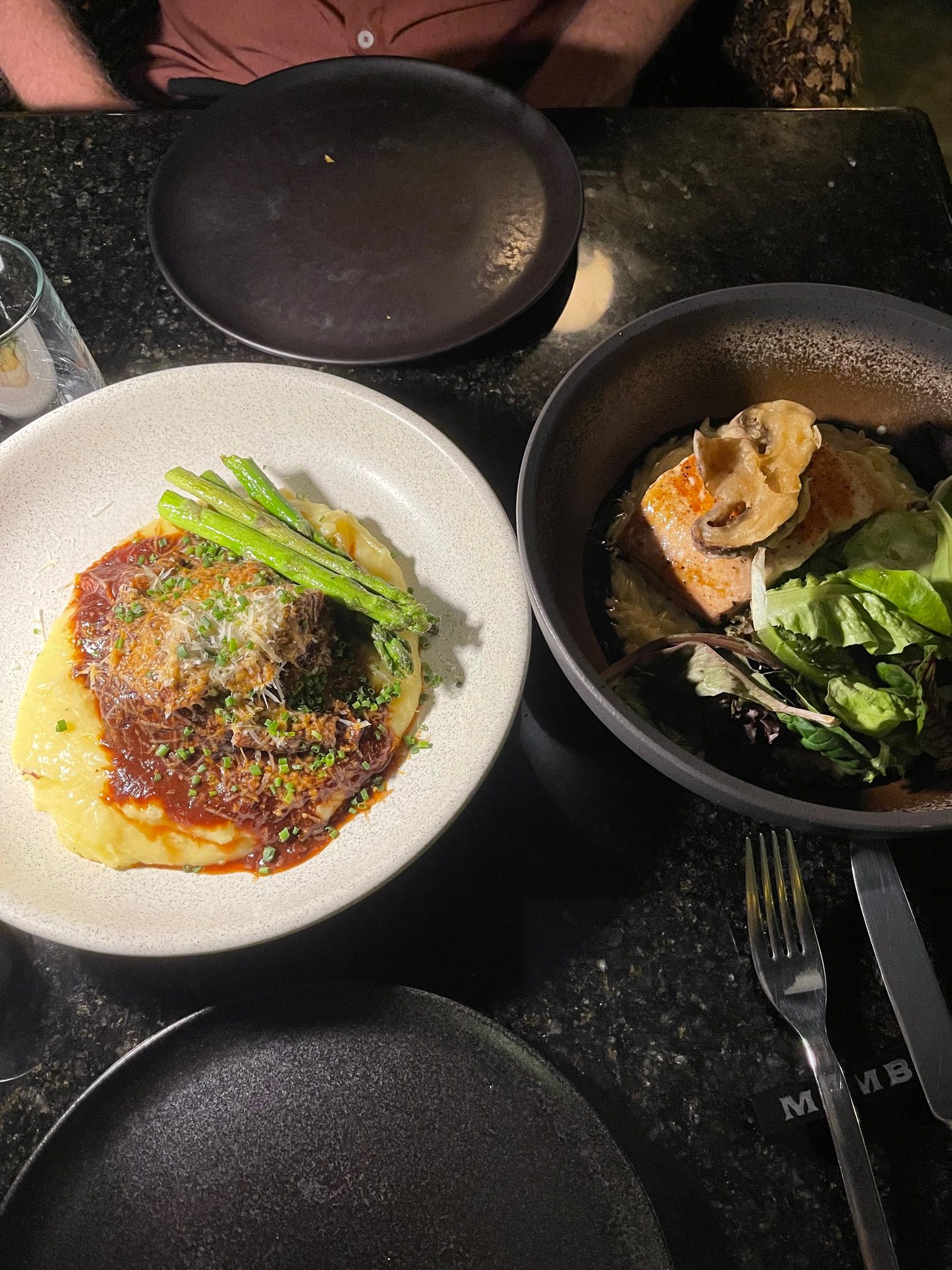
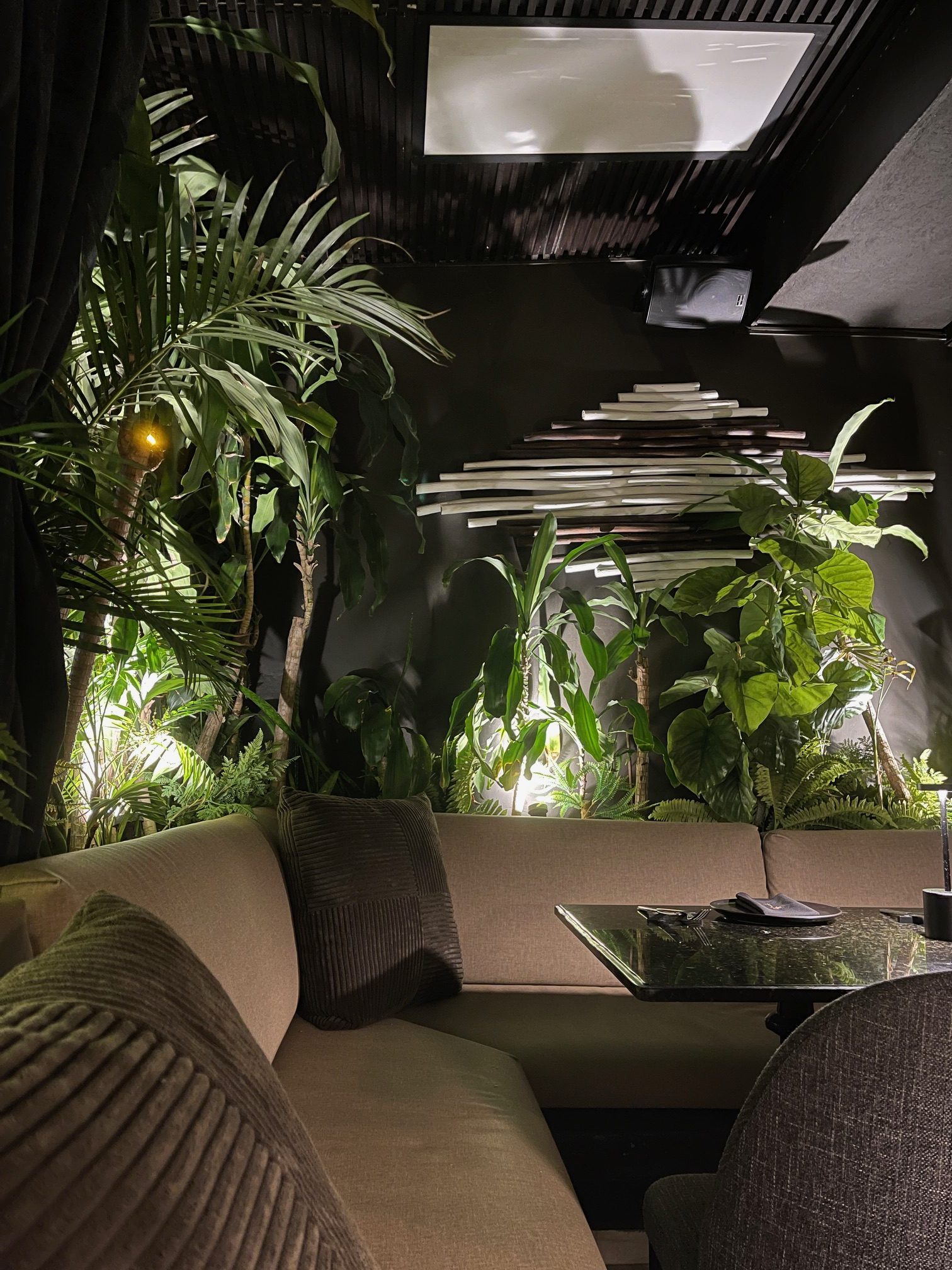
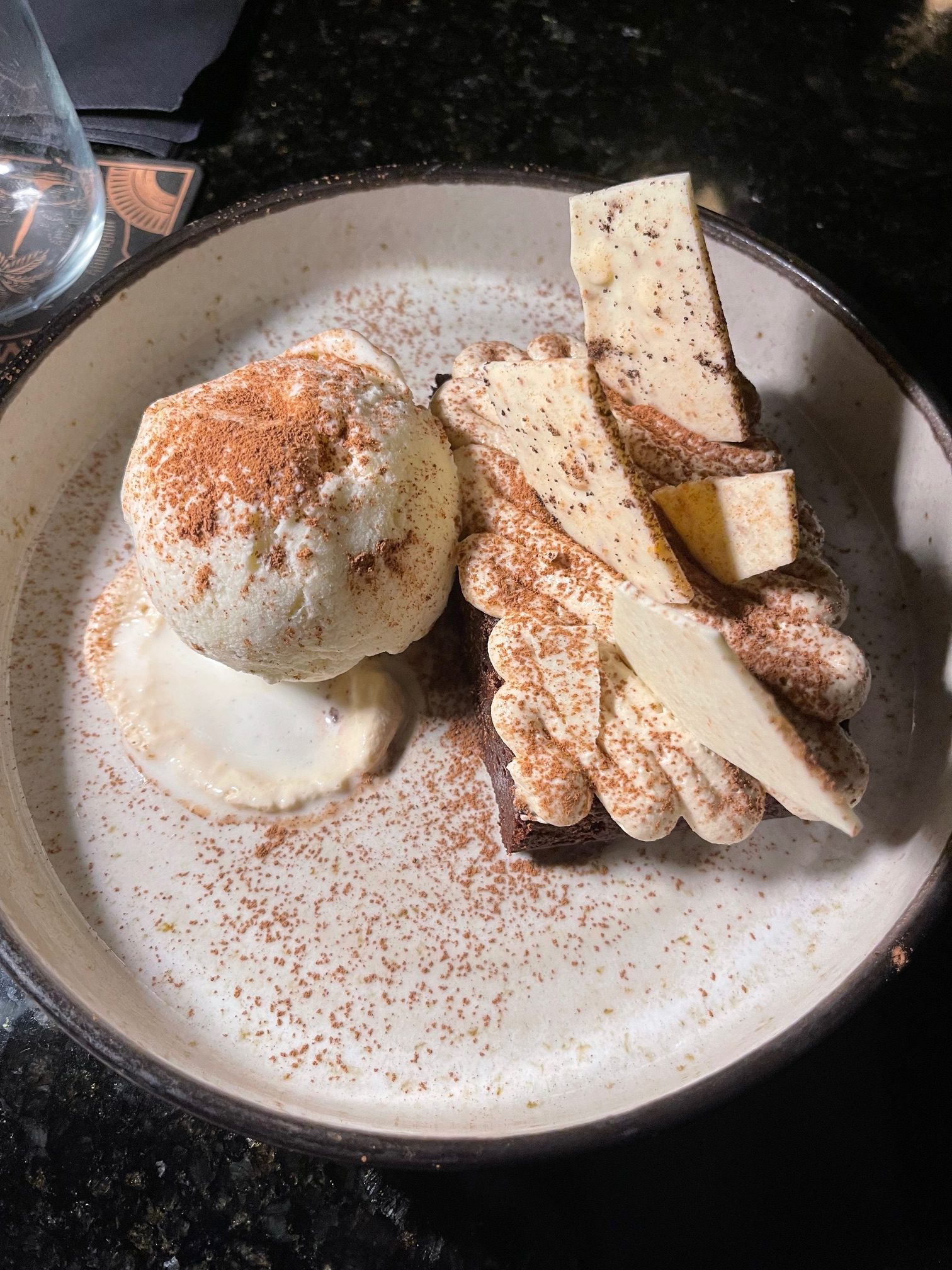
After the tour, my dad and I ended the night back in El Poblado, near the hotel, and enjoyed a solid meal at a restaurant called Mombasa. The food was tasty - we shared a braised morrillo beef dish and a piece of salmon, and had a chocolate brownie with ice cream for dessert. The restaurant definitely had an upscale vibe to it, offering a very chic atmosphere and dining experience.
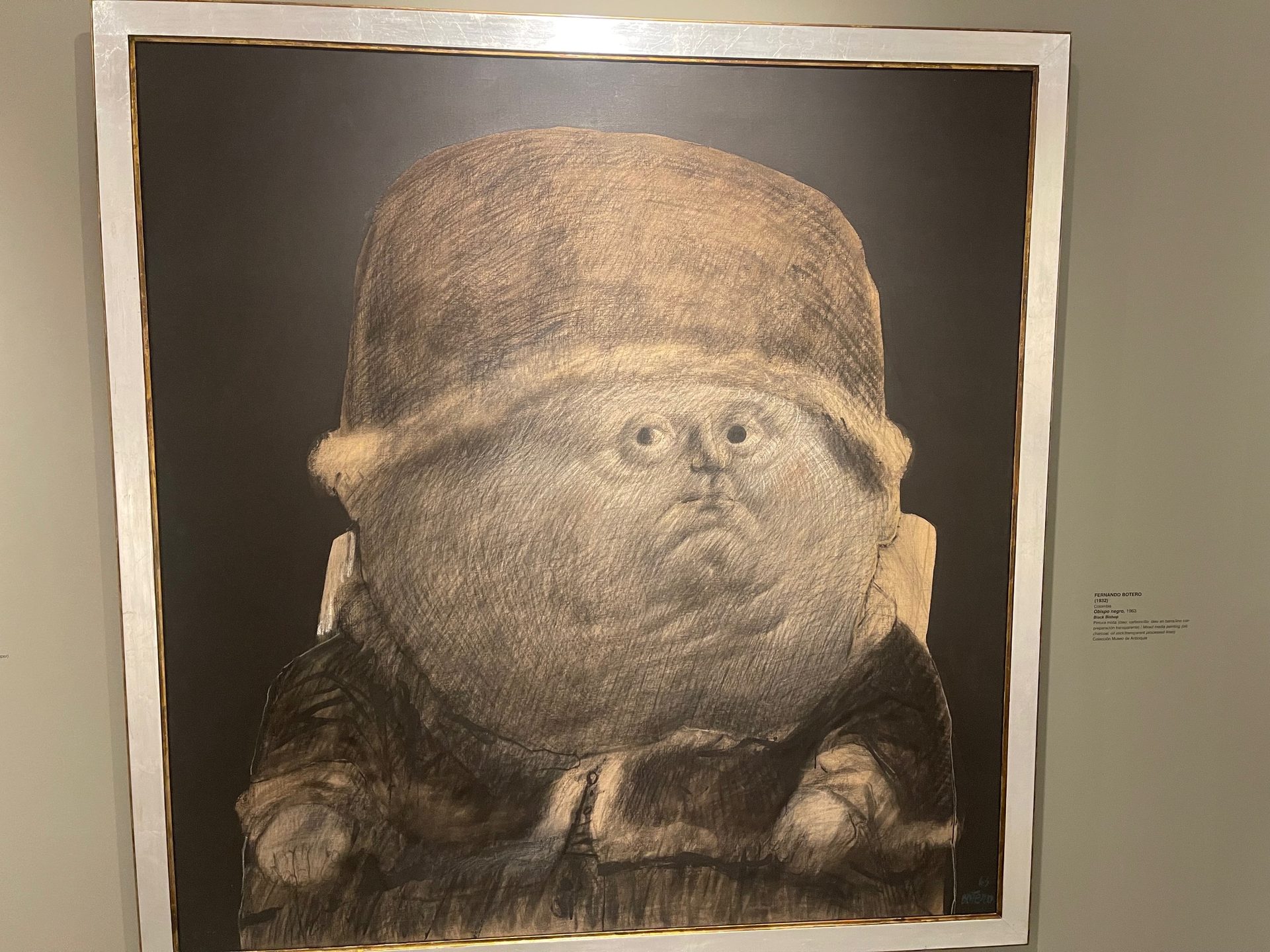
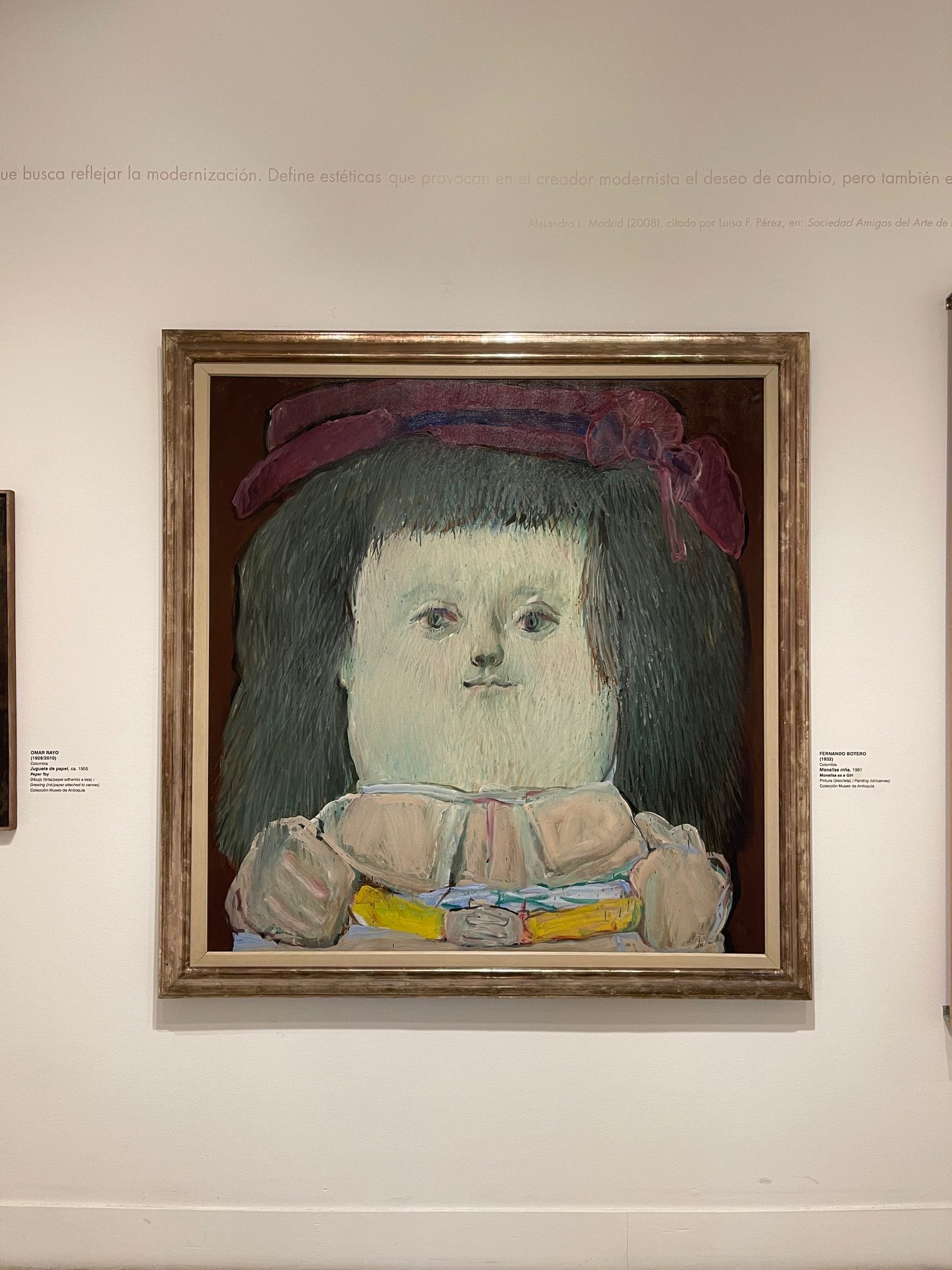
The next day, now Monday, we started with a trip to the Botero Plaza. Fernando Botero was Colombian painter and sculptor best known for his works featuring exaggeratedly large people and figures. There were dozens of his sculptures spread out throughout the plaza, and a large art museum (Museo de Antioquia) that housed a collection of his paintings and those of numerous other artists from around the world.
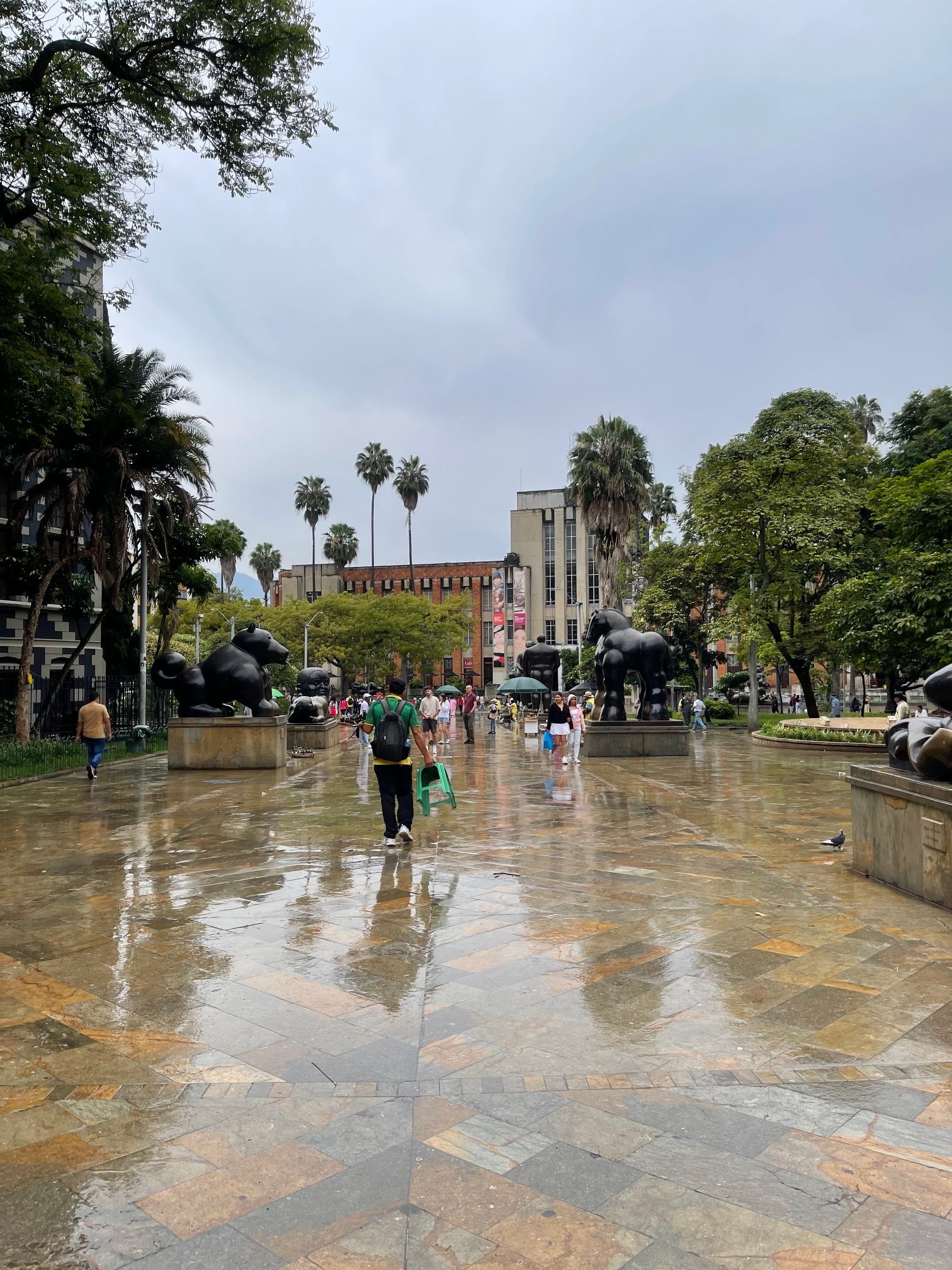
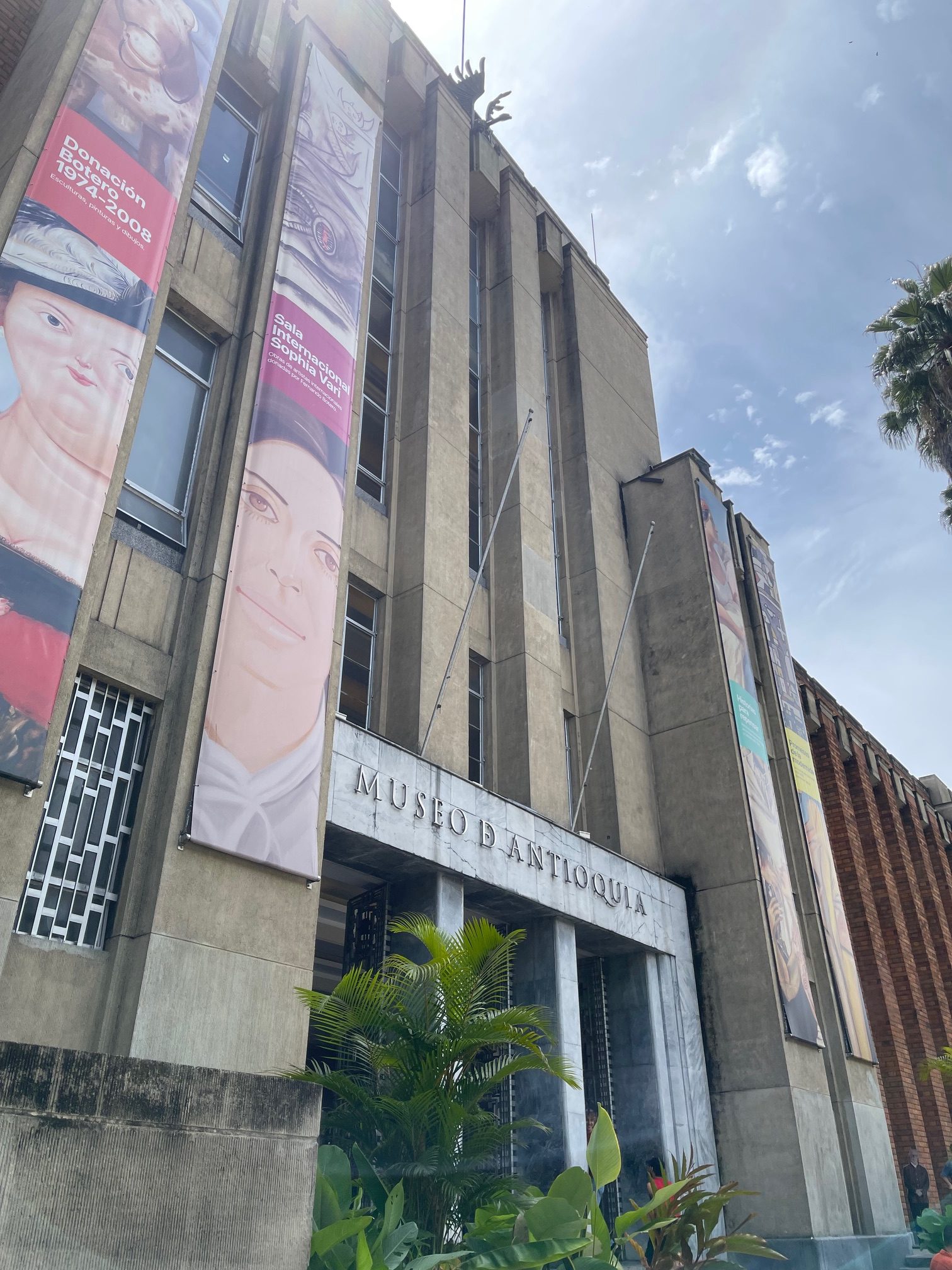
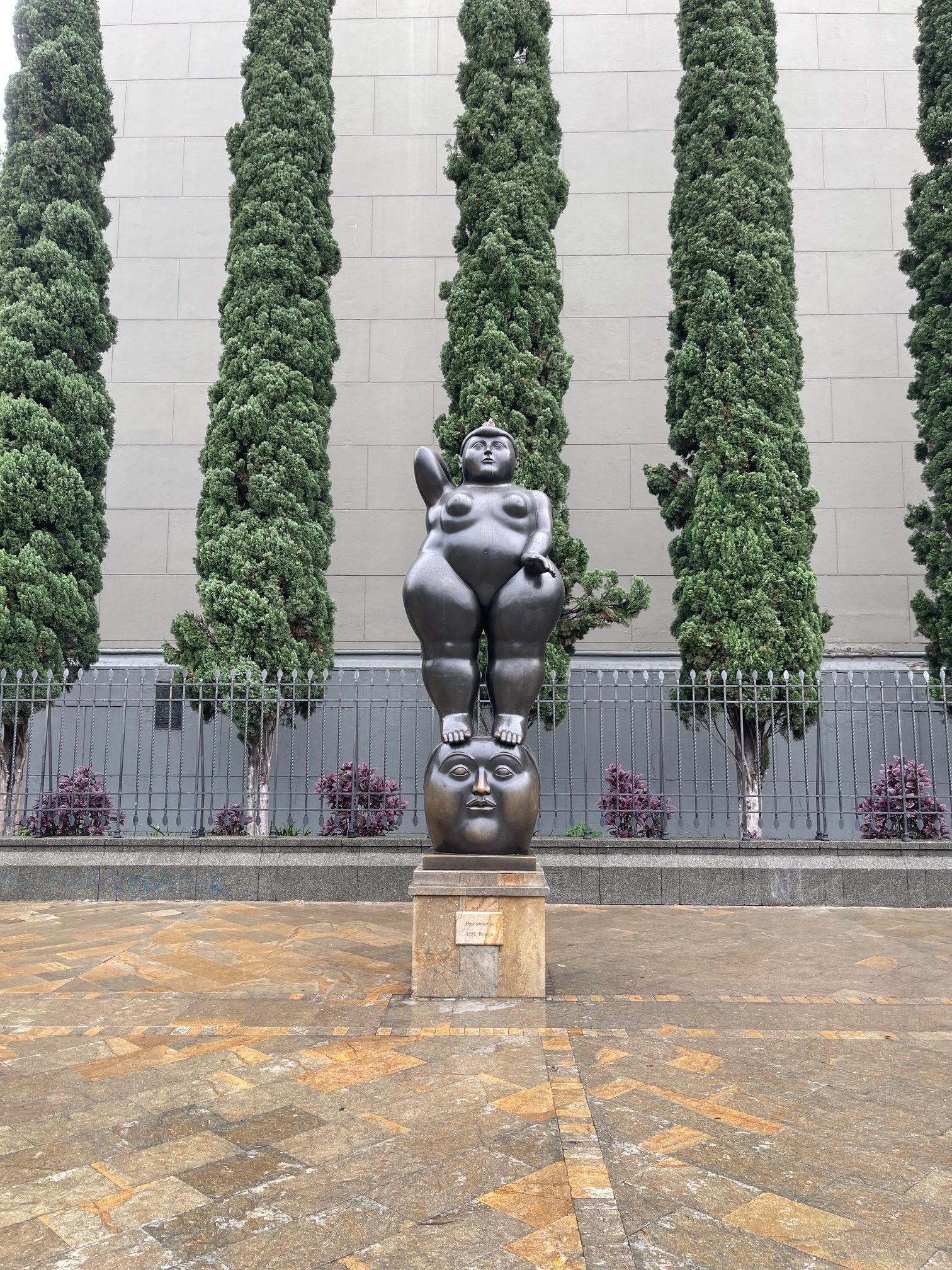
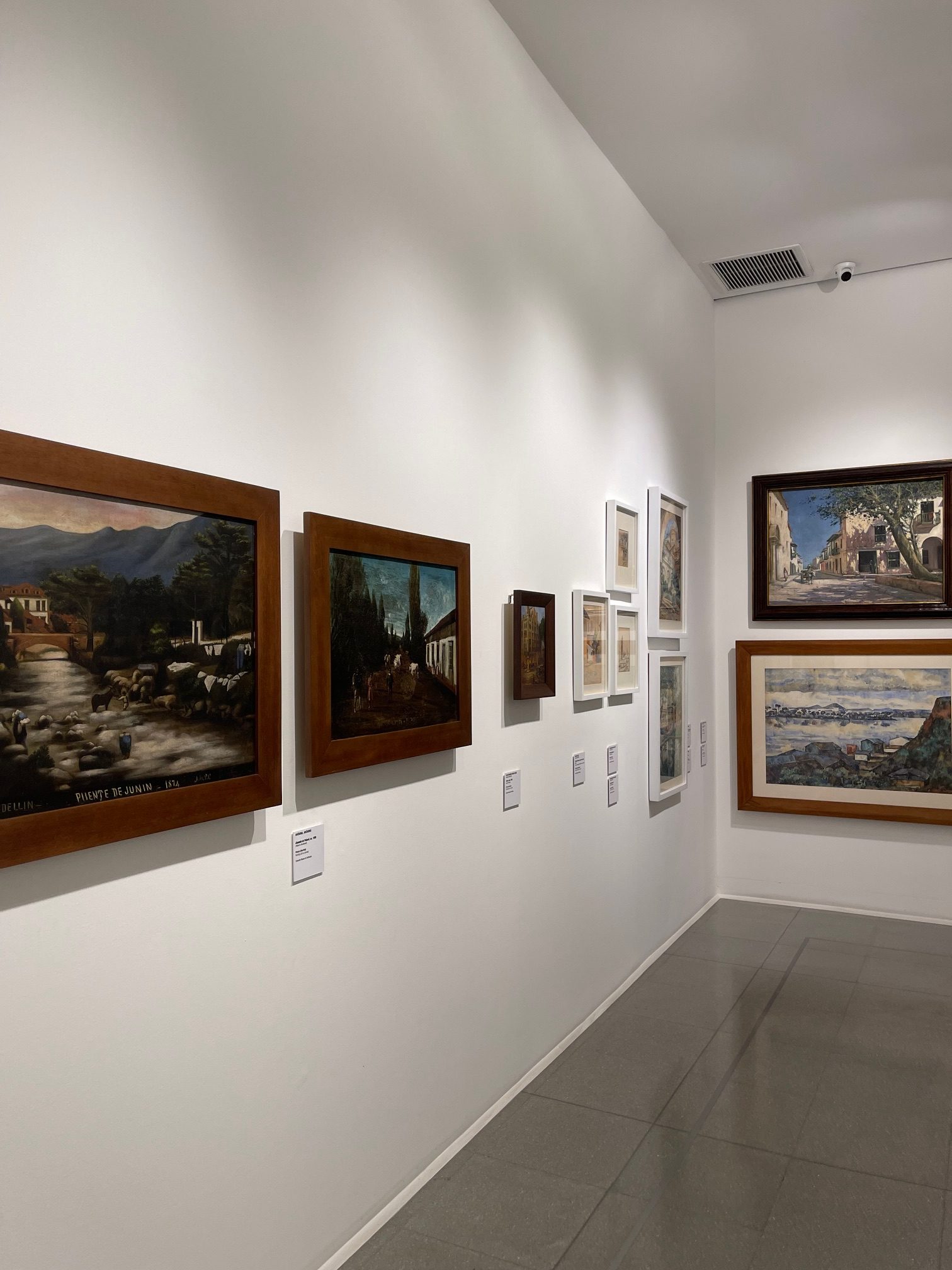
Aside from the Botero pieces, which you could not miss if you tried, I really appreciated one in particular about the American presence in Vietnam in the 1970s. I thought the way the artist conveyed their message across the three panels was very clever and unique.
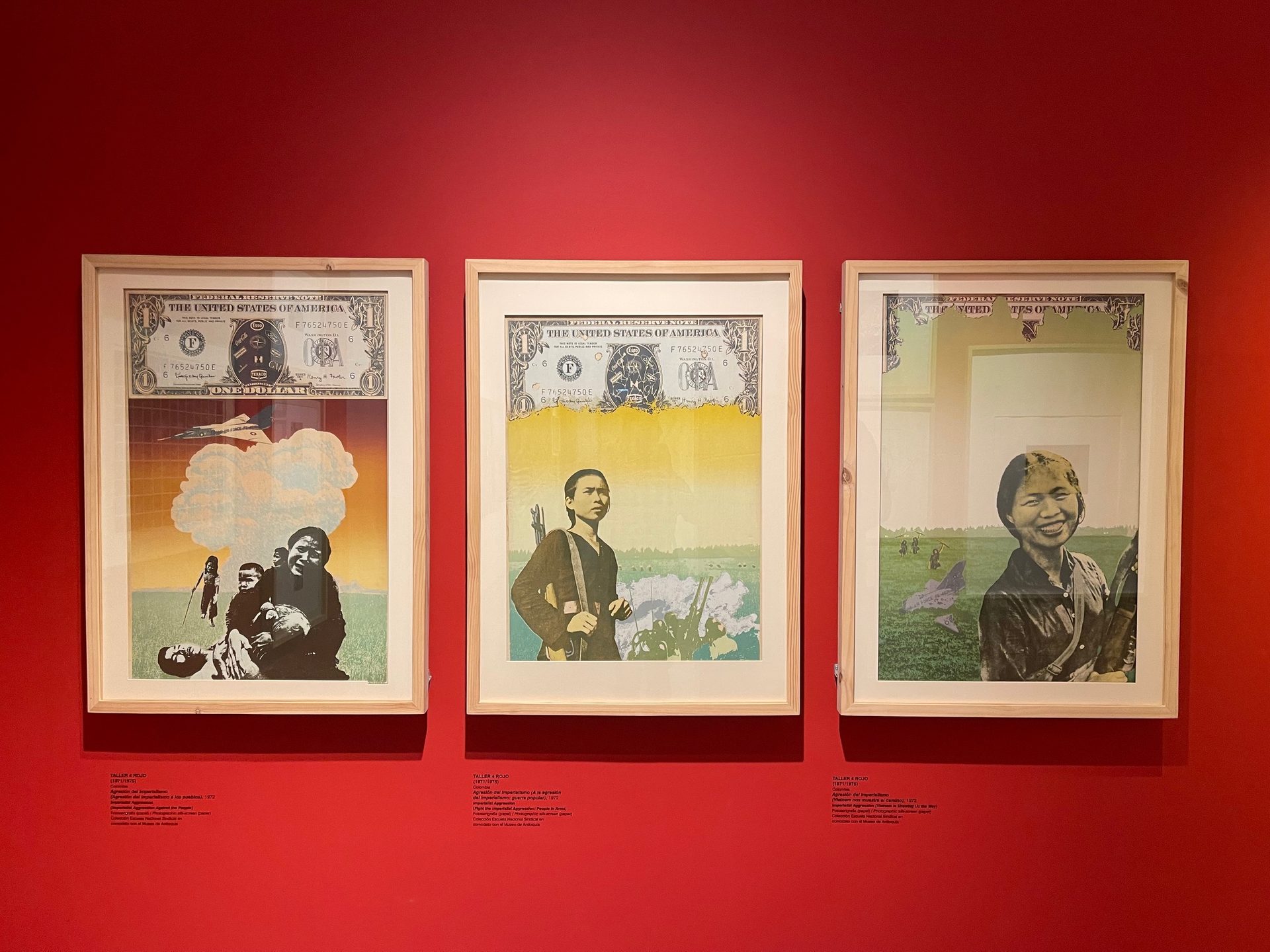
At one point in the museum, one of the curators started talking to me in Spanish. I surprisingly held my own. Although it was fairly basic conversation, and wasn't at all perfect, I was definitely proud of myself given how long it had been since I've practiced speaking. I just wish I had challenged myself to practice more when I was taking Spanish classes every day.
Following our museum visit, I decided I wanted to embark on new mission: riding public transportation. Well, really I just wanted to ride the cable car up the hillside to a nature preserve called Parque Arví. But doing so required navigating the public transportation around the city. We entered at the nearest train station to the museum, but already I had no idea how to get tickets for the metro. Fortunately, a local saw we were having some trouble and was able to communicate to me where to go to purchase a travel card. I had a little less luck understanding the worker at the ticket booth, and I think he also misunderstood what I was trying to ask for. But alas, he loaded up a card with some cash and we were soon aboard the Medellin metro.
What's cool about the metro system there is that, because the city is so hilly, cable cars serve as an extension to the normal train routes. To get to the park, we transferred onto the cable car at Estación Metro Andalucía. From there, it took about 15-20 minutes to reach the entrance to Parque Arví, but the views along the way made the journey worth it. As we climbed higher and higher, we could see out over the whole city, the buildings stretching on and on throughout the valley.
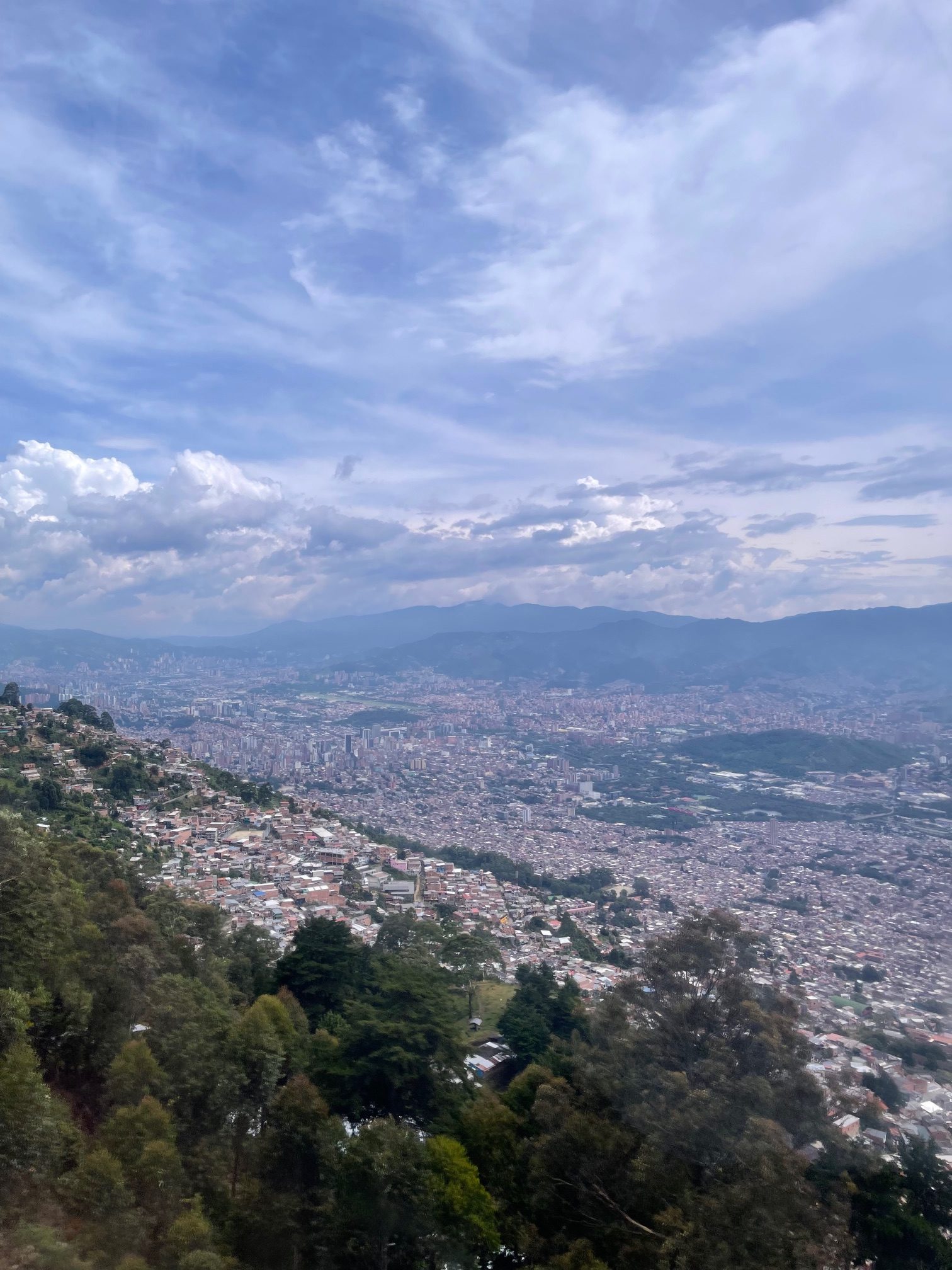
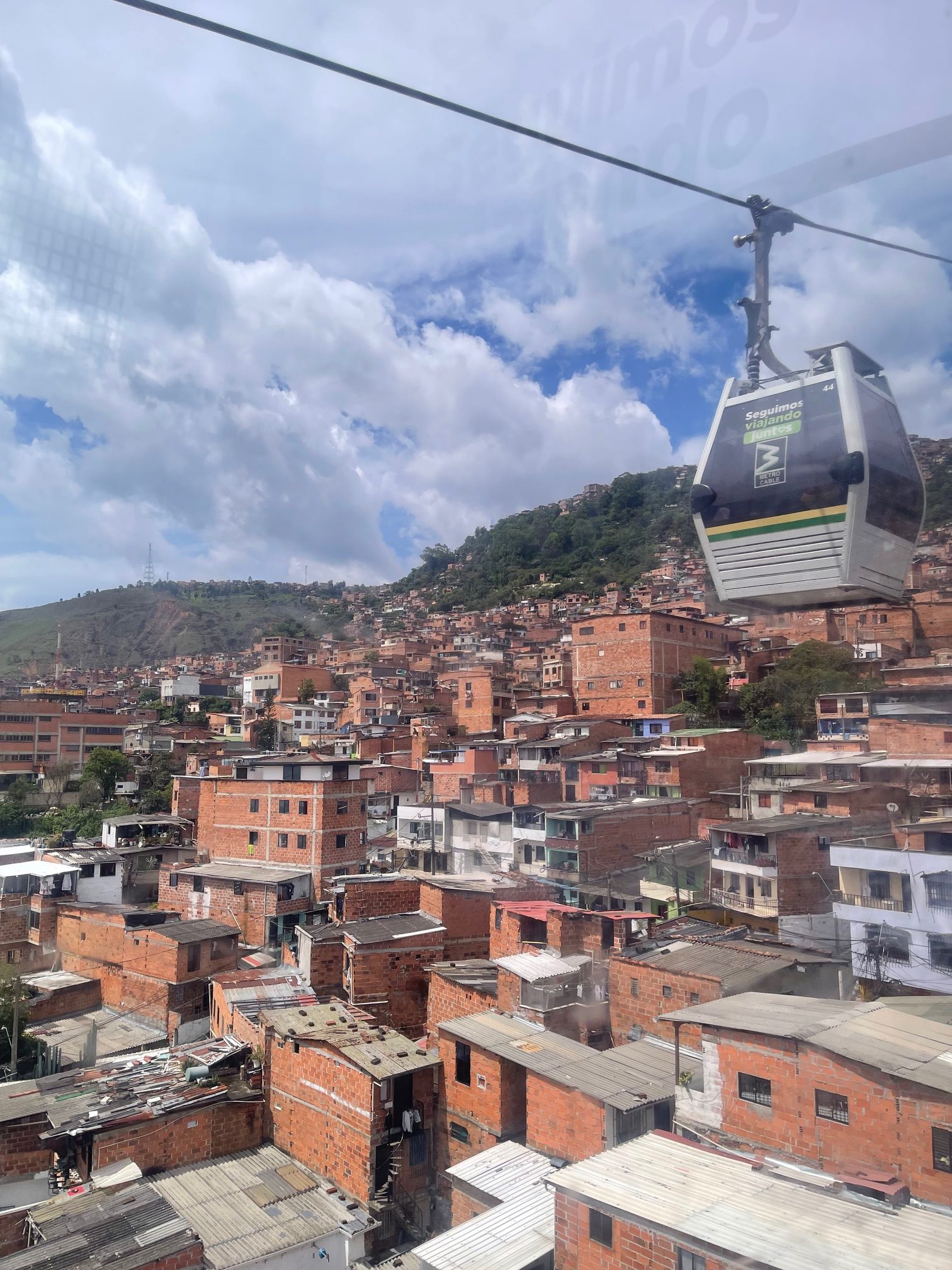
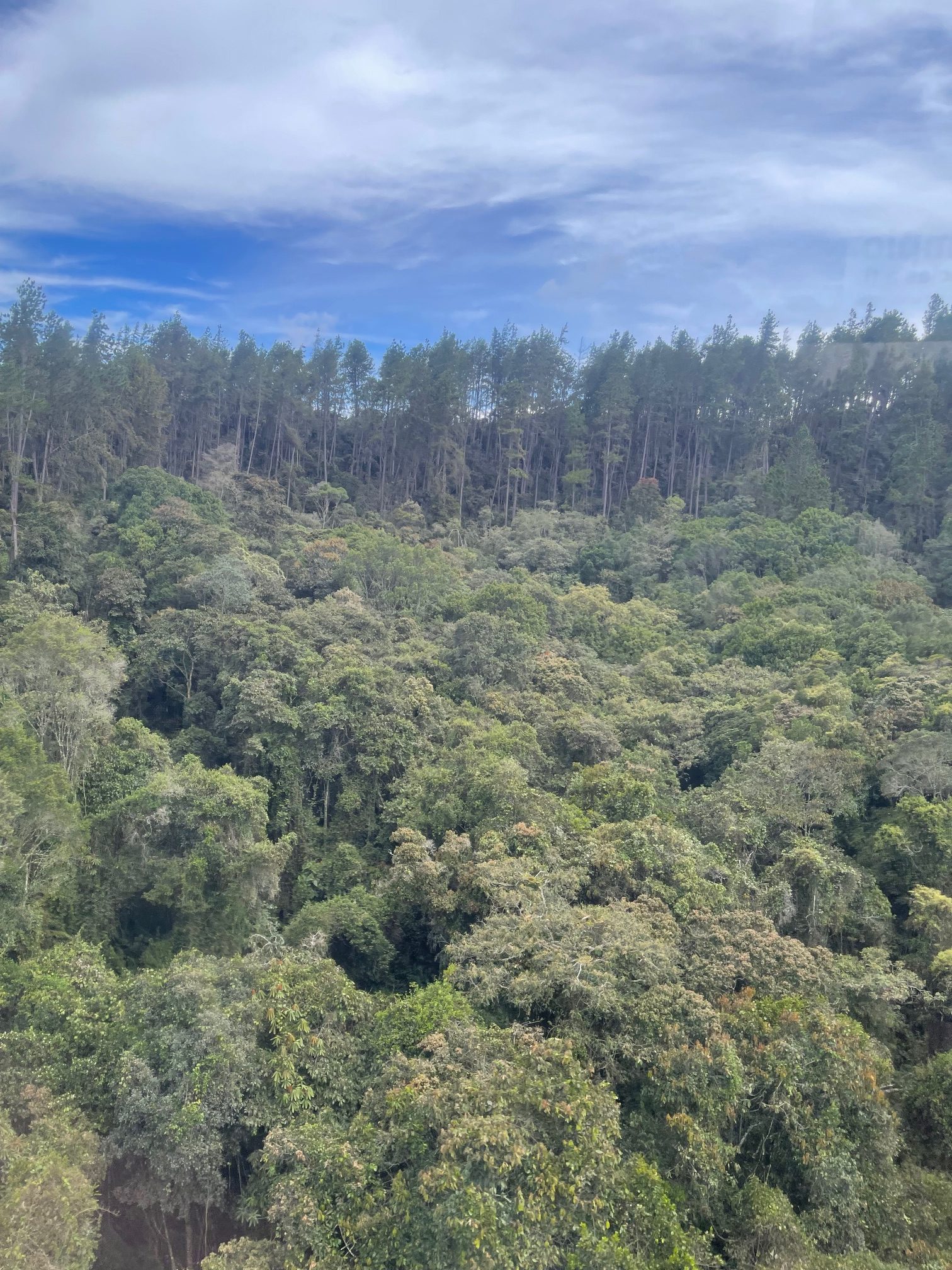
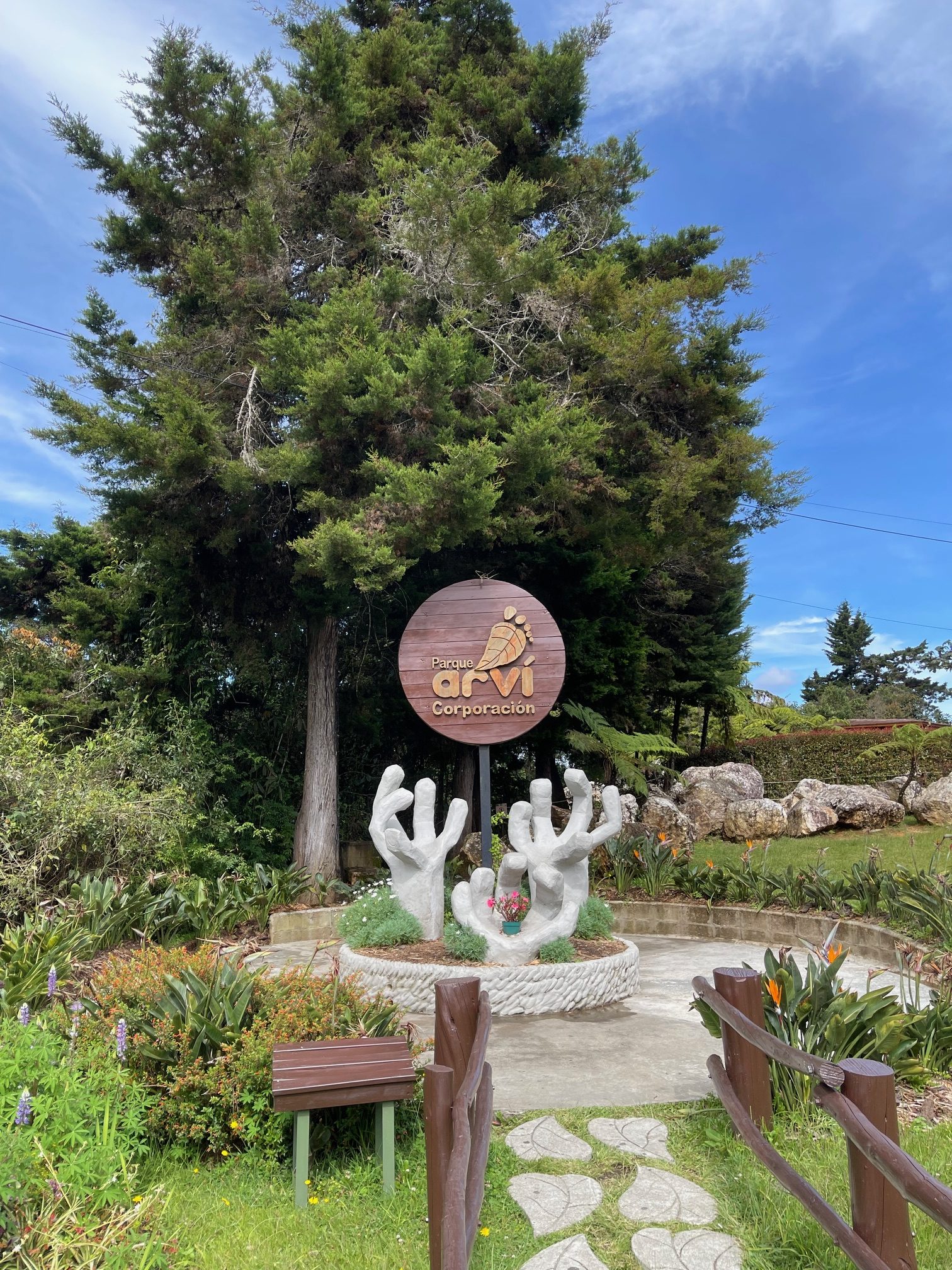
We eventually stopped climbing up and started to travel more horizontally, passing through a lush green forest before arriving at the entrance to the park. Once we got up there, there wasn't actually a whole lot to do (for free). Most of the actual trails within the park required us to pay for a tour. There was, however, a small pavilion area open to the public with some food stands nearby. Since we were both getting hungry for lunch, I ordered us hamburgers in Spanish and we ate under the pavilion. With nothing left to do after that, we just ordered an Uber and made our way back down the mountain. Apparently we passed through some small towns along way, but as is typical, I was asleep for most of the ride.
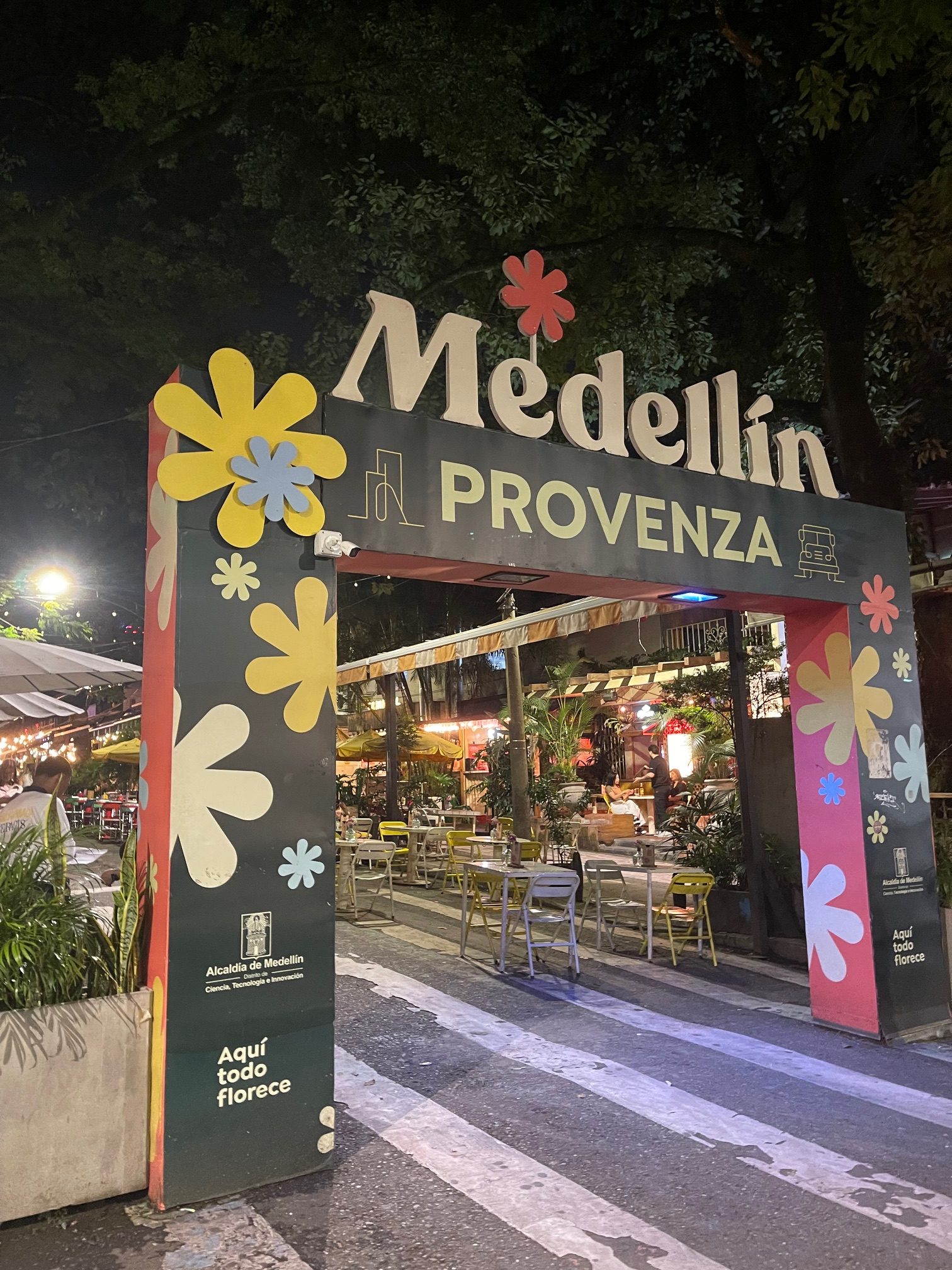
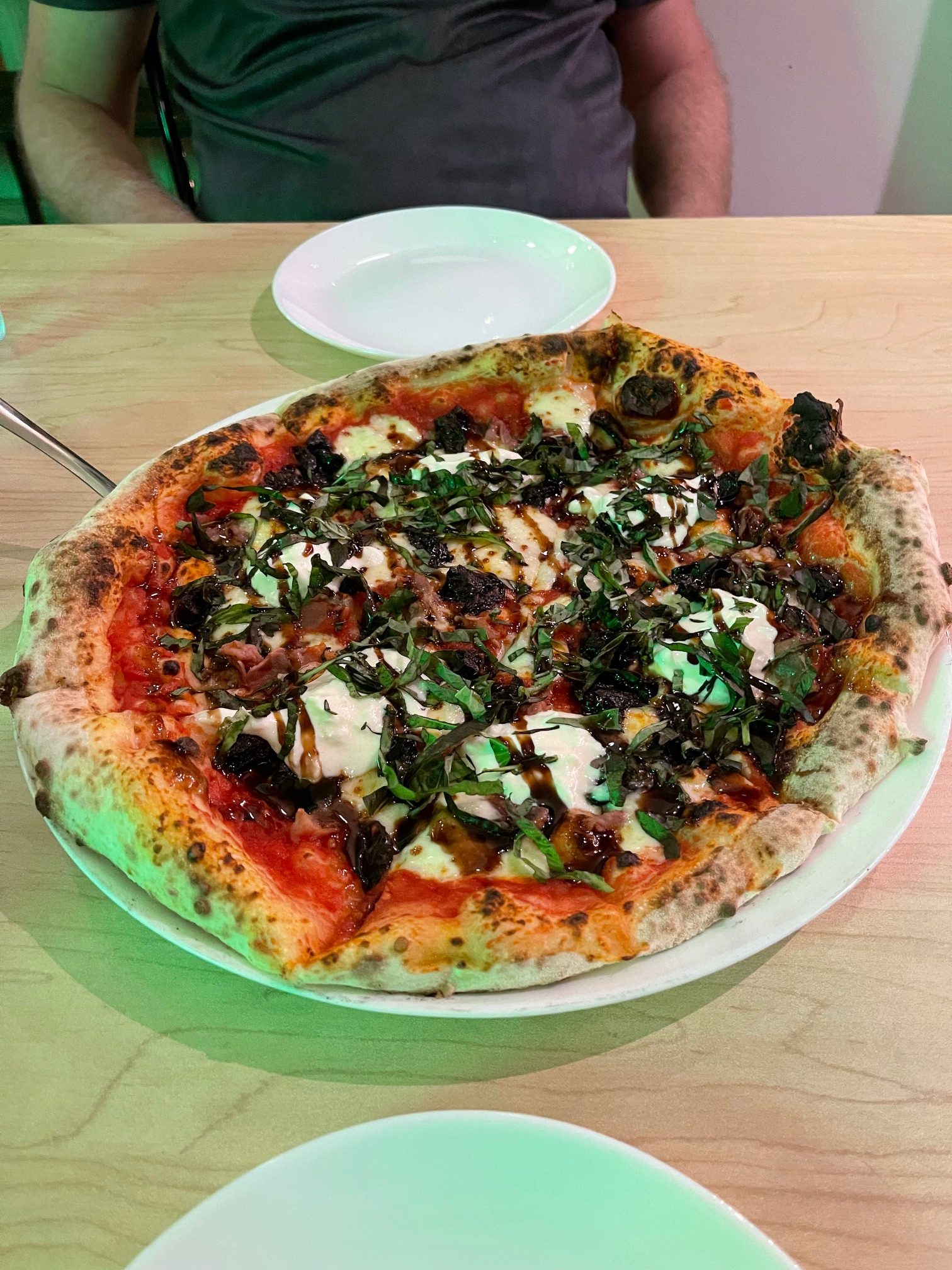
The rest of the evening was pretty uneventful. We just went out for a bite to eat at Pizzaiolo, a pizza place in El Poblado, and shared a pie. Back at the hotel, we spent a while relaxing in the rooftop jacuzzi before soon calling it an early night. We had an early morning the next day, and a long day ahead.
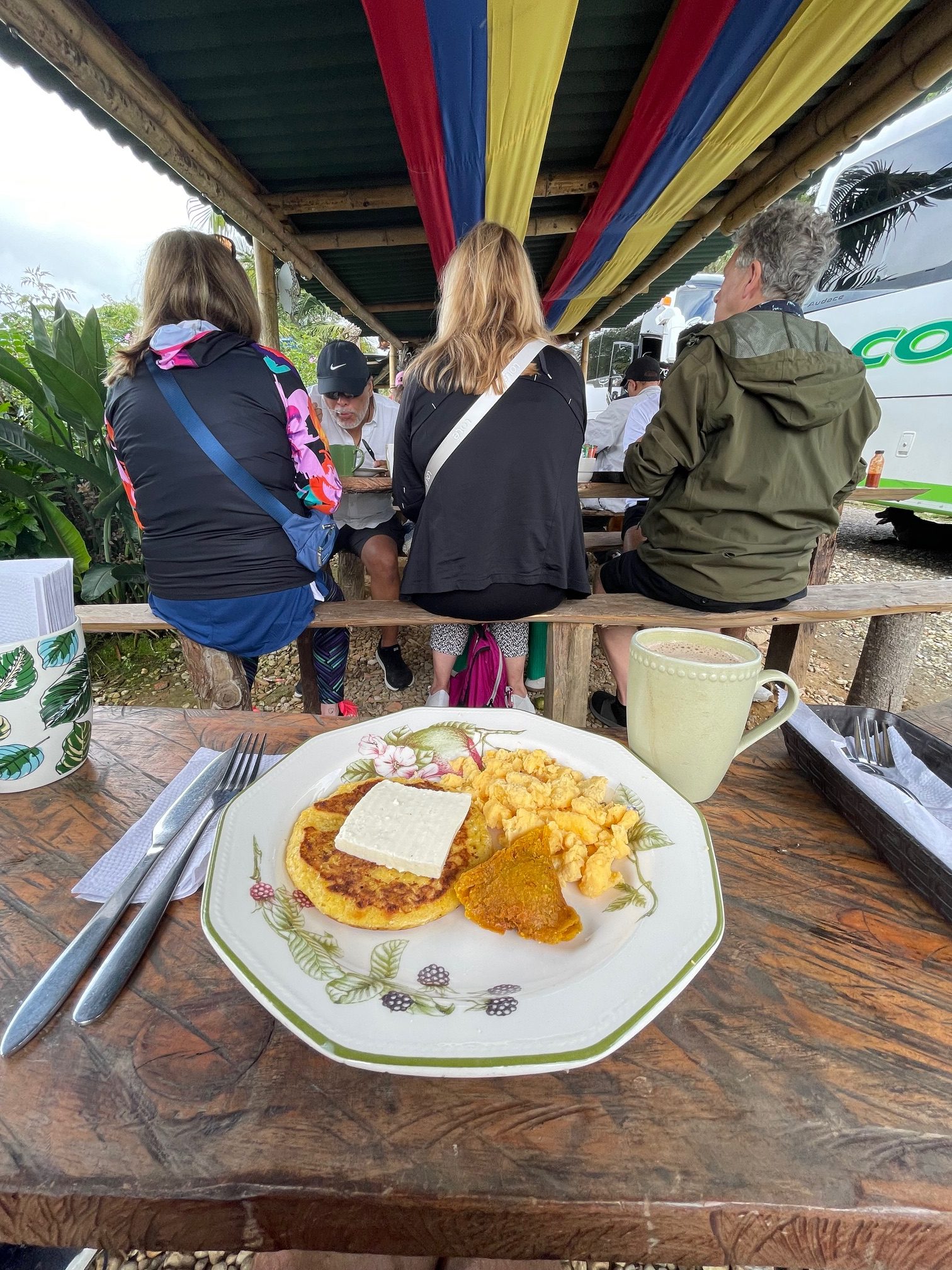
The next morning started bright and early. We had to be on the bus that day by 6:45am for our guided tour of one of Colombia's famous attractions: La Piedra de Peñol (or Peñón de Guatapé). Located in the town of Guatapé, La Piedra de Peñol is one of the largest stand-alone rocks in the world. From Medellin, the drive was just over an hour before we arrived at our first point of interest on the tour - a small restaurant off the side of the road called "Delicias de la Abuela". Here, we ate a quick outdoor breakfast that consisted of scrambled eggs, an arepa, cheese, and a hot chocolate or coffee.
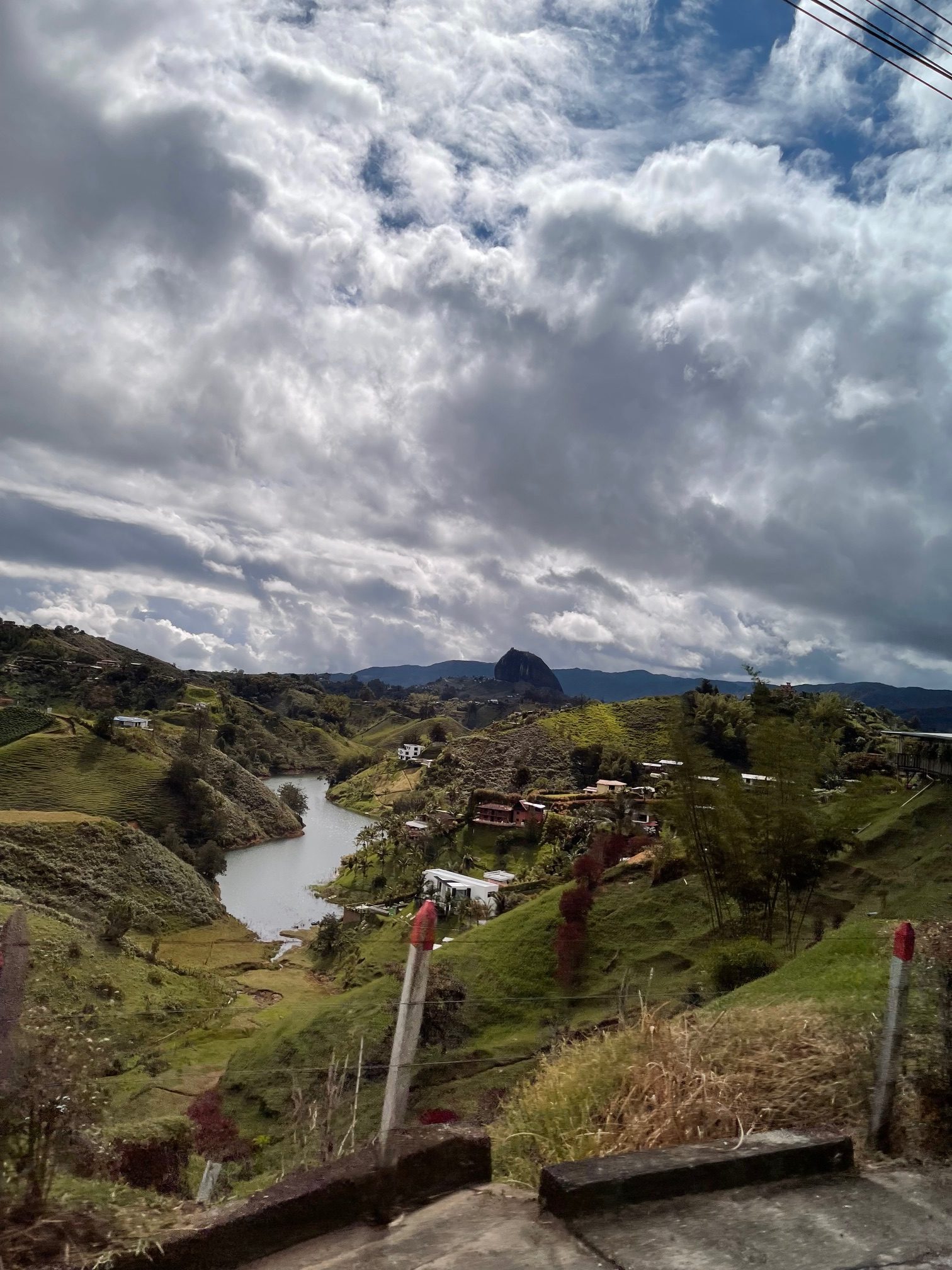
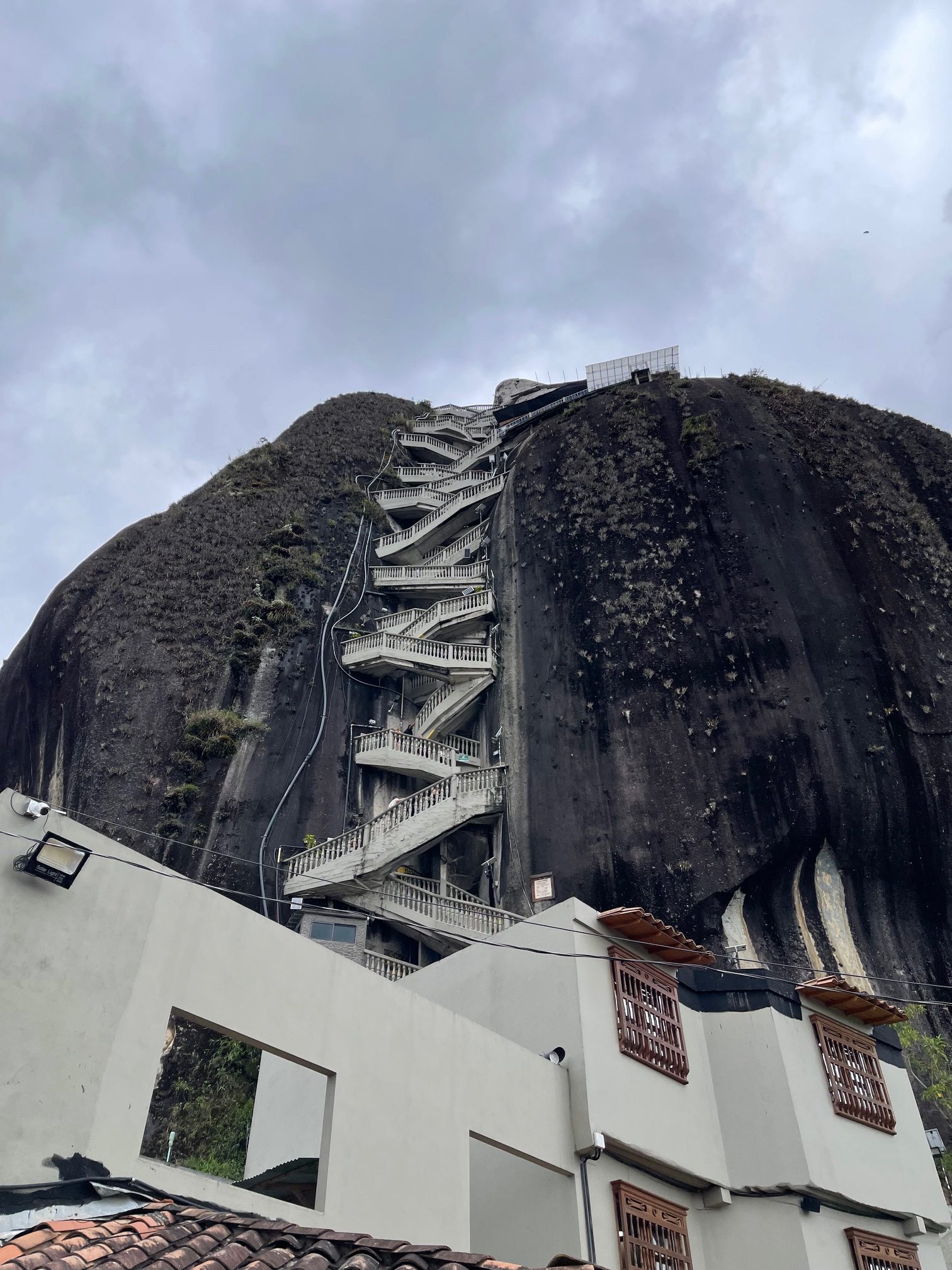
After breakfast, we continued on toward La Piedra de Peñol, navigating winding roads as the rock slowly grew on the horizon. At its base, there were a bunch of tourist shops and restaurants, but I walked right past them. I headed straight toward the bottom of the stairs, eager to begin my ascent. La Piedra de Peñol stands at over 650 feet tall (~200 meters) and offers a 659-step climb to the top along a staircase that zig-zags its way up the rockface.
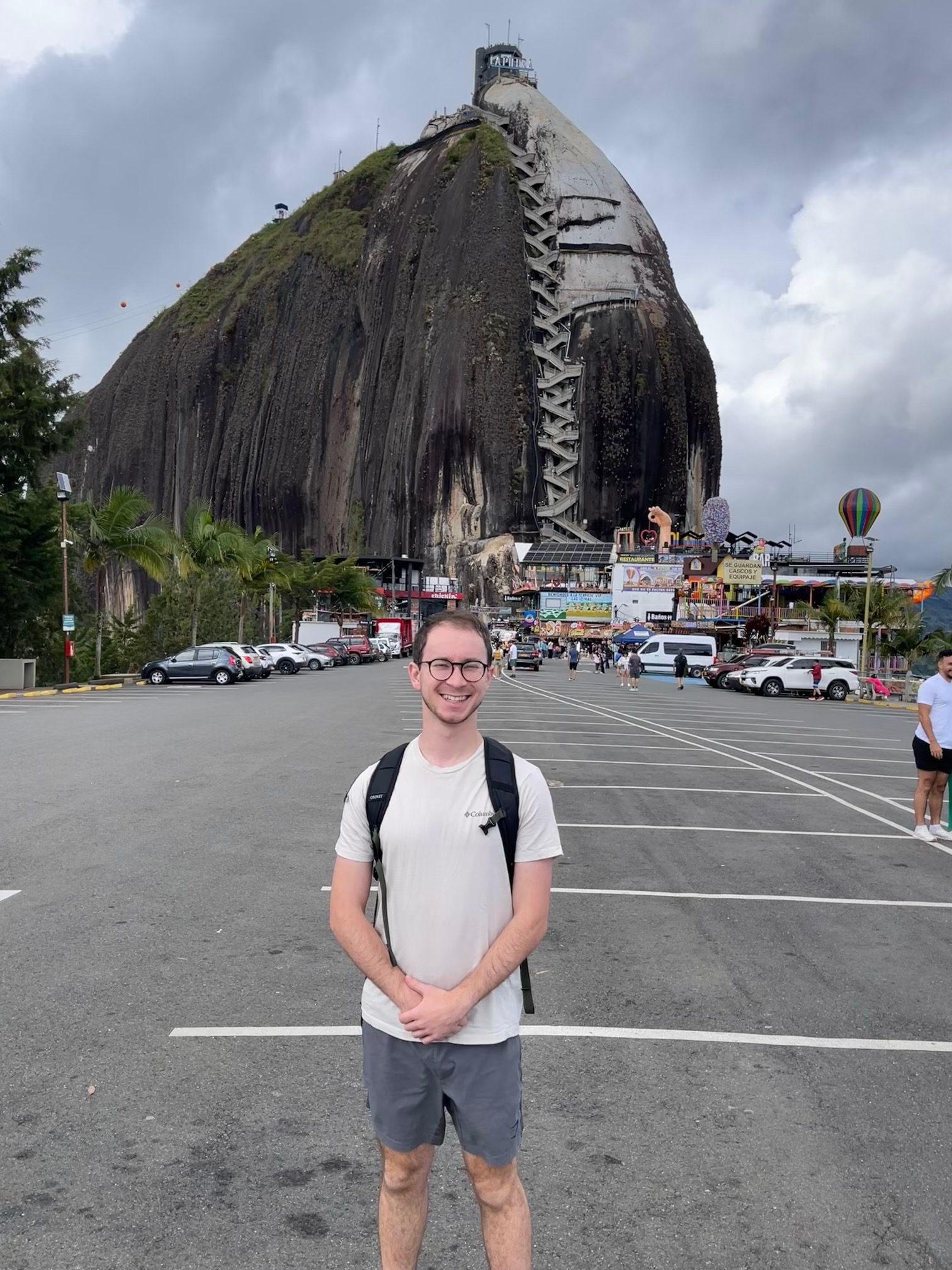
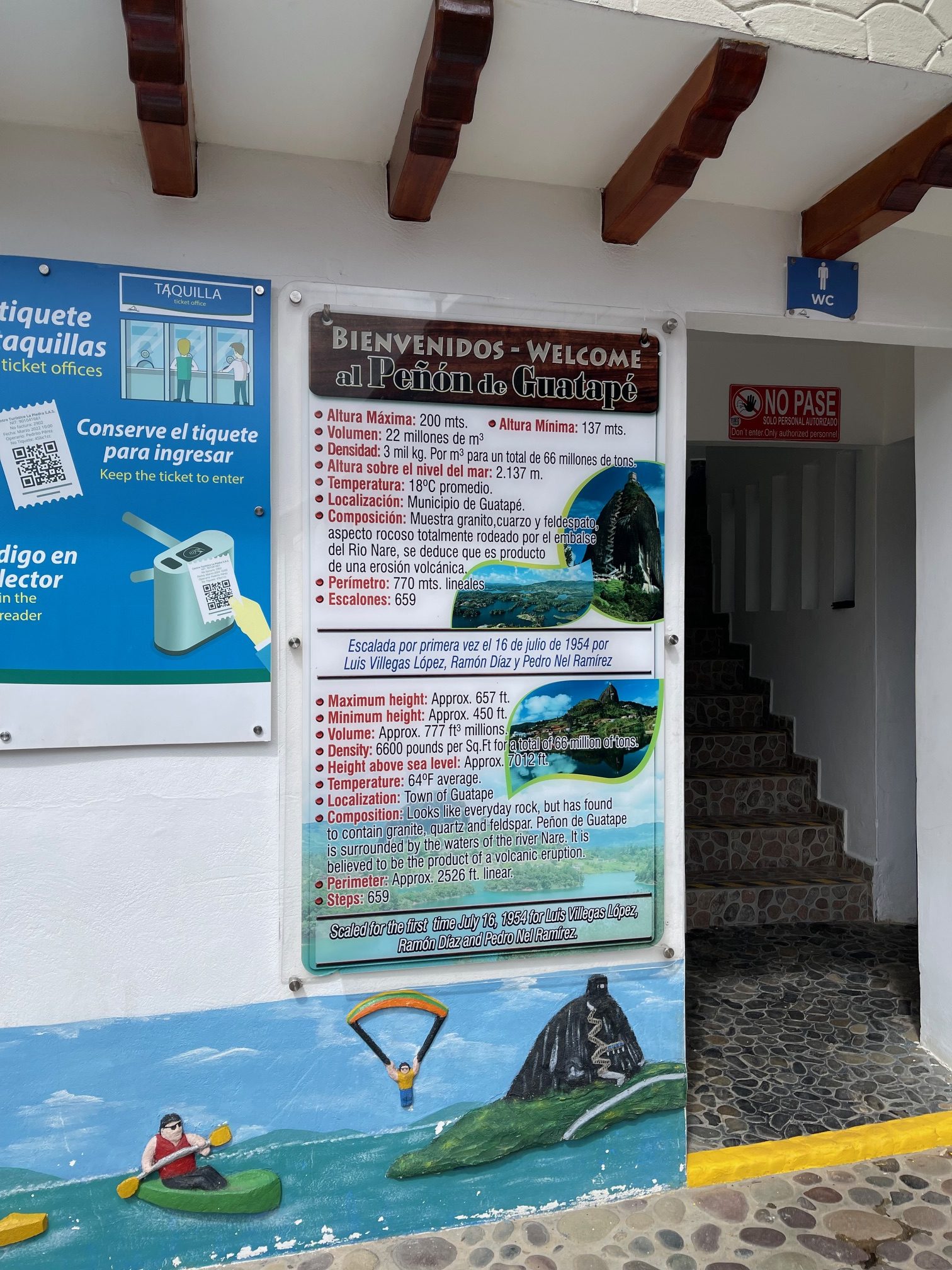
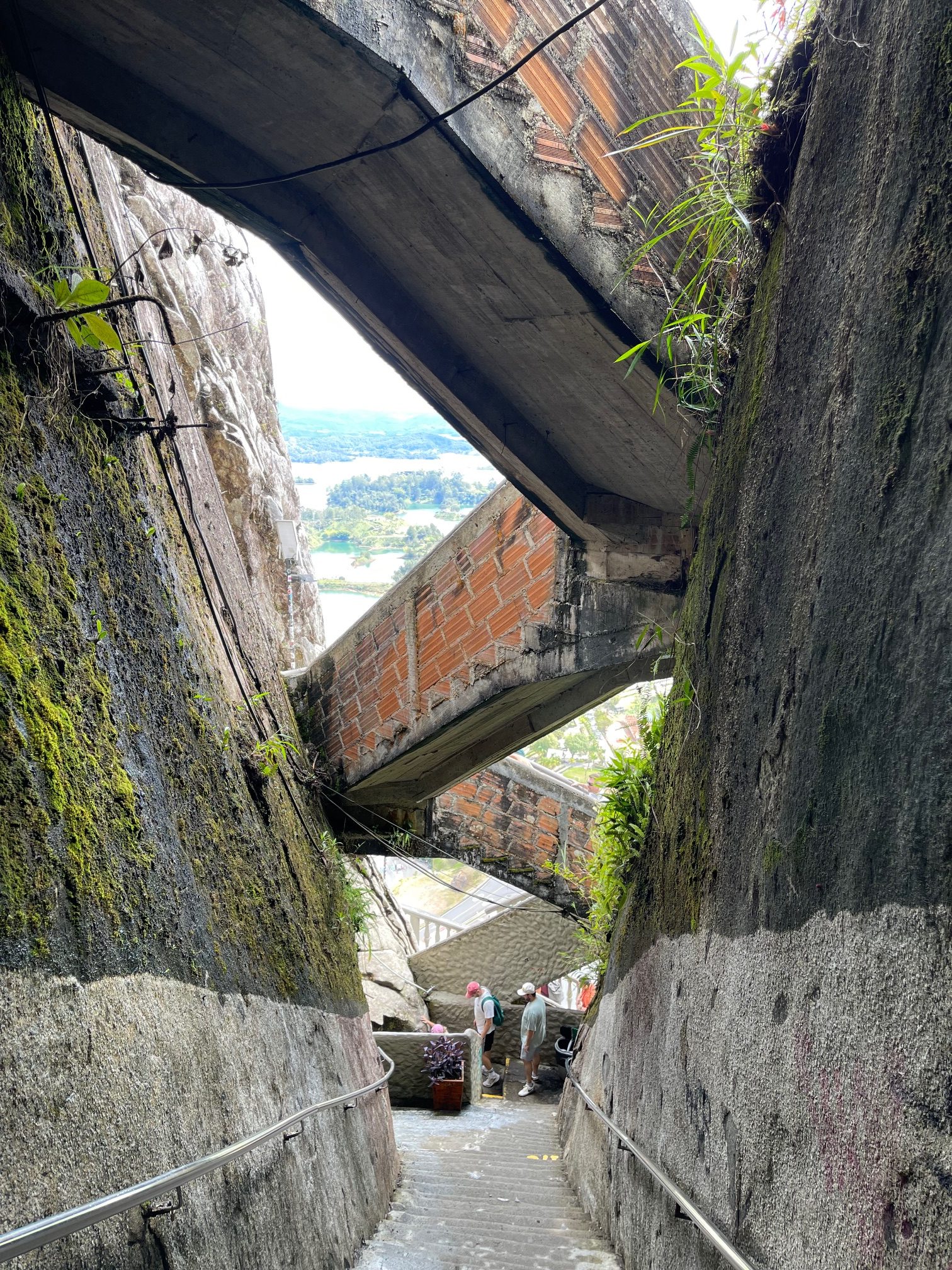
I breezed through the first 300 steps, quickly passing by people huffing and puffing along the rails. But soon I too fell victim to the stairs, having to stop several times to catch my breath during the second half of the ascent. I did appreciate that the stairs were numbered every 50 steps to help you keep track of where you were at, since counting down each remaining step gave me the push I needed to reach the top. I definitely could've taken my time, like my dad and many others did, and probably felt fine after. But I was going for speed. And by the time I finished my ascent, I felt like passing out. I needed a solid 10-15 minutes after to recover before I was ready to move again.
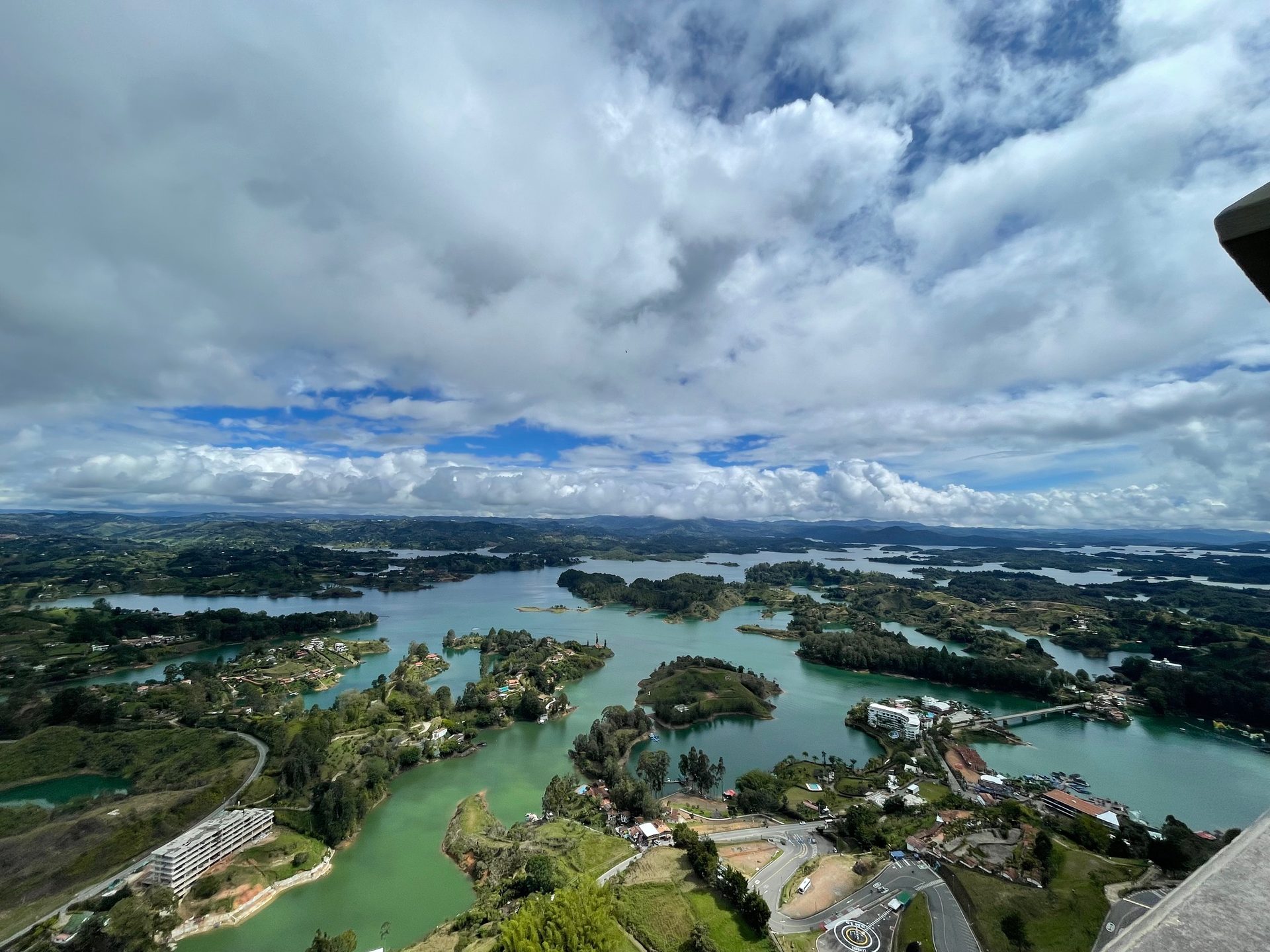
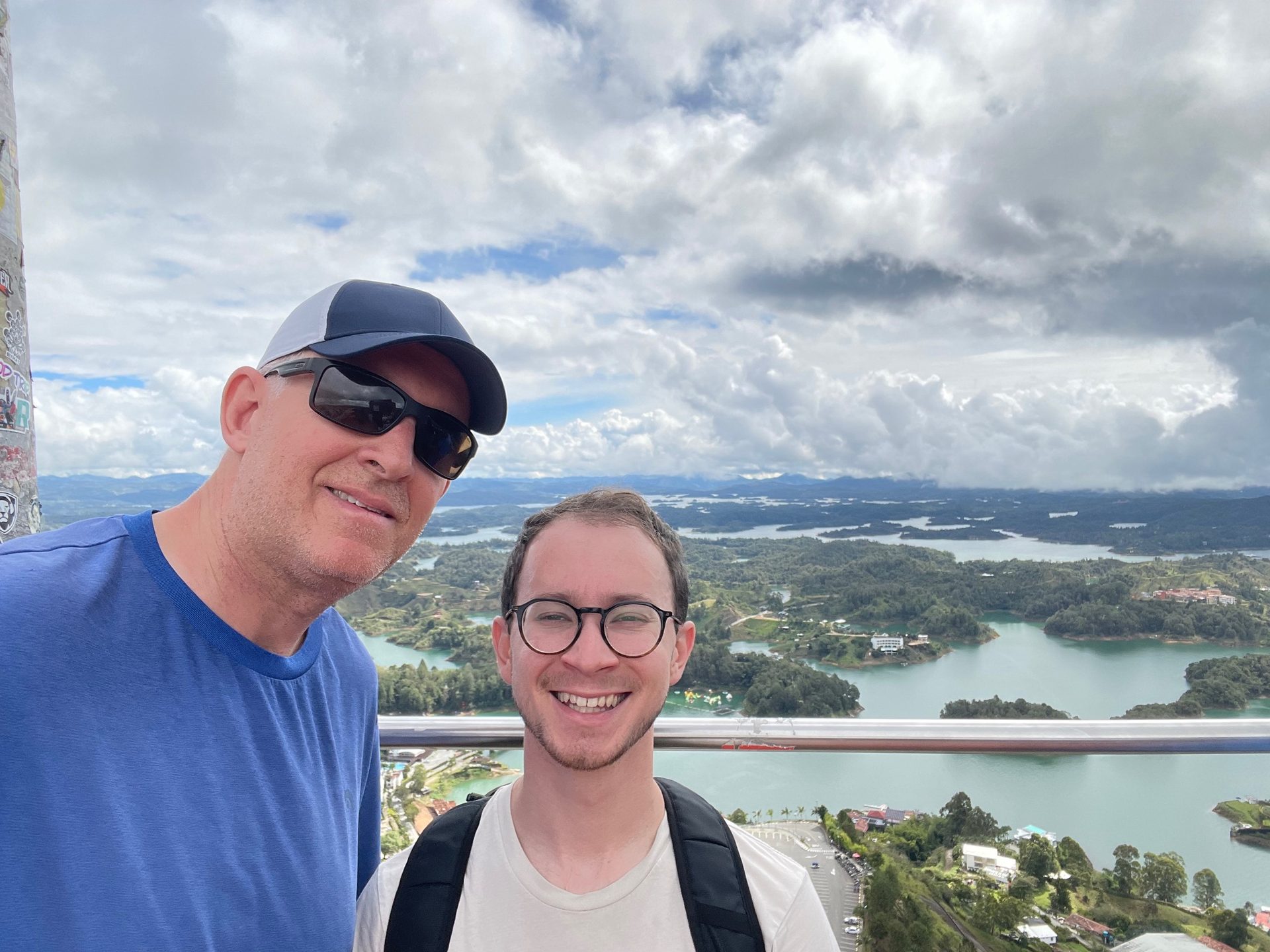
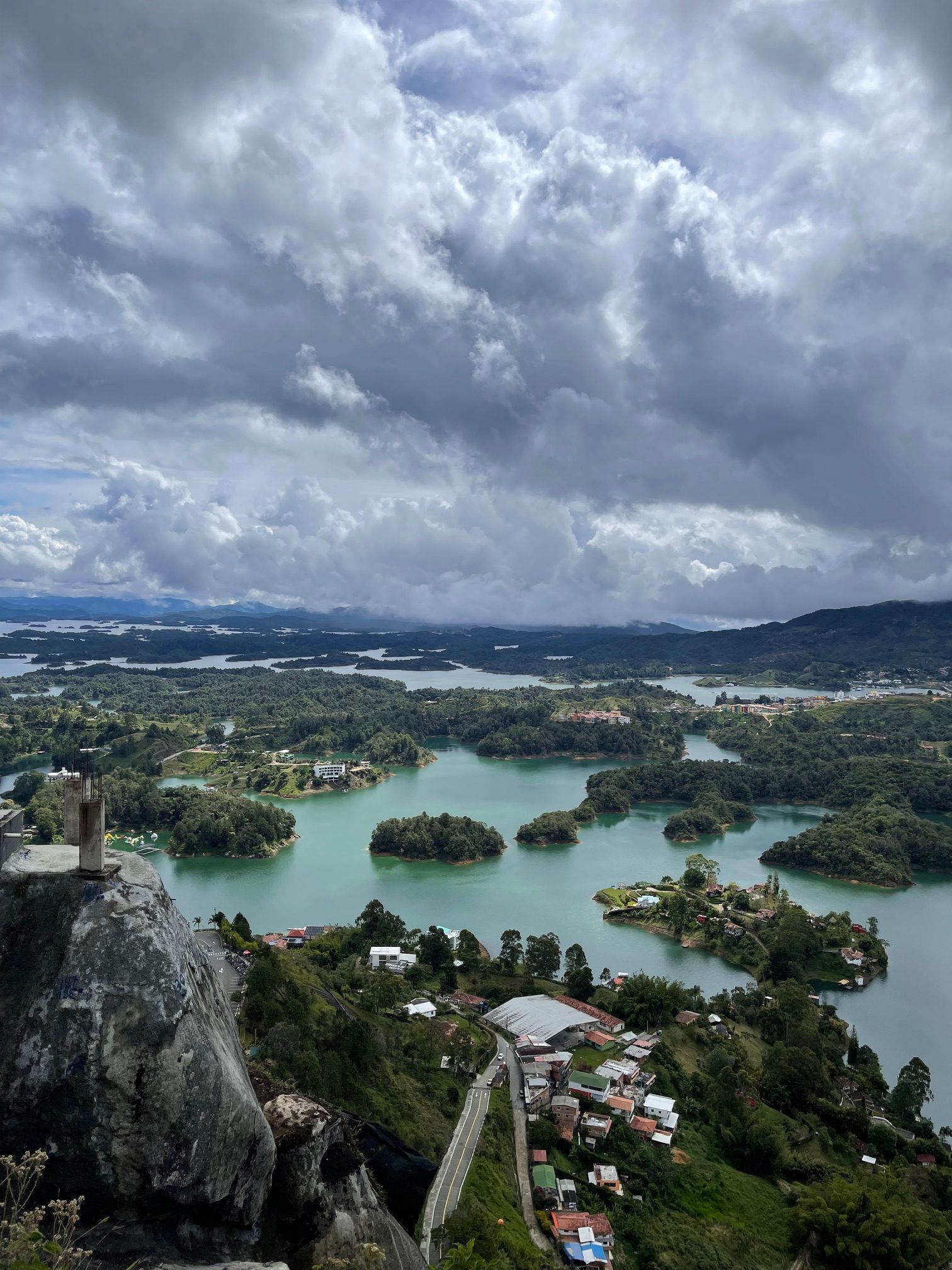
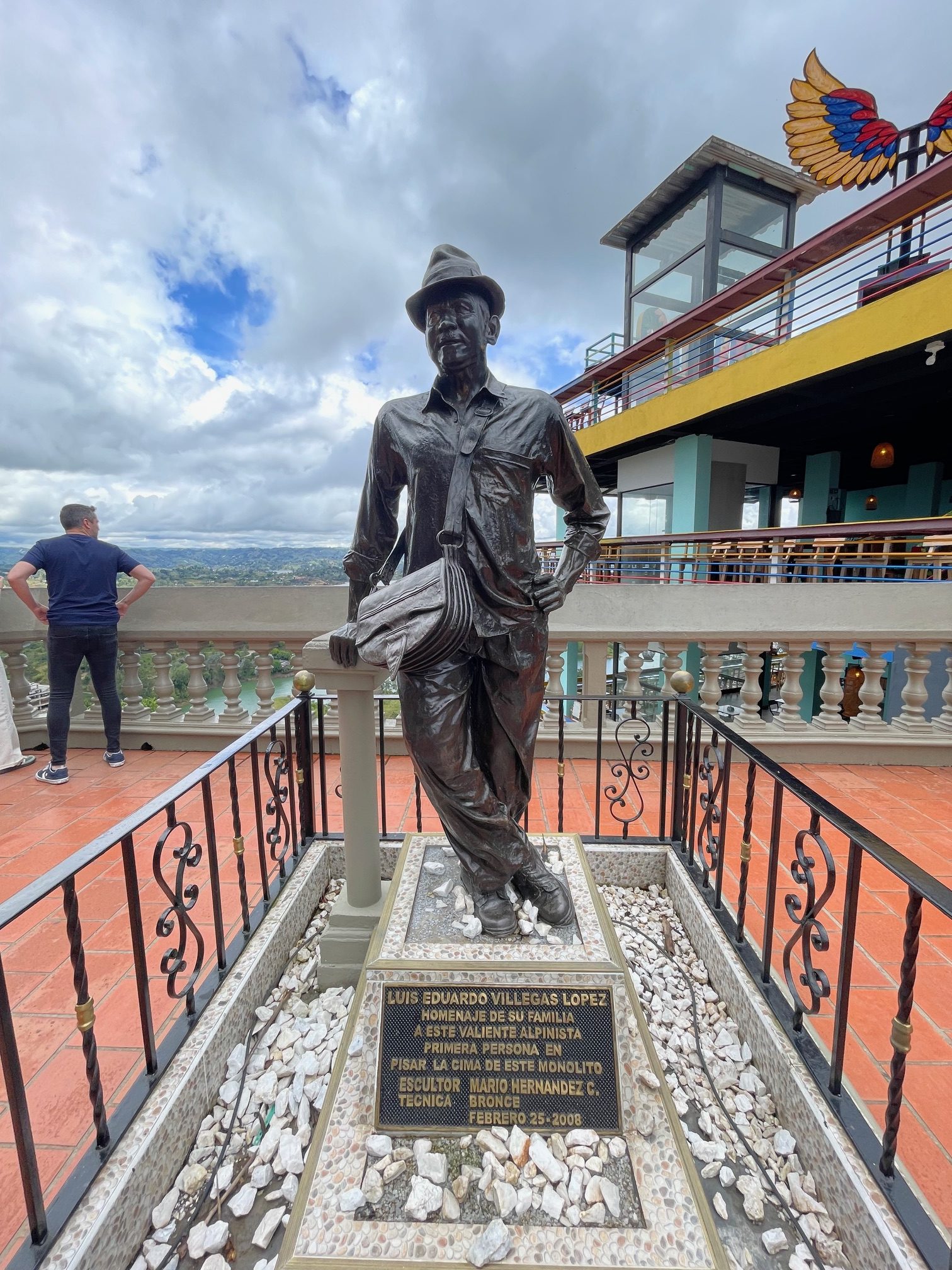
At the top, there were a few restaurants and stands selling drinks, as well as a lookout tower offering 360 degree views out over the surrounding area. Eventually my dad made it up, and together we scaled another 81 steps to the top of the tower. The views honestly made the whole climb worth it. The area surrounding La Piedra was filled with manmade, turquoise blue lakes and rolling hills along the horizon. After some time, we descended down the stairs and got back on the bus toward the town of Guatapé.
Walking around Guatapé, you are immediately met with color everywhere. The town is famous for its colorful zócalos, which are intricately decorated panels with raised designs that adorn the bottom half of every building. Every building is unique, featuring different designs and patterns on every wall. In fact, Guatapé served as inspiration for the world building in the popular Disney movie Encanto.
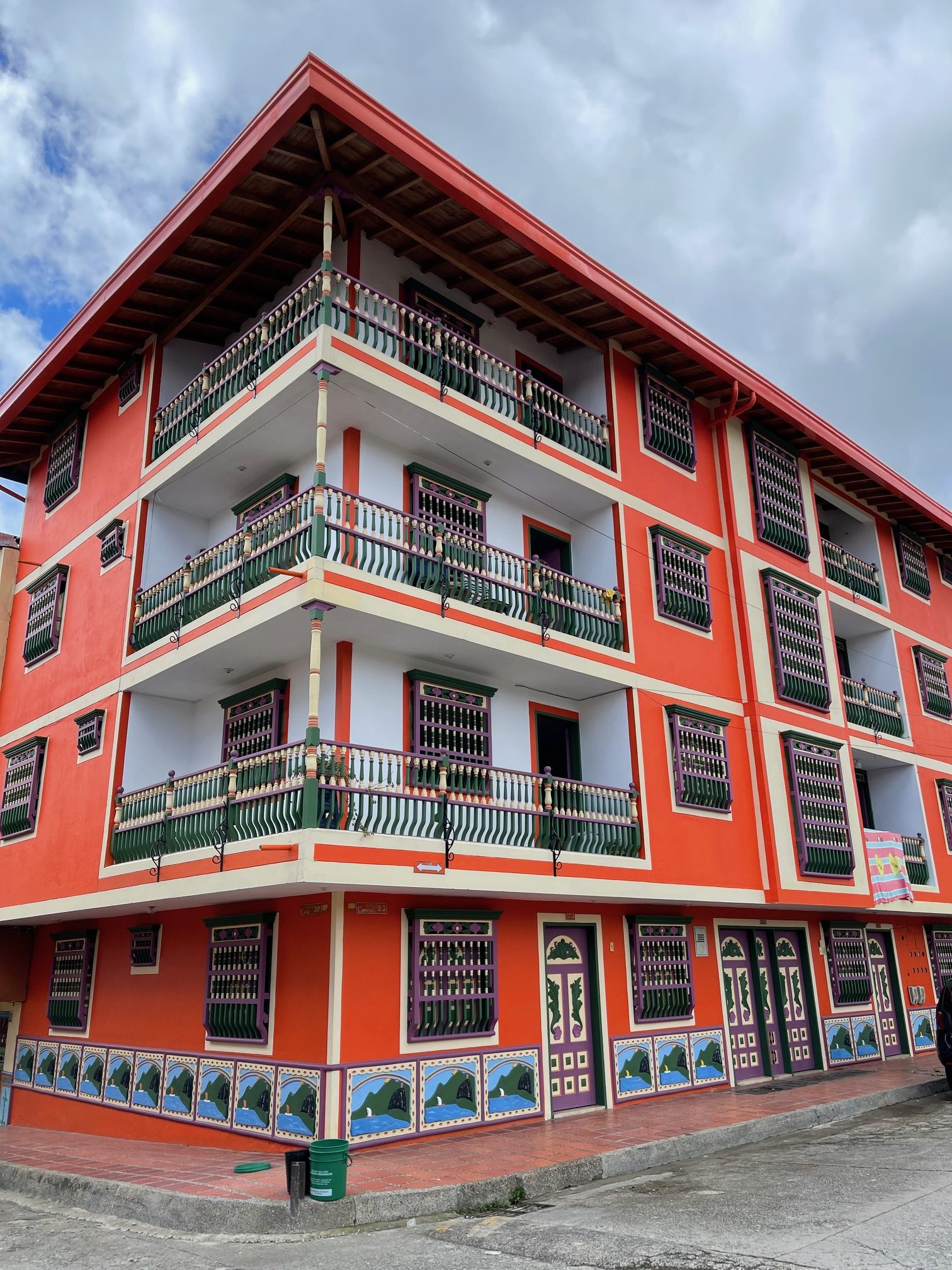
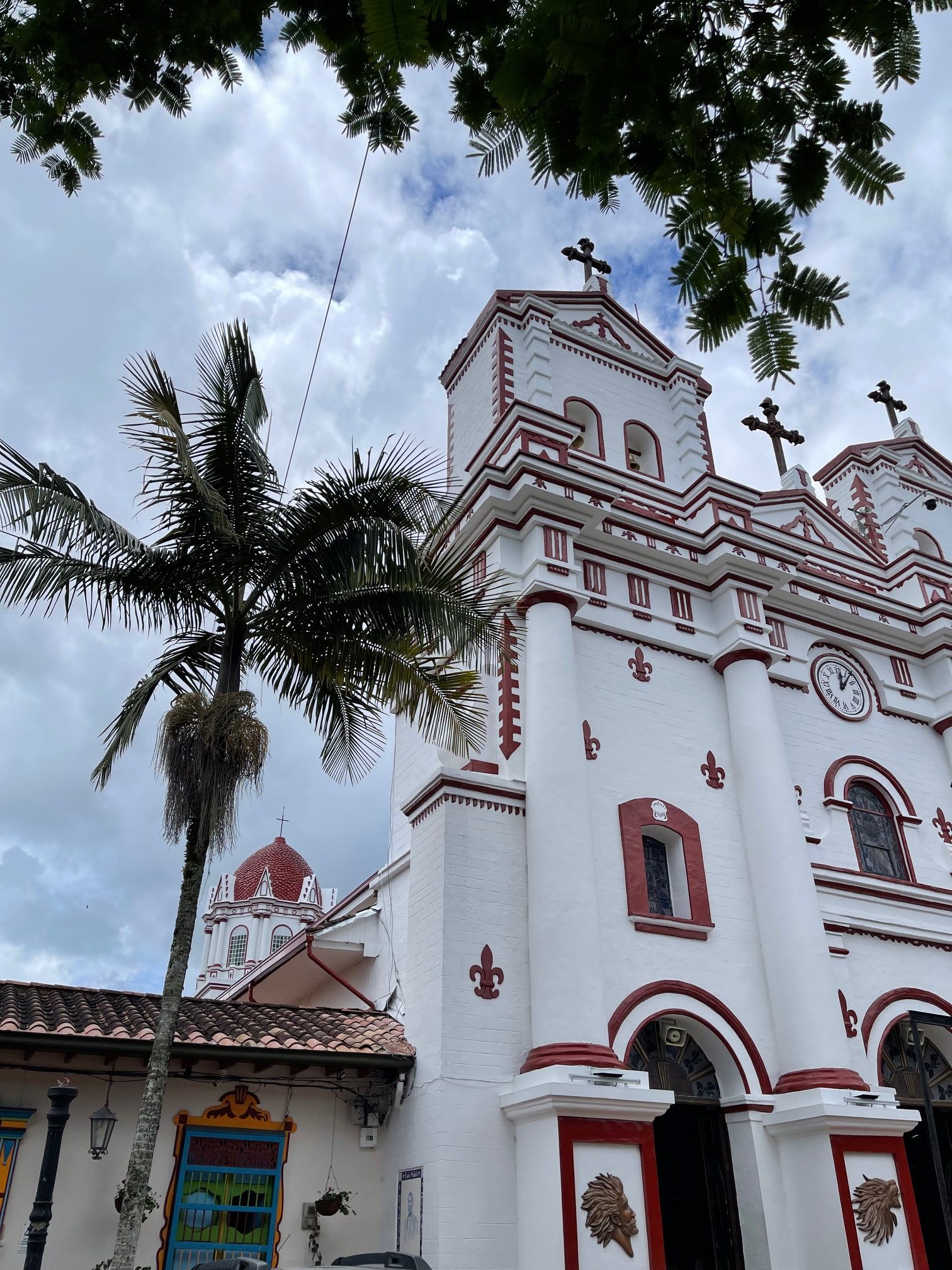
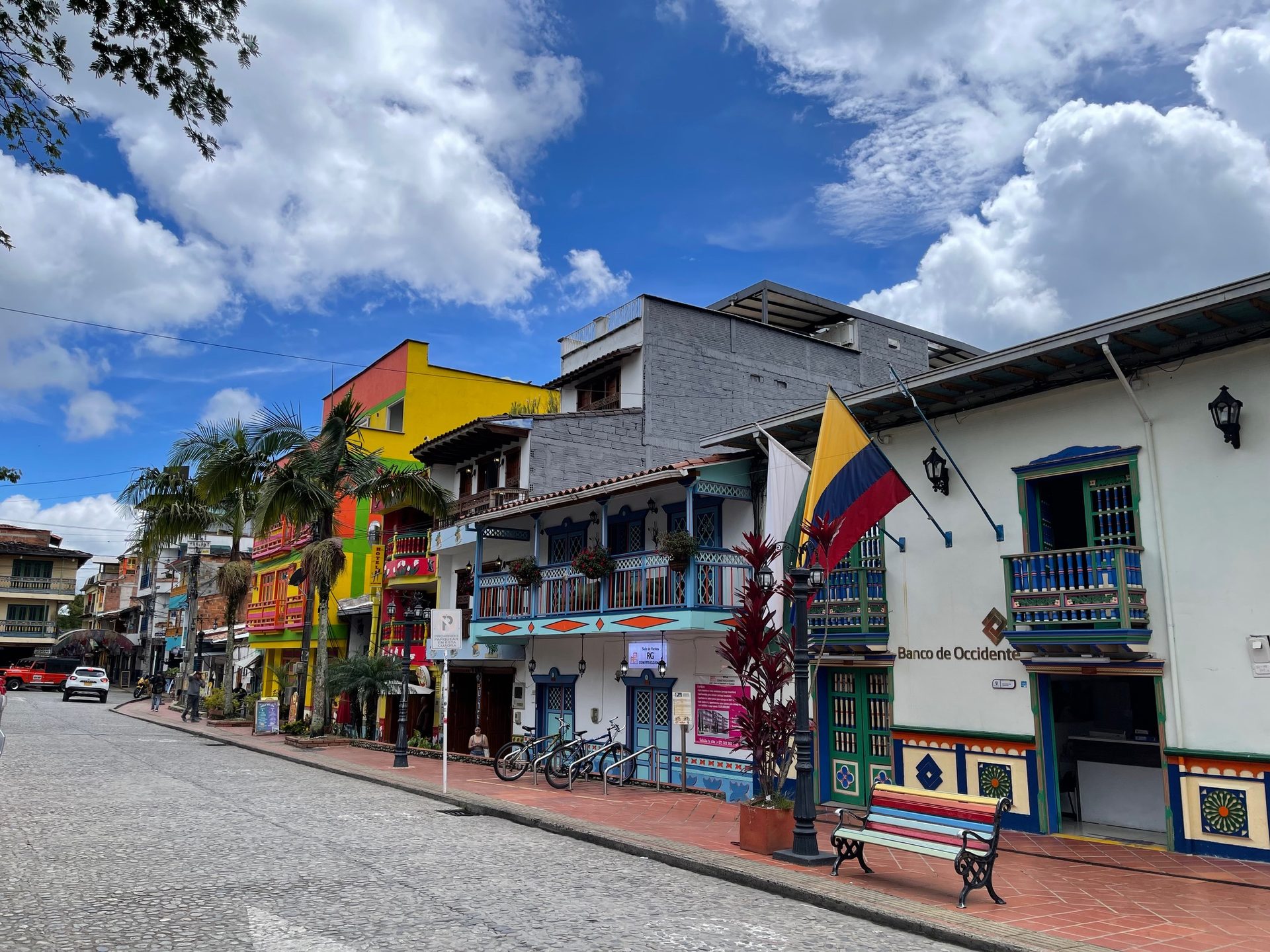
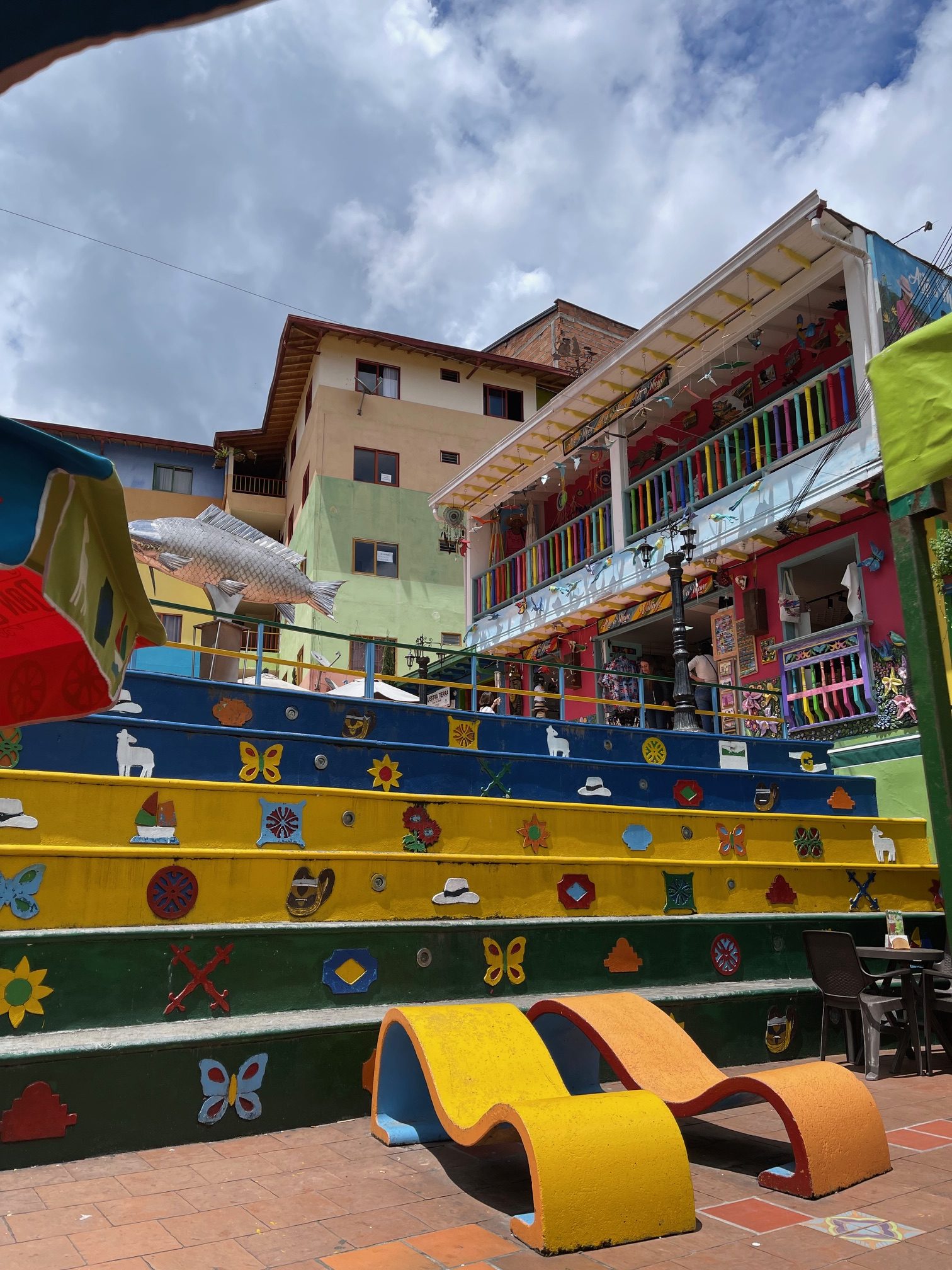
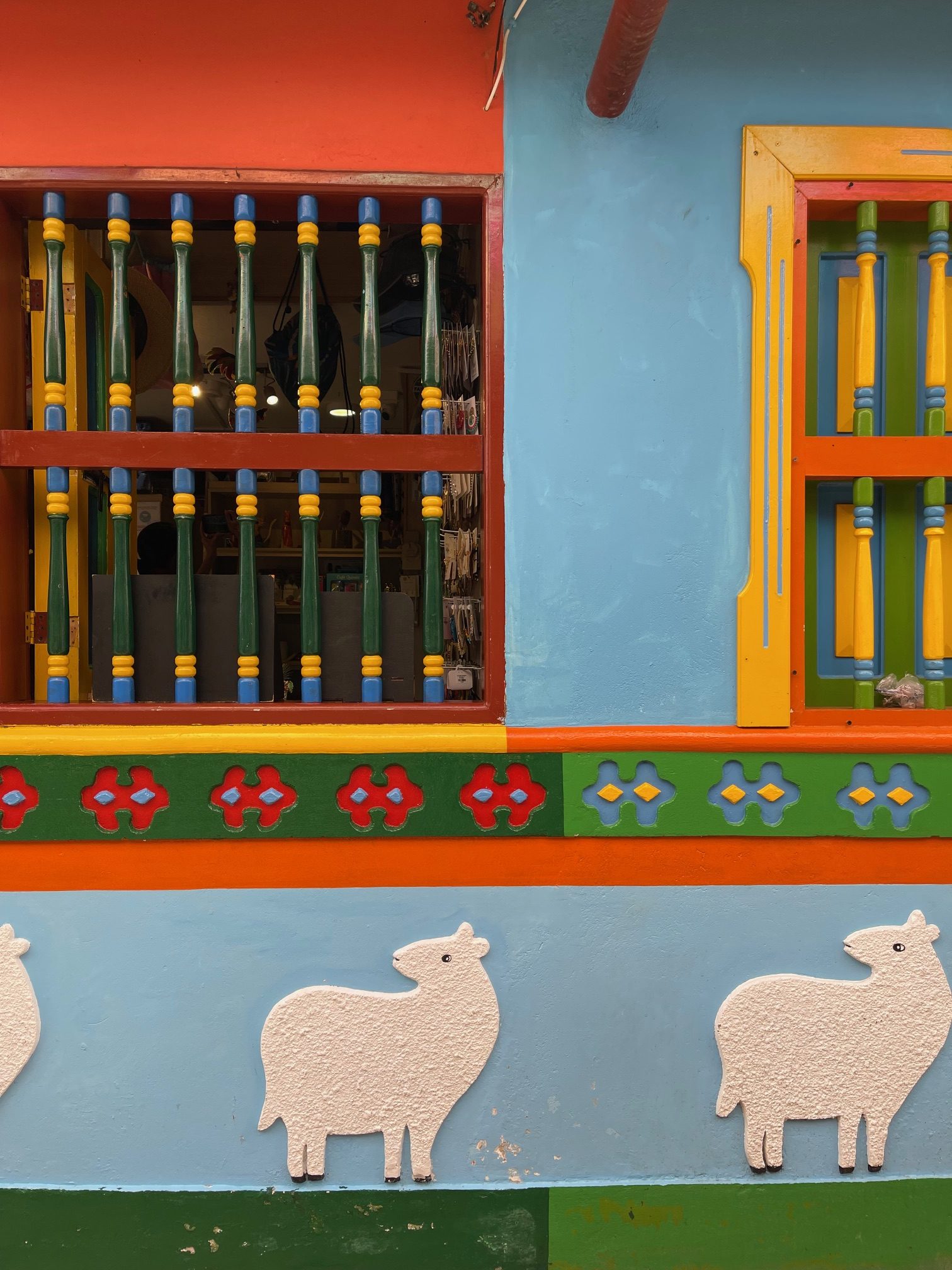
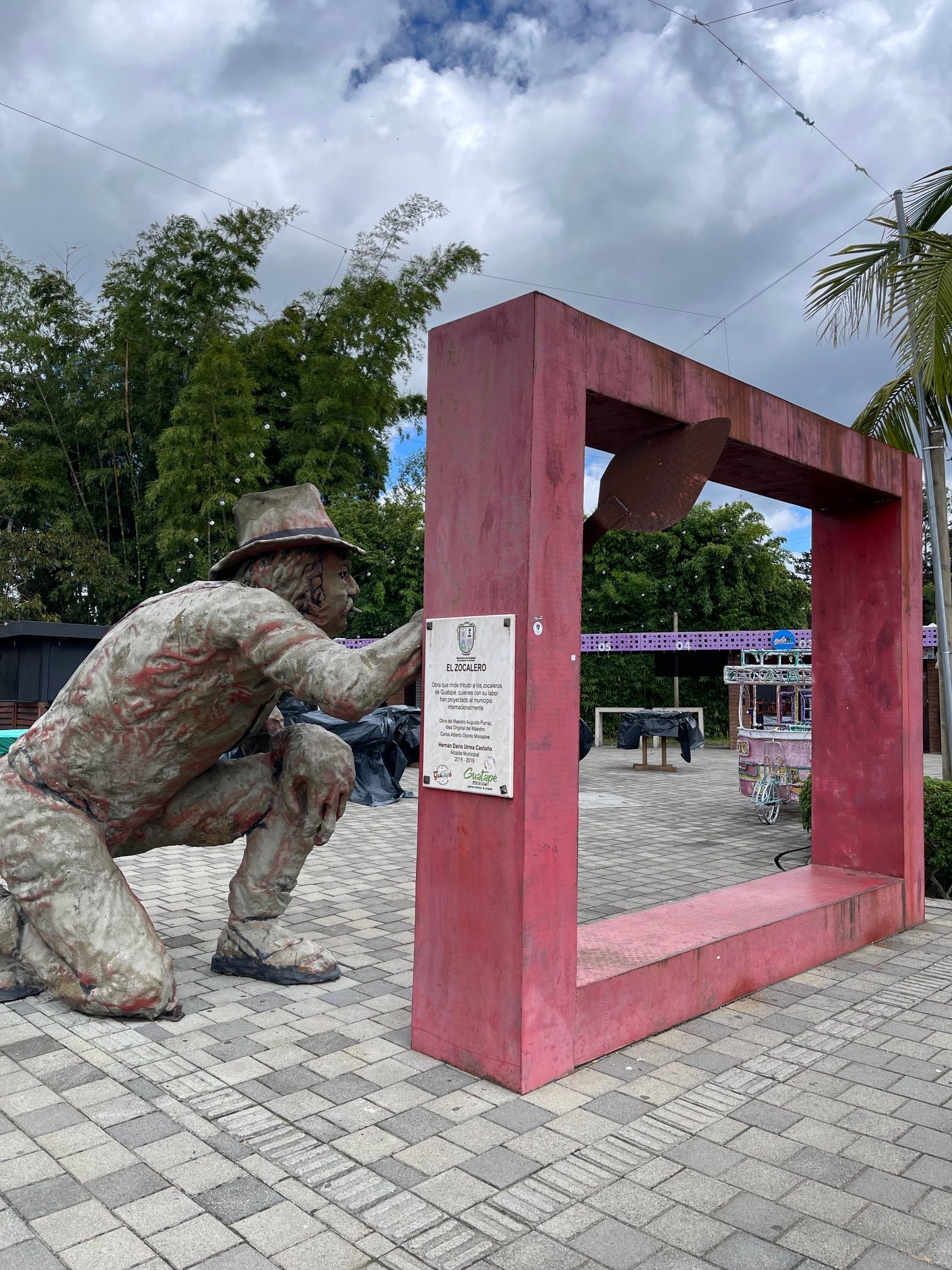
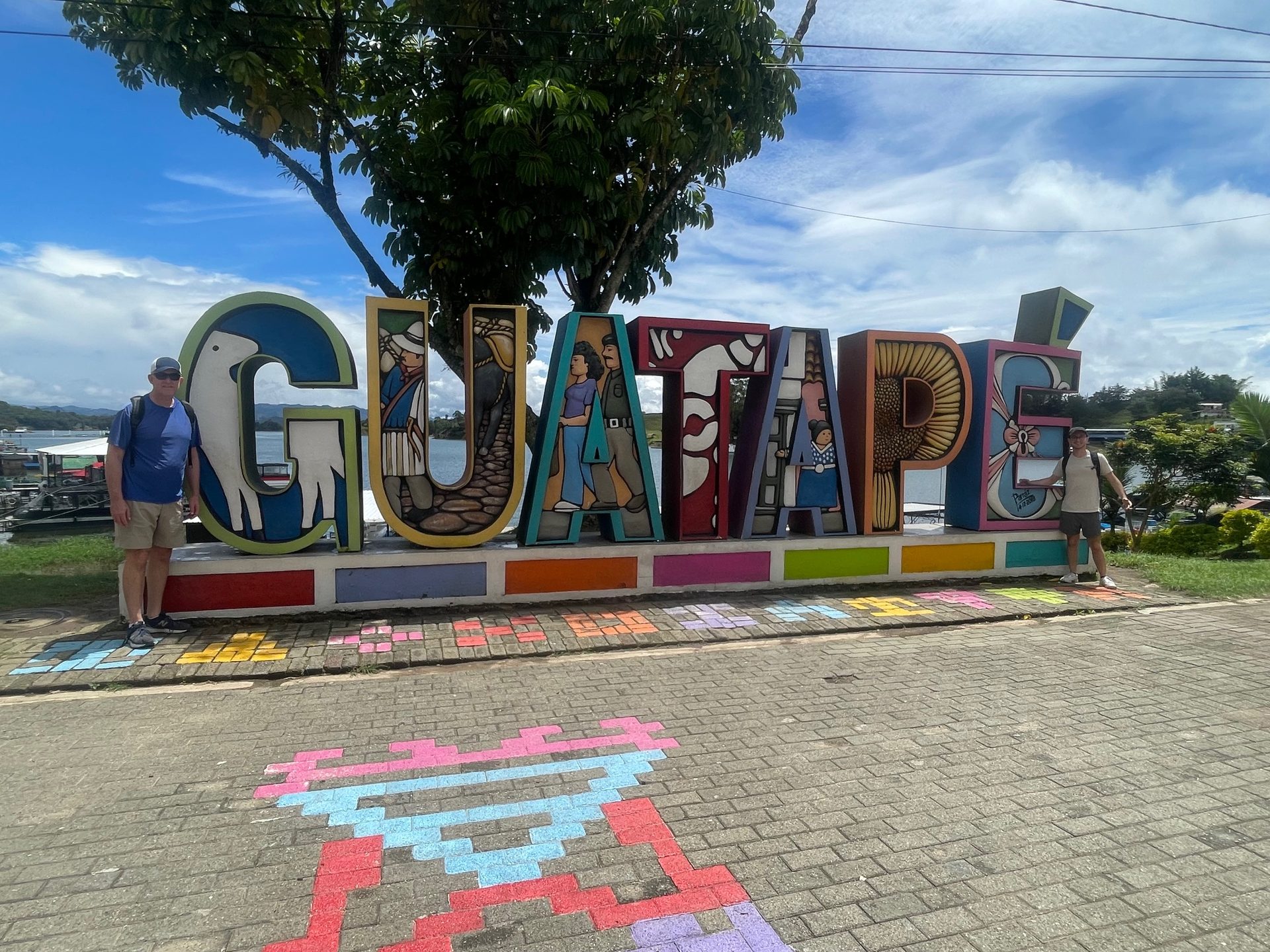
My dad and I walked around the town for quite some time, stopping to look at some of the zócalos, walk under colorful umbrellas, and take some photos with the town's sign. We ended up taking a full lap around the town, at some point leaving the main tourist areas and wandering through local school yards and playgrounds. While waiting for the bus to arrive, we walked down to the water, where I saw this cool statue of a man (El Zocalero) carving out a frame for a zócalo - a monument to the artists that made the town what it is today.
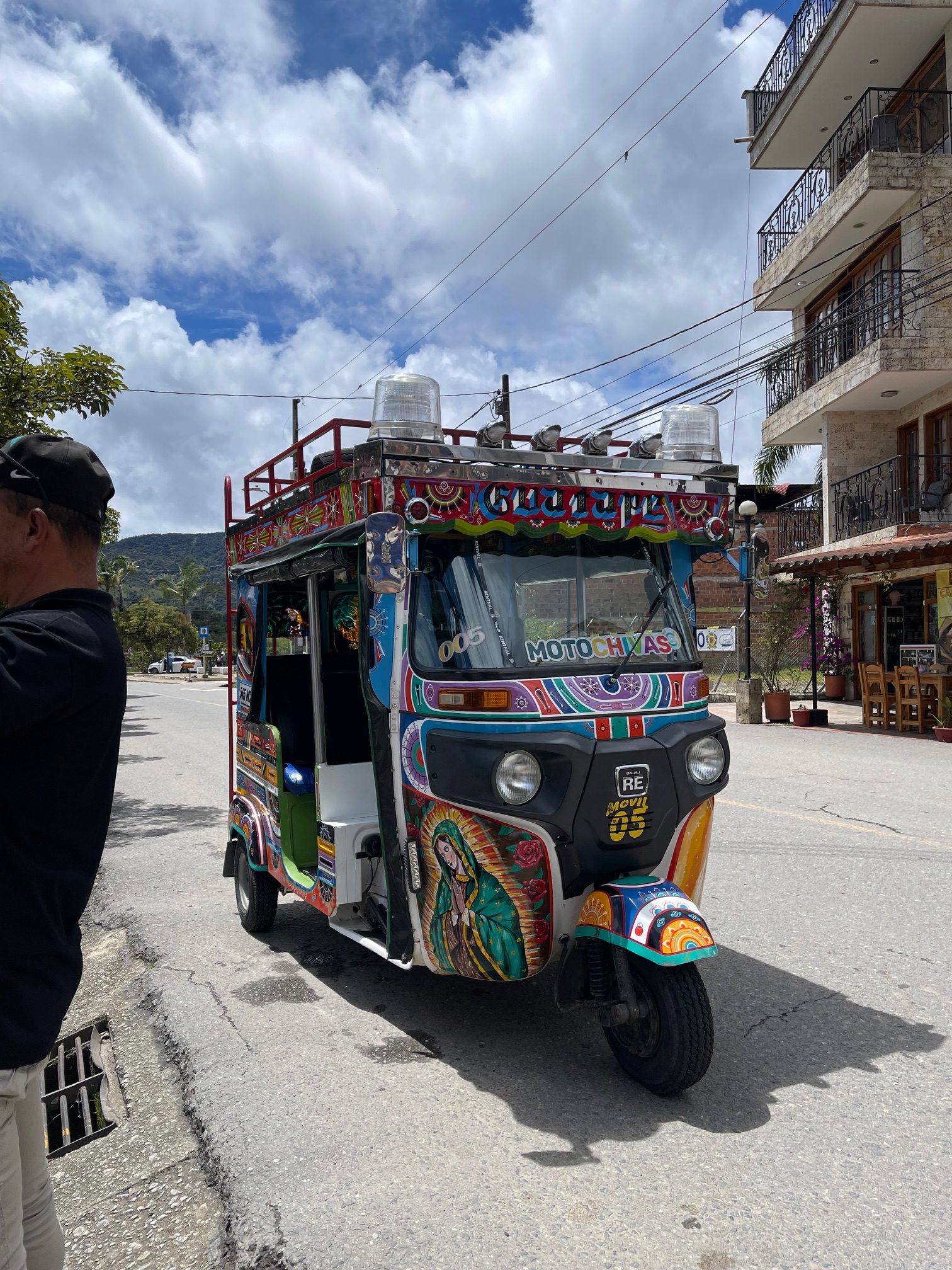
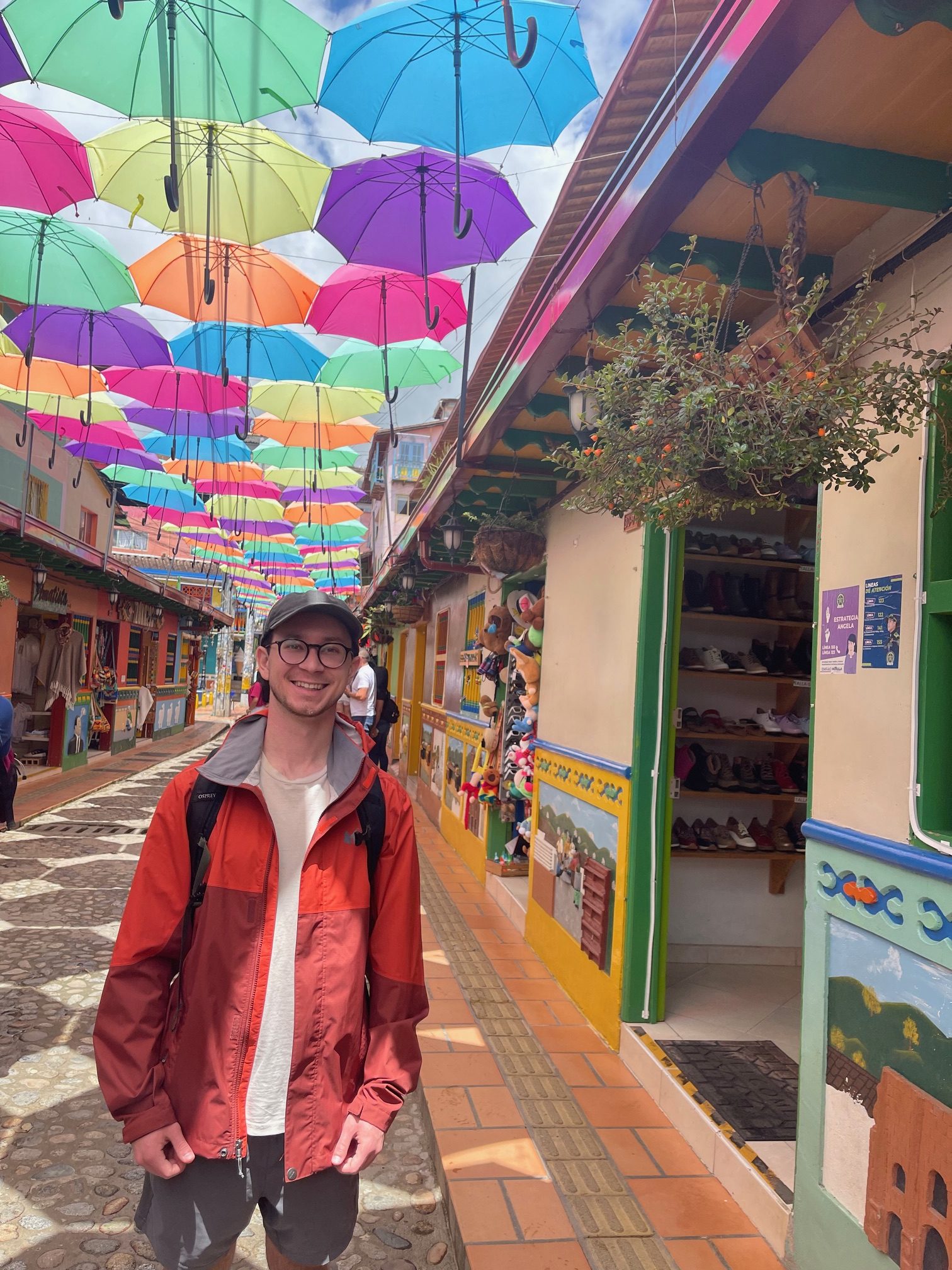
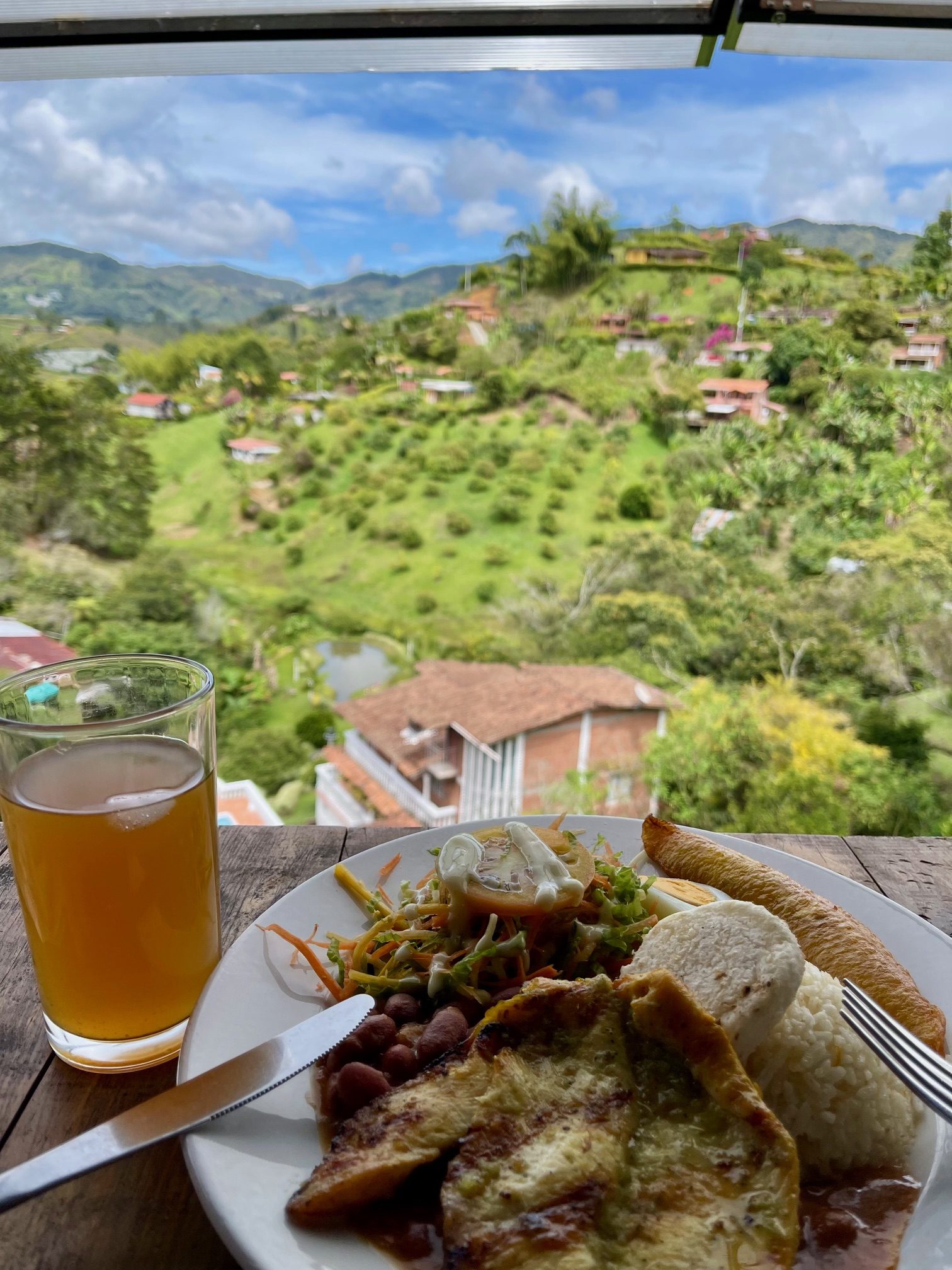
Once we left Guatapé, we stopped at another local restaurant along the road for lunch (Parador Turistico La Casa Del Cafe). I enjoyed a nice lunch consisting of a chicken breast, rice and beans, salad, an arepa, a sweet plantain, and a sugarcane based drink called guarapo. While eating, we got to enjoy a nice view out over the countryside, houses dotting the hillside in front of us.
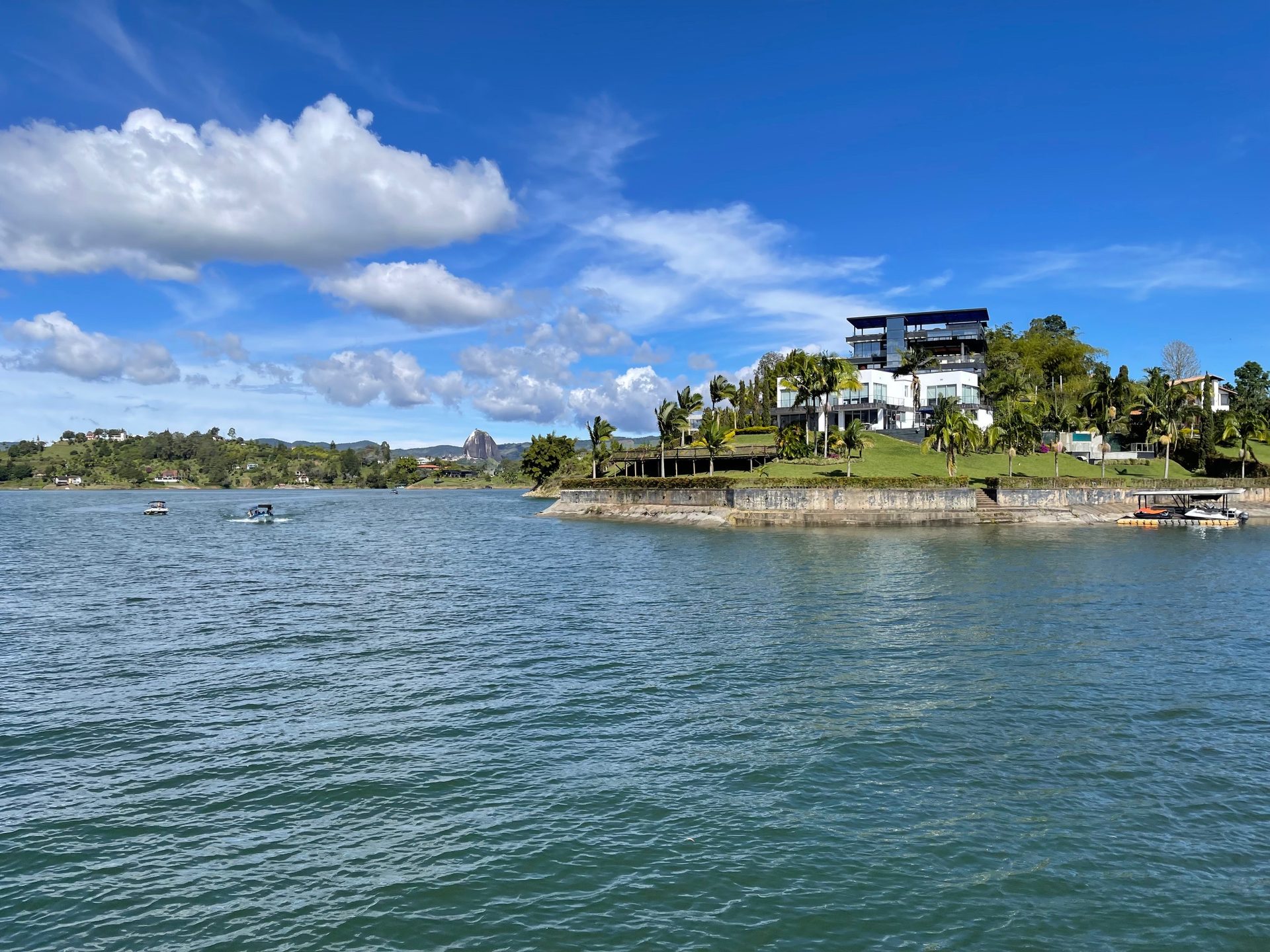
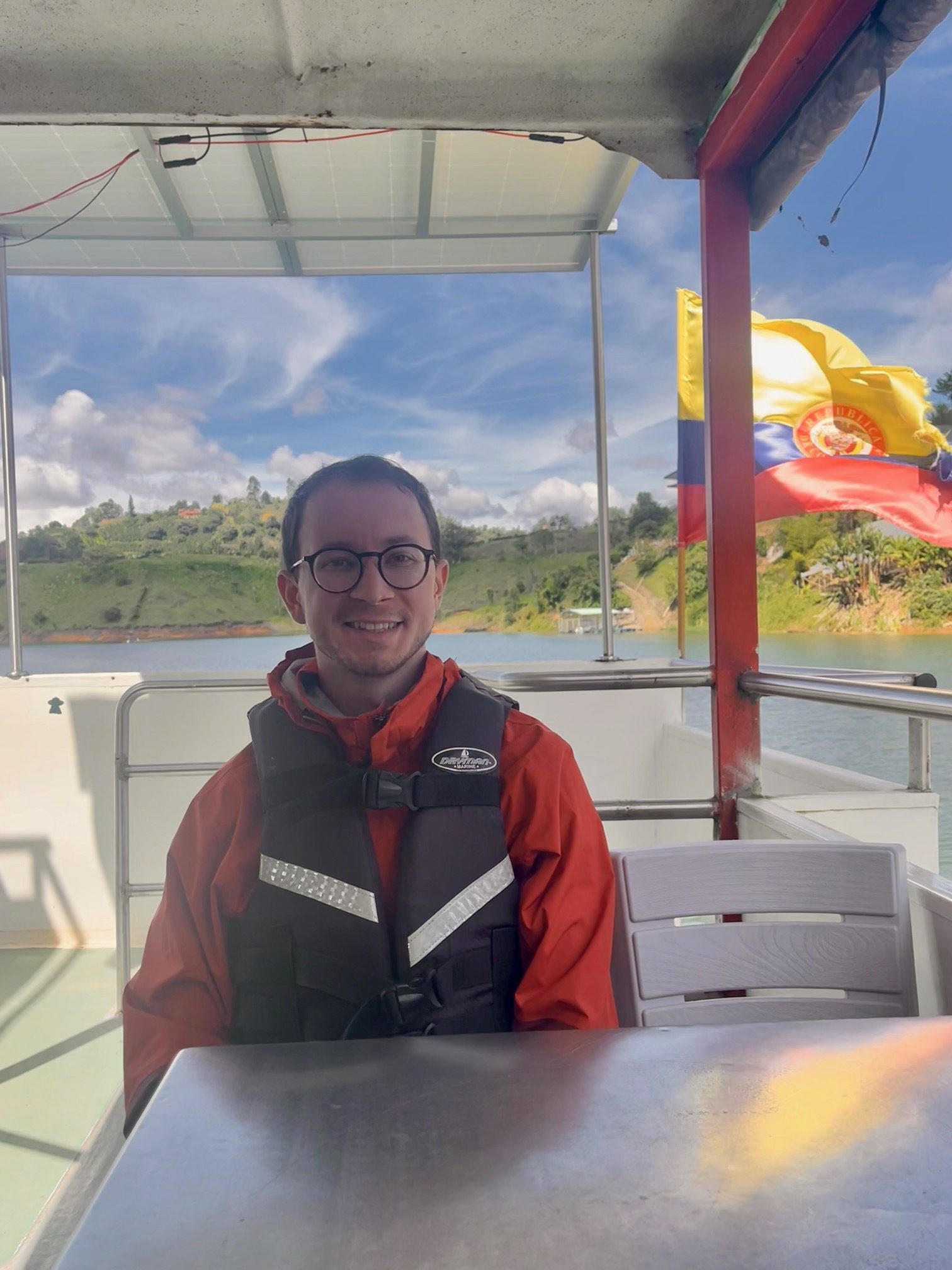
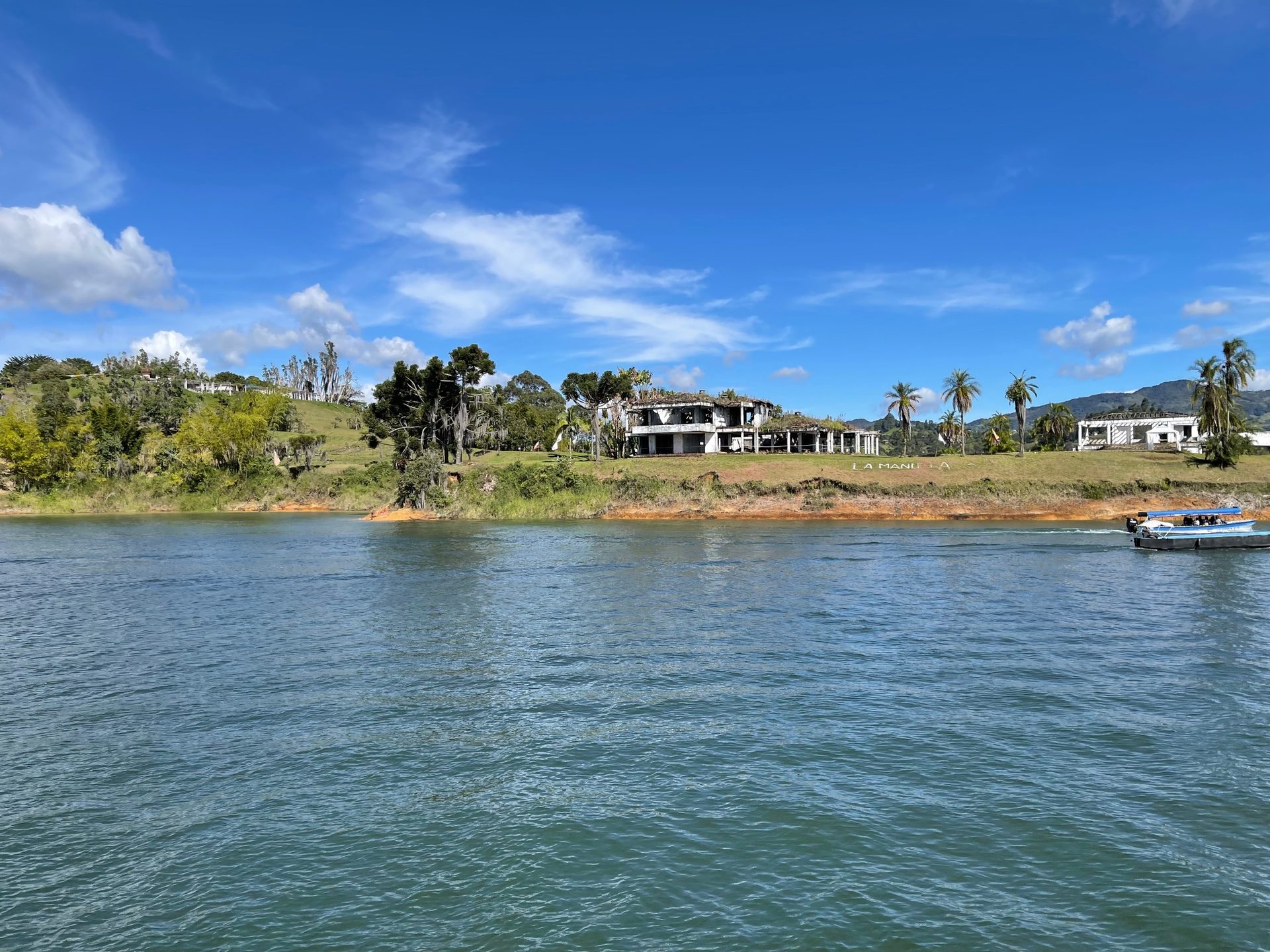
We finished the tour out on the water, aboard a boat that took us around the lakes in the region. The boat took us past some really nice homes along the water, including one mansion previously owned by Pablo Escobar (called La Manuela)! You could also see La Piedra de Peñol out in the distance. The weather was beautiful, and the breeze across the water made for a relaxing and enjoyable afternoon.
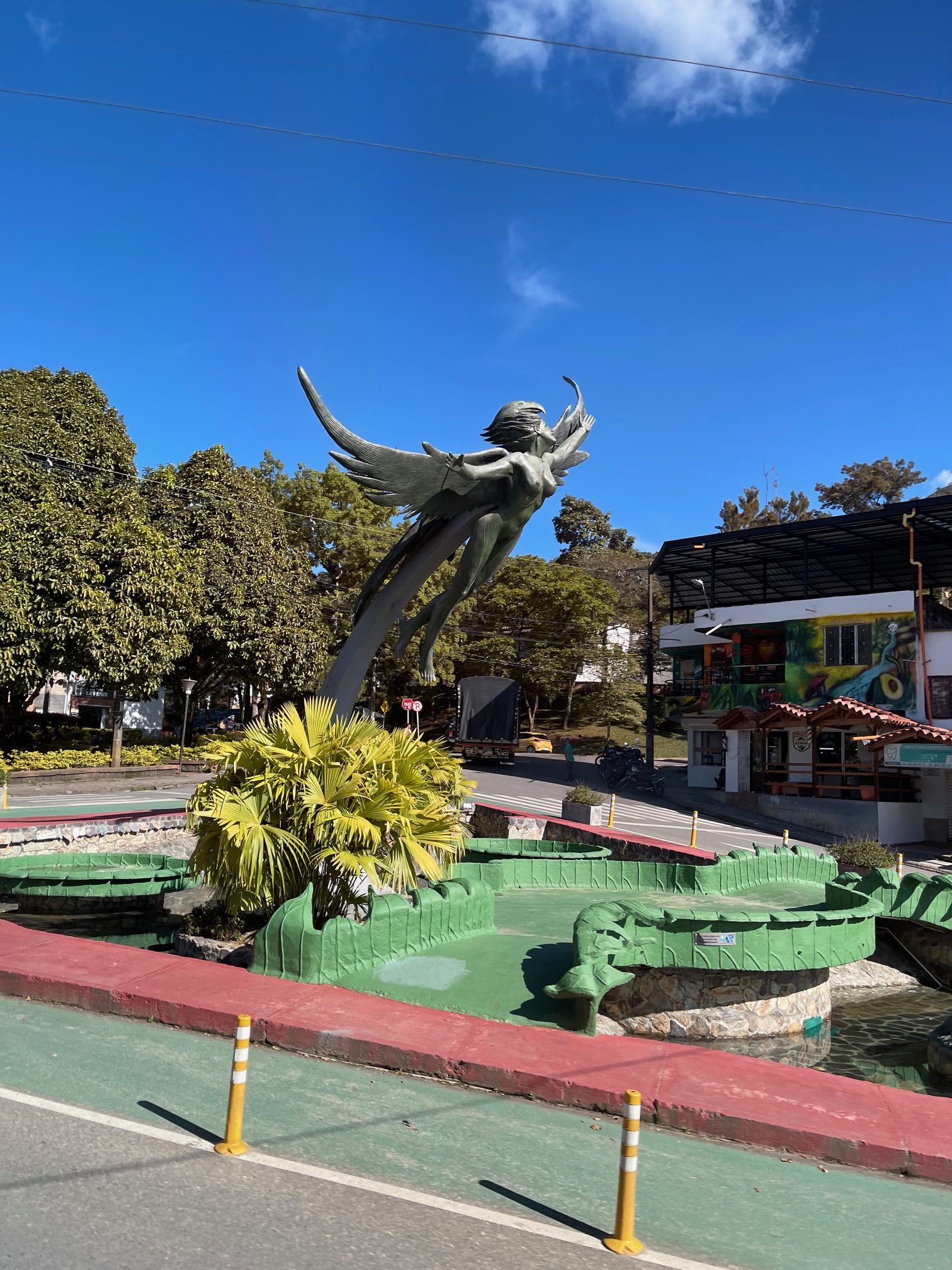
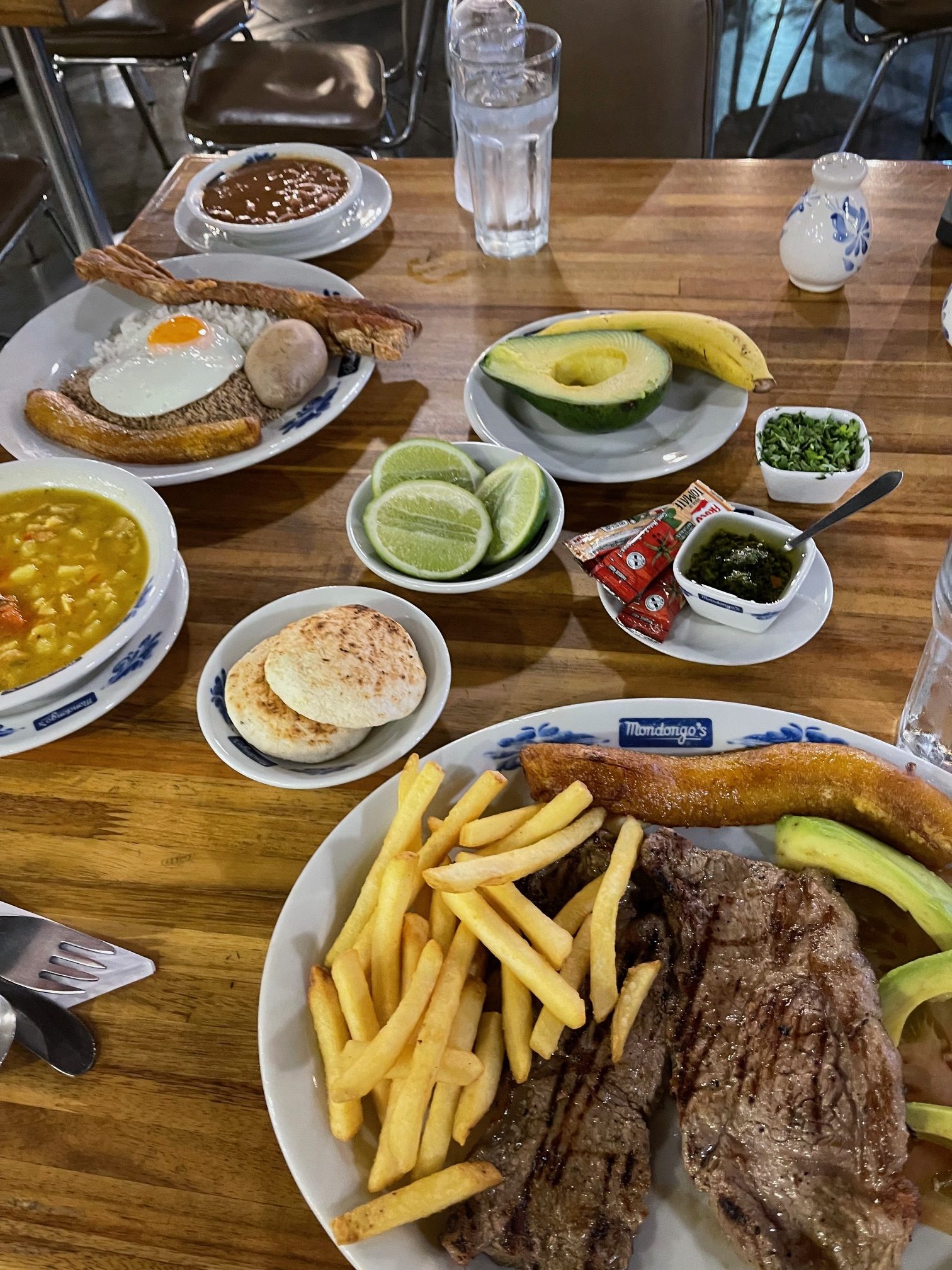
The rest of the day went by pretty fast. After disembarking the boat, we hopped back on the bus and made the hour or so long journey back into the city. On the way, we passed by a statue in the town of Peñol titled "La Fenix de America", which commemorated the town's rebirth and served as a symbol of resilience for the community. Once back in Medellín, my dad and I walked around El Poblado a bit before grabbing dinner in the area at Restaurante Mondongo's. I had a steak with fries, avocado, and probably the longest sweet plantain I've ever seen. We stopped into a souvenir shop so I could buy a magnet and soon called it a night back at the hotel. The next morning we were on our flight back home.
I'd say Medellín was definitely worth the visit, even if the language barrier made travel a bit frustrating at times. I honestly didn't realize how few people there would know how to speak English, even if just broken English. I guess there's really no reason for them to learn, as pretty much everyone in South and Central America speaks Spanish. It's the same reason why the vast majority of native English-speaking U.S. citizens don't speak anything other than English - there's simply no reason for them to need to learn anything else. I know nowadays translation apps make things much easier to communicate, but there's something about being able to speak another language other than my own that I just find so cool. That's definitely a lifelong goal of mine, to become fluent or at least somewhat conversational in a language other than my own.